
1. Product & Industry Overview
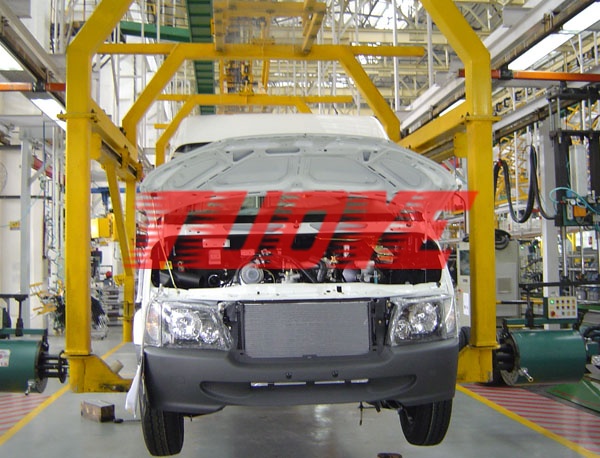
The final assembly line is the heart of a car plant — painted bodies come in, thousands of parts go on, and a vehicle that drives away comes out. An automotive final assembly line (also called a car production line or vehicle assembly line) is built from main lines (trim, chassis, final) plus sub-assembly lines (instrument panel, doors, powertrain, wheels); from Wenling, Taizhou, Zhejiang, China, Tuoye takes on the conveying equipment and station engineering of the final assembly line as complete packages.
The section division in a final assembly shop is industry-standard: the preparation stage sorts and feeds material; the trim stage installs harness, instrument panel, carpet and glass; the chassis stage marries the powertrain to the body; final assembly mounts wheels, seats and doors; then come interior/exterior inspection, wheel alignment, headlamp and brake checks, the water test and the road test. New-energy vehicles have made the "marriage" station matter even more — battery pack, front and rear suspensions marry the body in one fixture set, and the closing precision and lifting synchronization of the marriage equipment set the quality ceiling of the whole car production line.
2. Process Flow (see photo)
The photo shows a plate-chain/roller section with yellow steel gantry hoists: bodies flow in a straight line with work zones along both sides; green motorized rollers drive the line, and the gantry hoists dock sub-assemblies onto the body; utilities run on overhead bridges, never on the floor; floor guide rails steer the body flow, with epoxy floor paint and yellow zoning. Pneumatic and electric assembly tools line up along the stations while operators fit chassis parts and exterior parts on both sides of the body. Assembly sequence: body on line → trim line (harness, headliner, instrument panel, glass) → chassis marriage (powertrain or battery pack, suspension, brakes) → final assembly (wheels, seats, doors, fluids) → interior/exterior inspection → test line (wheel alignment, headlamps, brakes) → water test → road test and off-line. Capacity on an automotive final assembly line is calculated in JPH (jobs per hour), and the cycle balancing between main and sub-assembly lines plus the routing of heavy-part logistics are numbers that must be locked at proposal stage — the civil and steel-structure interfaces are fixed in the same step.
3. Customization & Service
An automotive final assembly line is delivered as a turnkey project: conveying forms combine plate chain, skid, EMS overhead trolleys and AGV; marriage stations carry lifting-type marriage equipment; the test section is engineered jointly with test-equipment suppliers. Tuoye joins the process planning early, delivering the general layout and section-wise equipment lists from the vehicle platform, JPH target and workshop conditions, and supports phased construction — many clients start with trim plus final lines in phase one and add the marriage section and test line in phase two, easing the funding curve considerably. Equipment ships in batches after pre-assembly and loaded trial runs, with on-site commissioning accepted alongside trial vehicle production. Warranty one year; chain plates, rollers, hoists and drive spares supplied long-term. Upgrades of existing car production lines (marriage section renewal, conveying speed-up, NEV model introduction) are taken too — site survey first, retrofit proposal second. For a vehicle assembly line proposal, bring vehicle and capacity data to the table.
Put JPH in plain numbers: 60 JPH means 60 vehicles an hour, about a thousand per day on two shifts — at that scale the trim line alone starts at two-to-three hundred meters, sub-assembly lines run seven or eight, and the logistics routing and civil interfaces must be locked at proposal stage, because every later change is surgery. That is why Tuoye's car production line proposals always run capacity simulation and a cycle-balancing sheet before any equipment layout drawing is drafted — the order cannot be reversed. NEV model introduction is today the most common retrofit on existing automotive final assembly lines — a legacy fuel-line marriage station cannot take a battery pack, so the marriage equipment changes, battery hoists are added and fire protection upgraded, and the budget for such vehicle assembly line retrofits needs counting a year ahead. The plate-chain-plus-gantry configuration in the photo is the most flexible and worry-free form on a final assembly line: fuel, battery-electric and hybrid vehicles all pass through.