
1. Product & Industry Overview
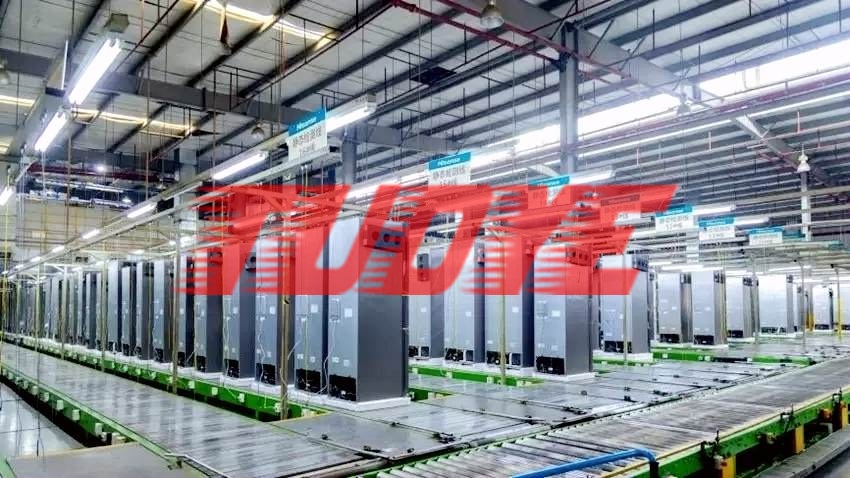
Among major appliances the refrigerator cabinet is tall and heavy, and the first job of a refrigerator assembly line is making a two-meter cabinet stand steady and turn smoothly on its pallet. The refrigerator assembly line (also called a fridge production line) covers final assembly from cabinet on-line to whole-unit packing; the product follows GB/T 8059 for household refrigerating appliances, efficiency filed per GB 12021.2, with power consumption and pull-down speed as hard ex-factory figures. The types: two-door and three-door move the volume, side-by-side and cross-door models serve mid-high end, French multi-door at the top of the price band; cooling splits into direct-cool and frost-free fan types, the fan type carrying an extra air-duct and defrost system worth three or four stations on the fridge assembly line; inverter compressors and dual-circuit systems spread widely these two years, weighting the electronics stations further. Quality control sits in the density of pipe welds and the precision of charging — a few dozen grams off, and both the energy consumption and the pull-down curve change shape.
2. Process Flow (see photo)
Look at the photo of this refrigerator production line's final assembly: a two-tier line, pallets on the upper deck carrying big side-by-side cabinets (around 1.8 m, 500 L class) one by one, empty pallets returning below on rollers, green line frames with lamp bridges and blue station boards along the way, 25-30 stations in view per side, pacing at 30-60 seconds a unit. Assembly sequence: cabinet on line (foamed body incoming) → compressor bay assembly (compressor, condenser, filter-drier) → pipe welding (LockRing or flame brazing) → nitrogen hold & leak check → vacuum evacuation → metered refrigerant charging → thermostat and lighting electricals → door assembly (hinges, magnetic gaskets) → powered pull-down test → appearance final check → labeling and packing. The test section of the fridge assembly line carries temperature recorders per model, pull-down duration archived unit by unit, with efficiency-sampling units pulled aside for recheck.
3. Customization & Service
Customization: line width sized to the largest cabinet plus working room on both sides; pallets serialized quick-change to the cabinet base holes; leak-check, vacuum and charging sections fitted with explosion-proof safety per refrigerant type (mainly R600a); pull-down test room capacity as daily program times test duration. Tuoye — in Wenling, Taizhou, Zhejiang, China — delivers the refrigerator assembly line from in-plant pre-assembly and commissions through trial production, warranty one year, pallets, plate chain and charger parts supplied long-term; speed-up retrofits (added return lines, densified stations) are taken too. For a fridge production line quotation, send the model size band, daily program and workshop length — dual parallel versus single loop compared on the layout drawing.
One choke point no refrigerator plant escapes: the test section. A pull-down test holds a unit for half an hour or so, and the test-room slots at the line tail must be counted backwards from the cycle — run short and the whole refrigerator assembly line drags. When expanding, expand the test rooms first; plenty of plants have learned this the expensive way. A word for the door-gasket station: magnetic gasket attraction and flatness feed the energy-consumption figure directly — this station on a fridge production line carries dedicated locating tooling and checks right after fitting, never waiting for whole-unit testing to discover a lifted gasket. And side-by-side cabinets run tall: size the curve sections one radius up and raise the guards — the rework cost of a transfer knock far exceeds the tooling investment.