
1. Product & Industry Overview
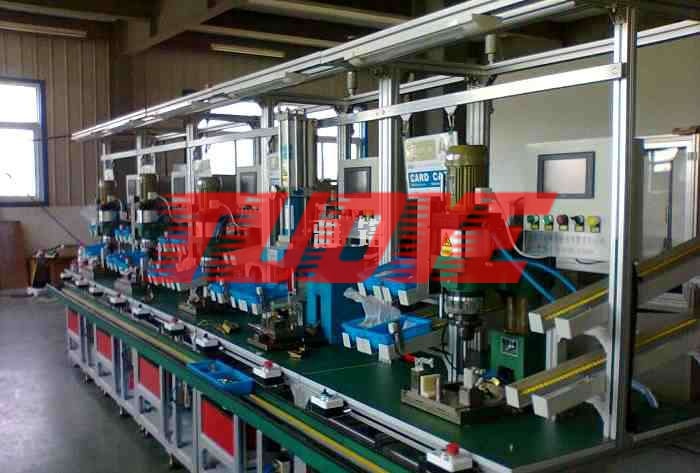
A decade of change in the instrument business has rewritten the specification sheet of the automotive instrument cluster assembly line — mechanical gauges are exiting, full-LCD clusters are scaling up, and ESD protection and burn-in screening have moved from bonus items to compulsory questions. The instrument cluster assembly line (also called an instrument cluster production line or dashboard assembly line) covers the full sequence of assembly, calibration and burn-in; Tuoye's cluster production lines in Wenling, Taizhou, Zhejiang, China are ESD-designed around the processes of LCD combination clusters and vehicle display modules.
Product shapes split in two: full-LCD clusters render navigation, vehicle status and driver-assist information on a screen and processor, standard on mid-to-high trim levels; stepper-motor combination clusters keep costs down and will stay on economy models for a long time. What both share is fragility — PCBA, LCD panels, backlight modules and pointer mechanisms are all precision parts, afraid of static, dust and knocks, and every unit must be light-on calibrated and batch burn-in screened. So the design logic of an instrument cluster assembly line is one sentence: assembly, testing and burn-in connected end to end, no break in between.
2. Process Flow (see photo)
The photo shows an aluminum-extrusion speedchain line: pallets carry products along the chain, stations fitted with green ESD tabletops and assembly jigs; several pneumatic press-fit units sit in-line — screen lenses, bezels and structural parts are pressed on the line, with press force and stroke set from the touchscreen control cabinet. That is this line's highlight: press-fit never leaves the line, and the beat never breaks. Yellow slide chutes handle transfer between stations, warning signs and e-stops all in place. Assembly sequence: PCBA and screen on line → backlight module → pointer mechanism assembly and zeroing → bezel press-fit → light-on calibration (brightness, color shift, display content) → ICT in-circuit test → bar-code SN entry into burn-in → high-temperature burn-in → retest, packing and off-line. Never skip the burn-in gate: one high-temperature round screens out early failures, the burn-in flag is written into EEPROM and readable at the factory gate; MES traces every cluster's assembly and test data by SN — exactly what OEM plant audits look for.
3. Customization & Service
Customization items on the instrument cluster assembly line: cycle time and station count follow capacity — 15 to 60 second cycles have all been built; ESD class upgrades per workshop condition (ESD tabletops, grounding chains, ionizer fans); burn-in room or cabinet temperature and slots per process; the calibration station can add camera vision, steadier than the human eye at catching display defects. Before proposing an LCD cluster assembly line, Tuoye reviews product format, capacity program and workshop conditions, then delivers the three-piece set: floor layout, equipment list and quotation. Equipment is pre-assembled and trial-run in our plant, then commissioned on site through trial production. Warranty one year; jigs, pallets and ESD accessories supplied long-term. Older module plants wanting to add a burn-in section fall within the same retrofit scope — measure the workshop's spare electrical capacity first. For a proposal, send the product documentation directly.
Two numbers for reference. Burn-in: temperature and duration follow the product process; a burn-in cabinet holds a few dozen units, and high-volume plants go straight to a burn-in room — the burn-in floor area on an instrument cluster assembly line must be reserved against batch size, or capacity ramp finds the burn-in room queueing. ESD: after ESD tabletops and grounding chains are installed, measure actual resistance to ground; at acceptance of an instrument cluster production line, test station by station and keep the records — those records are pulled straight out at audits, sparing the panic of on-the-spot retesting. One more option worth taking: camera vision at the calibration station. Brightness, color shift and display defects are read more steadily by machine than by eye — human inspectors staring at screens for hours will always leak defects; that is money spent on the cutting edge.