
1. Product & Industry Overview
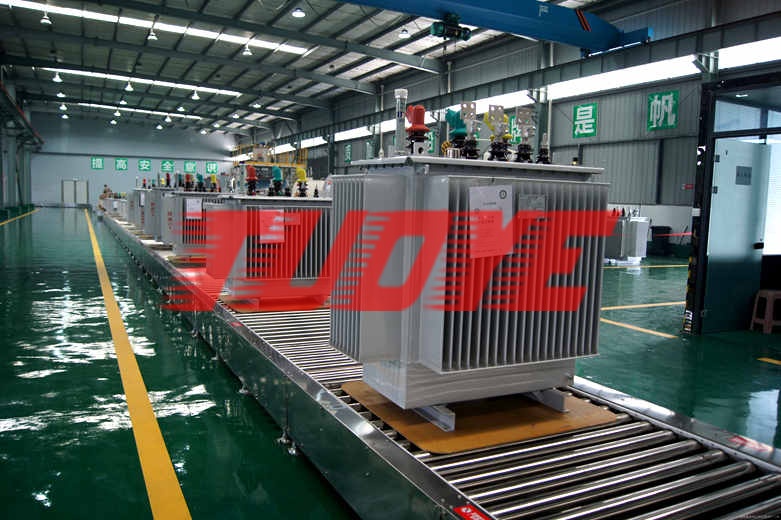
A transformer weighs a tonne or more per unit, and the first principle of a distribution transformer assembly line is heavy duty — rollers, pallets and hoist points, every link calculated in tonnes. The transformer assembly line (also called a transformer production line) covers final assembly from active part into tank through routine testing; oil-immersed distribution transformers follow GB/T 6451, with efficiency under GB 20052's mandatory classes — low-loss models like S20 now lead procurement. The types: 10 kV distribution units from 30 to 2500 kVA move the biggest volumes, S13 and S20 classed by efficiency; dry-type transformers (SCB series) serve buildings and new-energy stations — no oil filling, but cast-windings feed coordination instead; amorphous-core models cut losses further with finer stacking craft. Quality control on a transformer assembly line sits in three places: cleanliness of the active-part insulation assembly, tap-changer position accuracy, and tank sealing — oil seepage is the industry's oldest complaint.
2. Process Flow (see photo)
Look at the photo of this transformer production line's final assembly: a heavy roller line, silver-gray rollers carrying yellow support pallets, gray oil-immersed tanks (panel radiators, porcelain bushings, conservator) spaced along the line, each with a white inspection card on the front recording the process flow; a blue bridge crane above handles active parts and tanks, green flooring with yellow zoning, six-to-eight units on line, 10-15 stations overall. Assembly sequence: tank on line → active part hoisted in (core-and-coil assembly done at dedicated floor-track positions) → active part located and fastened → tap changer and drive mechanism connected → bushings, conservator, radiators and components → internal leads and insulation clearance check → tank closing → vacuum oil filling (vacuum level and fill rate per code) → standing and sealing test → routine tests (insulation resistance, power-frequency withstand, no-load and load losses) → nameplate and ex-factory documents → packing and dispatch.
3. Customization & Service
Customization: roller loading rated to the transport weight of the largest capacity (a 2500 kVA oil unit nears 5 t filled); hoisting stations coordinated with the crane duties; vacuum pump groups and oil treatment equipment per capacity; the HV test zone isolated at code safety distances. Tuoye — in Wenling, Taizhou, Zhejiang, China — delivers the transformer assembly line from in-plant pre-assembly and commissions through trial production, warranty one year, rollers, pallets and hoist parts supplied long-term; test-section expansions and oil-filling automation retrofits are taken too. For a transformer production line proposal, send the capacity range, daily program and crane tonnage — the roller-to-hoist handoff gets fixed on the layout.
One process detail easily underrated: standing time. After vacuum oil filling, the unit stands the prescribed interval by capacity before testing, letting bubbles clear — only then do the withstand figures count. The transformer production line digests this in roller buffer slots, never occupying test stations. The HV test zone takes code-mandated clearances and interlocks — nobody enters during tests, and any opened door cuts the power; this safety set belongs in the drawings from proposal stage. Panel-radiator joints and valve ports are the seepage hot spots: pressure-hold records unit by unit after final assembly — in the distribution transformer business, reputation is built joint by joint, on nothing leaking.