
1. Product & Industry Overview
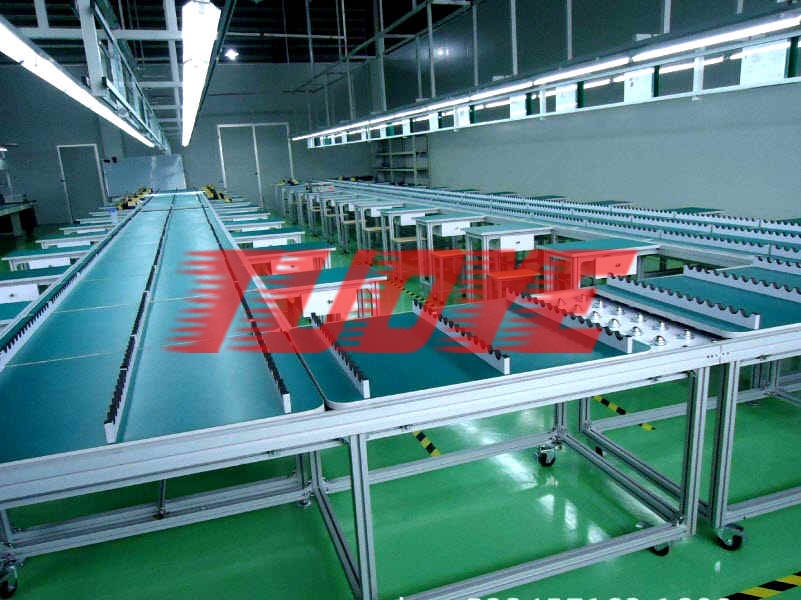
The lighting industry runs on scattered models and fragmented orders — one LED lamp assembly line often takes bulbs, tubes and panel lights at once, and changeover frequency decides capacity more than cycle time does. An LED lamp assembly line (the trade also says LED lamp production line or LED lighting assembly line) carries the work from LED boards and drivers to shade, cap and whole-lamp light-on; the LED placement happens in SMT, the final-assembly section takes over from board to finished lamp, and ESD protection plus burn-in are the two unavoidable links. Tuoye, in Wenling, Taizhou, Zhejiang, China, structures its lamp assembly line proposals around exactly that split. The model spread: bulbs run highly automated assembly machines — high volume, thin margins; tubes and ceiling lights lean on manual stations organized by line cycle; panel lights, downlights and high-bay fixtures come in small batches and many specs, demanding quick-change fixtures. Safety and performance follow GB/T 24906 for self-ballasted LED lamps and GB/T 24908 for performance; the light-on first test and burn-in before ex-factory are never skipped.
2. Process Flow (see photo)
Look at the photo of this LED lamp production line: dual parallel speedchains on aluminum-extrusion frames, green ESD pallets circulating with lamp bodies, independent drawer tables on casters — in peak season you add tables, not lines; perforated fixture boards on the pallets locate tube parts by pin, and a different lamp type passes the line with one fixture board swapped; 20-30 stations arranged by model, green epoxy flooring marking out the ESD zone. Assembly sequence: incoming board check (bright/dark dot sampling) → board to heatsink housing with locking (thermal grease applied) → driver wiring and fixing → shade/cap assembly → whole-lamp light-on first test → to the burn-in line for on/off aging → final check, labeling, packing. On the LED lighting assembly line, first-test stations carry integrating spheres or simple dark boxes per lamp type; sampling frequency for luminous flux and color temperature is written into the inspection spec, and the ratio adjusts dynamically to customer class and batch quality record.
3. Customization & Service
Customization turns on three things: quick-change fixtures (model swaps in minutes), burn-in capacity (daily program times burn-in duration, 24-72 h on/off cycles) and ESD class (pallets, strap monitoring, ionizers as needed). Tuoye's LED lamp assembly line ships from in-plant pre-assembly and commissions through trial production, warranty one year, fixture boards, chains and station tables supplied long-term; speed-ups and added burn-in sections on existing lines are regular business — lamp line retrofits are a solid share of it. For a quotation, send the lamp type list, daily program and workshop dimensions; single or dual line, burn-in at the ends or the side — the proposal lays the choices out plainly.
Lamp-line scheduling has a signature: many models, small batches. Stations on an LED lamp production line group by model family — bulb machines, tube lanes, panel sections each hold their stretch — so families change without posts changing, and operator skill survives. Another lesson: never under-size the burn-in section — the classic LED light assembly line ailment is a full-built assembly section with too few burn-in slots, finished goods piling at the tail in peak season; size the burn-in line at daily program times model burn-in duration plus twenty percent, and peak season overtimes without jamming. And never save small money on ESD: pallets, straps and grounding accepted together, ground resistance tested station by station — once before the lamp assembly line starts production, then quarterly. That little testing budget buys the baseline of your yield.