
1. Product & Industry Overview
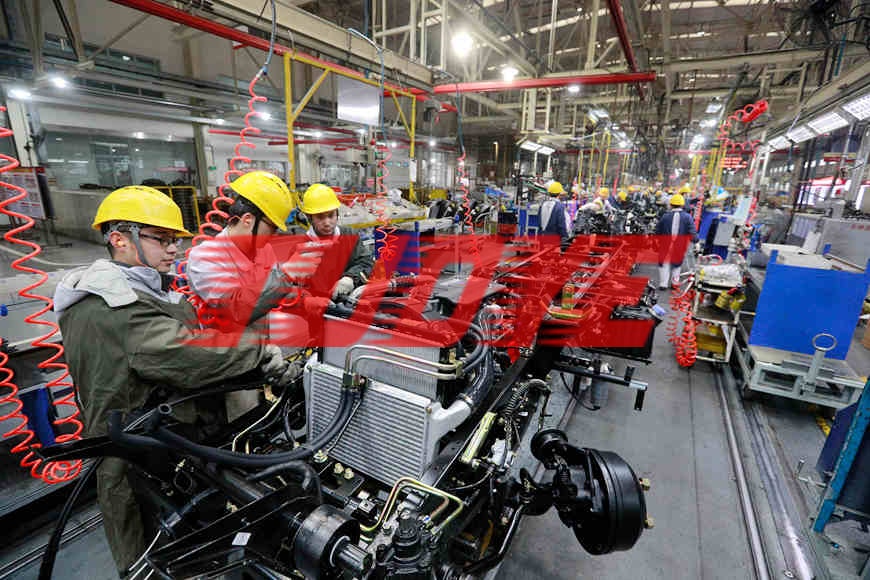
A truck chassis assembly line does the skeleton work of the whole vehicle: frame, axles, powertrain and brakes all come together on this line. The truck chassis assembly line (also called a truck chassis production line or truck assembly line) starts from the marriage of equal-width straight ladder frames on medium and heavy trucks — front and rear axles, leaf-spring or air suspensions, engine and gearbox, propeller shafts and air-brake piping climb aboard in sequence, and tires go on last before the chassis hands over to the trim section. The types: 4×2 medium trucks, 6×4 heavy tractors, 8×4 construction trucks, with suspensions stepping from taper-leaf springs to bogie and air suspensions — the chassis line's station count and hoisting tonnage follow the axle loads. Quality control on a chassis marriage line concentrates in three places: the connection torques between frame and axles, the dynamic-balanced assembly of propeller shafts, and the sealing and routing of air-brake piping — air leaks are the single most time-consuming item in truck chassis delivery debugging.
2. Process Flow (see photo)
Look at the photo of this truck assembly line's chassis marriage section: skid-on-plate-chain conveying, the chassis already past its powertrain stage — radiator, intercooler and battery box mounted, cab not yet on — the middle section just before chassis-to-cab marriage; red pneumatic hose reels drop from overhead to the stations, torque-controlled wrenches doing the fastening; traveling racks move with the chassis so bolts and washers never touch the floor; pitch 4-5 meters, 20-30 stations double-sided, heavy parts handled by overhead crane. Assembly sequence: frame on line and flip positioning → front/rear axle and suspension marriage (U-bolts torque-controlled) → powertrain hoisted and seated → propeller shaft connection → air-brake piping and valves (reservoirs, brake valves, fittings) → fuel tank, battery box, harness → wheel marriage → chassis off-line and debugging (air-tightness, lamps, brakes). On the frame assembly line, torque data is recorded point by point per the process files, critical bolts carry torque wrenches with data output, and station width is checked against the widest model so the walkways never pinch.
3. Customization & Service
Chassis marriage line customization follows tonnage and program: plate-chain loading, skid return method and crane tonnage settle first, then positioning machines, the torque network and filling equipment. To propose a truck chassis assembly line, Tuoye — in Wenling, Taizhou, Zhejiang, China — needs three inputs: vehicle axle loads, daily program, and the workshop crane conditions; the proposal includes logistics organization and line-side rack layout. The line ships from in-plant pre-assembly and commissions through trial production, warranty one year, plate chain, skids and pneumatic parts supplied long-term; retrofits adding torque networks and filling stations to older lines are taken too. For a truck chassis production line quotation, send the model range and capacity.
Civil-works coordination must be raised early: the heavy plate chain of a truck assembly line demands floor load capacity, and pit construction drags drainage into the question — conditions that belong in the building-design phase, expensive to retrofit. Air-brake piping is the highest-rework section of a truck chassis production line — many joints, complex routing; the working method concentrates piping assembly into two or three stations with routing templates and torque wrenches, then pressure-tests segment by segment; add one air-tightness bench on the chassis marriage line and the whole-vehicle air test passes in one shot at off-line — a far cry from hunting leaks back and forth across the debug shop. Plants requesting a frame assembly line retrofit: measure the existing crane tonnage and rail gauge and send them along — the proposal lands directly on equipment selection.