Burn-in Section Planning on a DC EV Charger Assembly Line: Capacity, Cycle Time and Safety Enclosure
1. Industry Overview
Charging infrastructure investment keeps climbing with EV fleet growth, and charger makers plan capacity under constant delivery pressure. An EV charger production line — the trade also says charging pile assembly line — runs the full sequence from cabinet on-line, power module insertion and secondary wiring through gun-cable assembly to whole-charger inspection. By type: AC chargers, mainly 7 kW home and commercial slow units, are light and fast-paced; 60-160 kW DC all-in-one chargers, big cabinets with many modules, are the line's mainline products; split-type charging heaps separate power units from terminals, so production organizes in two sections; liquid-cooled superchargers bring their own piping and cooling-test requirements.
The charger production line usually divides into assembly, testing and burn-in sections. DC power modules run two-stage PFC plus DC/DC structures; ex-factory testing follows GB/T 18487.1 for conductive charging systems — withstand voltage, insulation, leakage current — then high-temperature burn-in (60 ±2 °C chamber) at full load, closing with whole-charger error and function checks. How well the three sections match decides the whole line's output.
2. Process Flow & Line Configuration
The typical DC charger assembly flow: cabinet on line (sheet-metal cabinet pre-welded) → grounding copper bar and busbar installation → power modules into cabinet (rail insertion, locking) → breakers, fuses, relays, energy meter → control board and secondary wiring (wire numbers, torque fastening) → charging gun-cable assembly and coiling → withstand-voltage and insulation test → high-temperature burn-in → whole-charger function checks → door closing, packing, off-line.
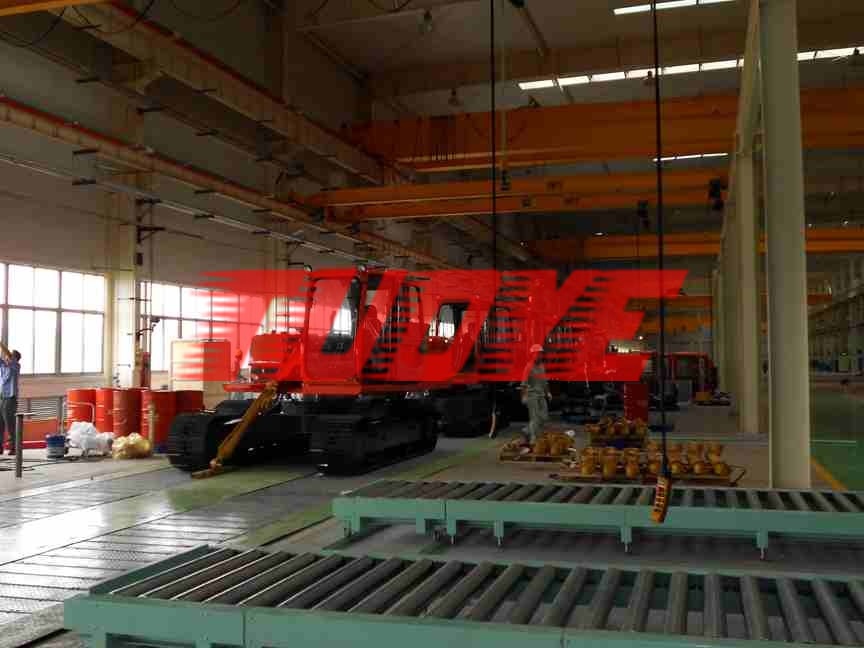
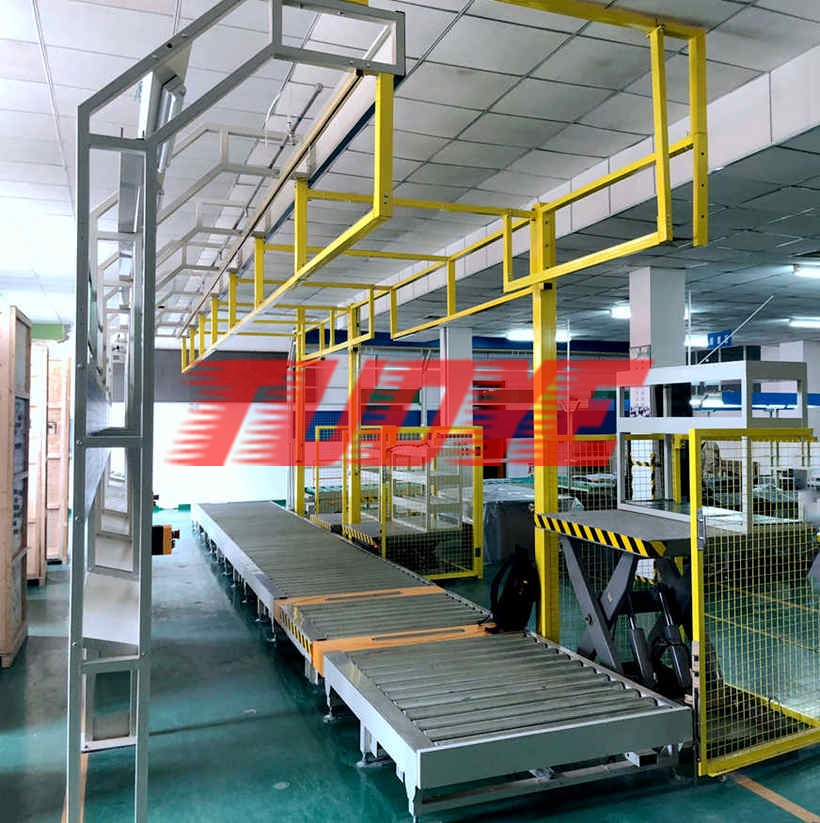
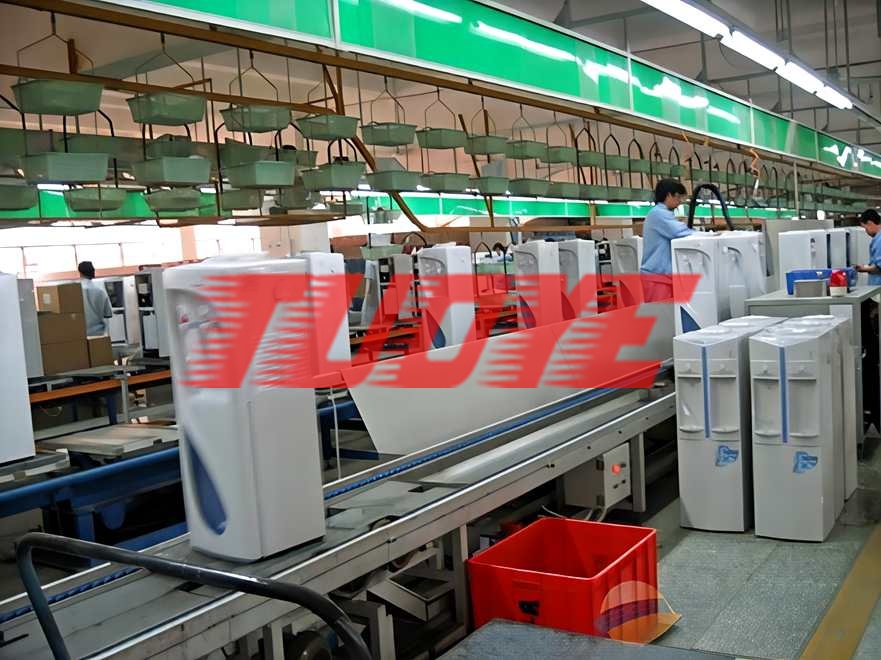
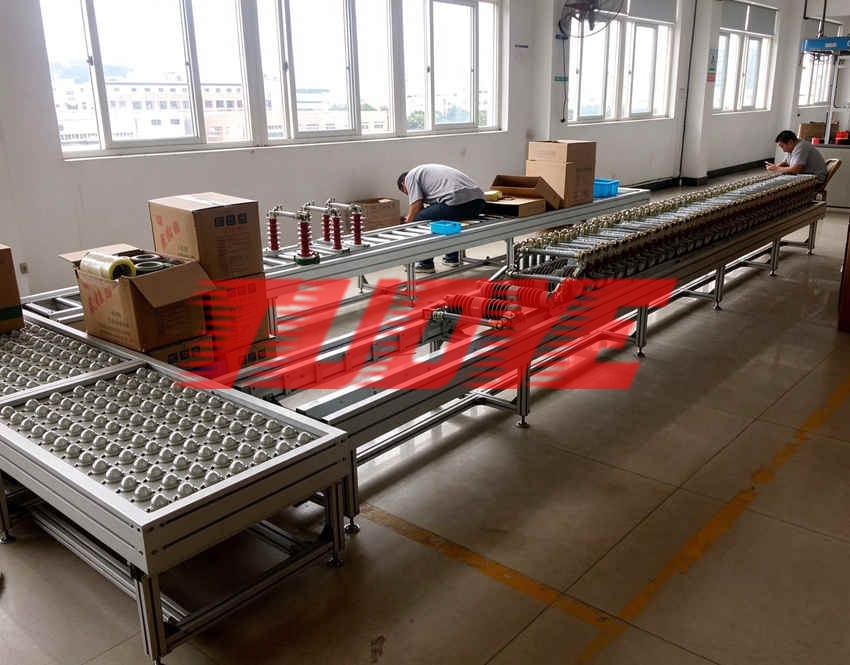
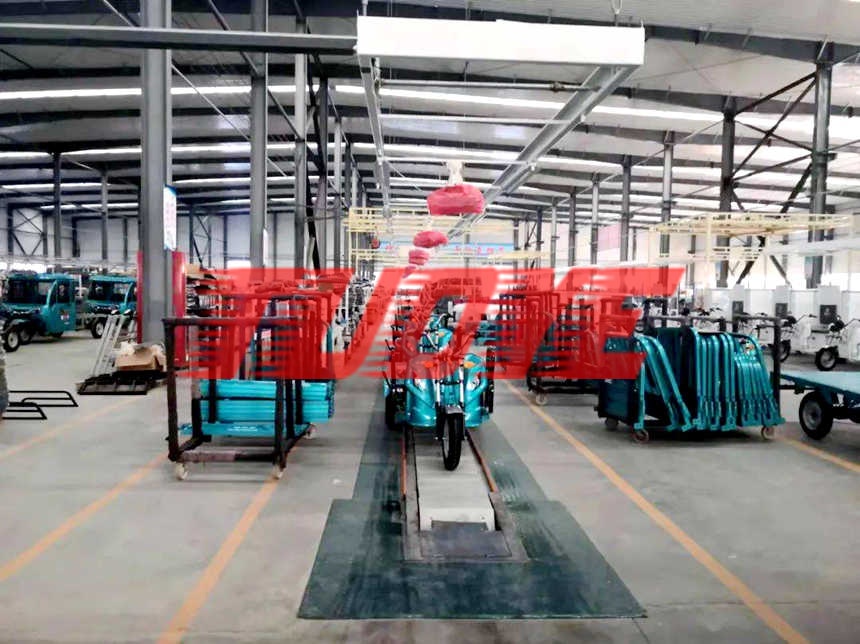
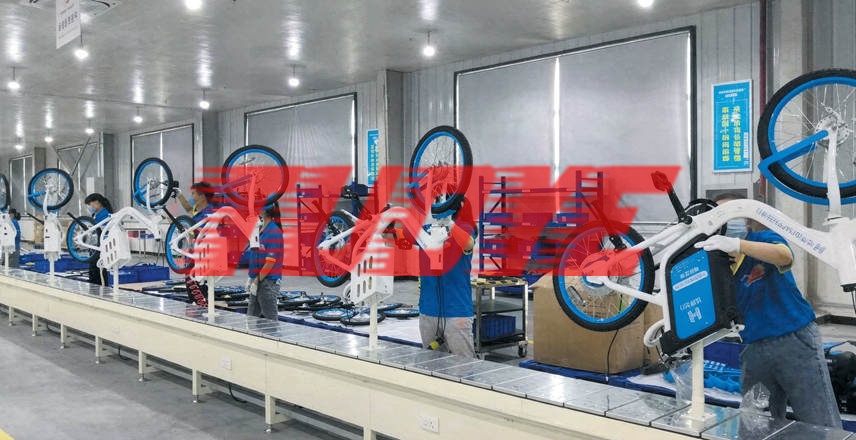
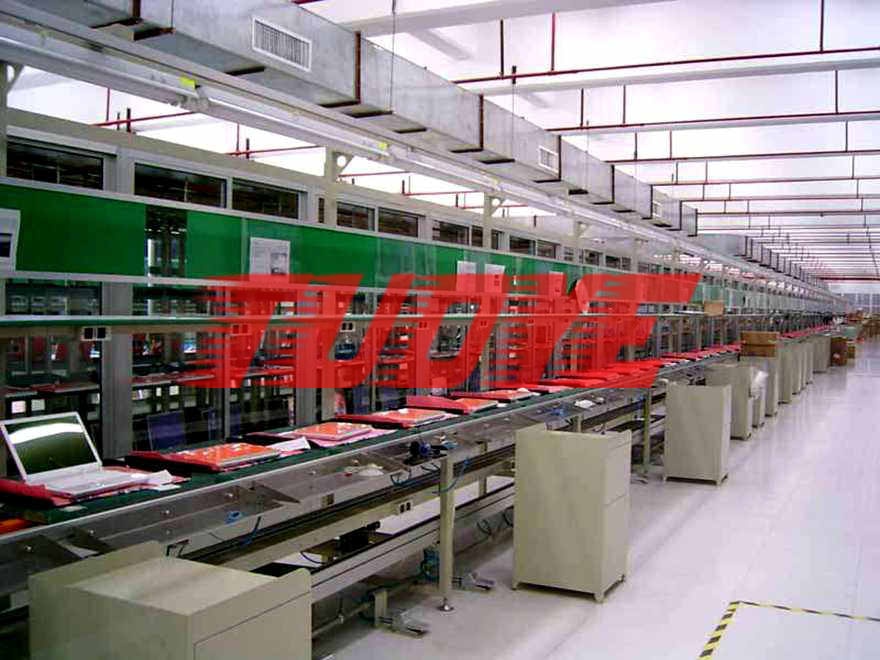
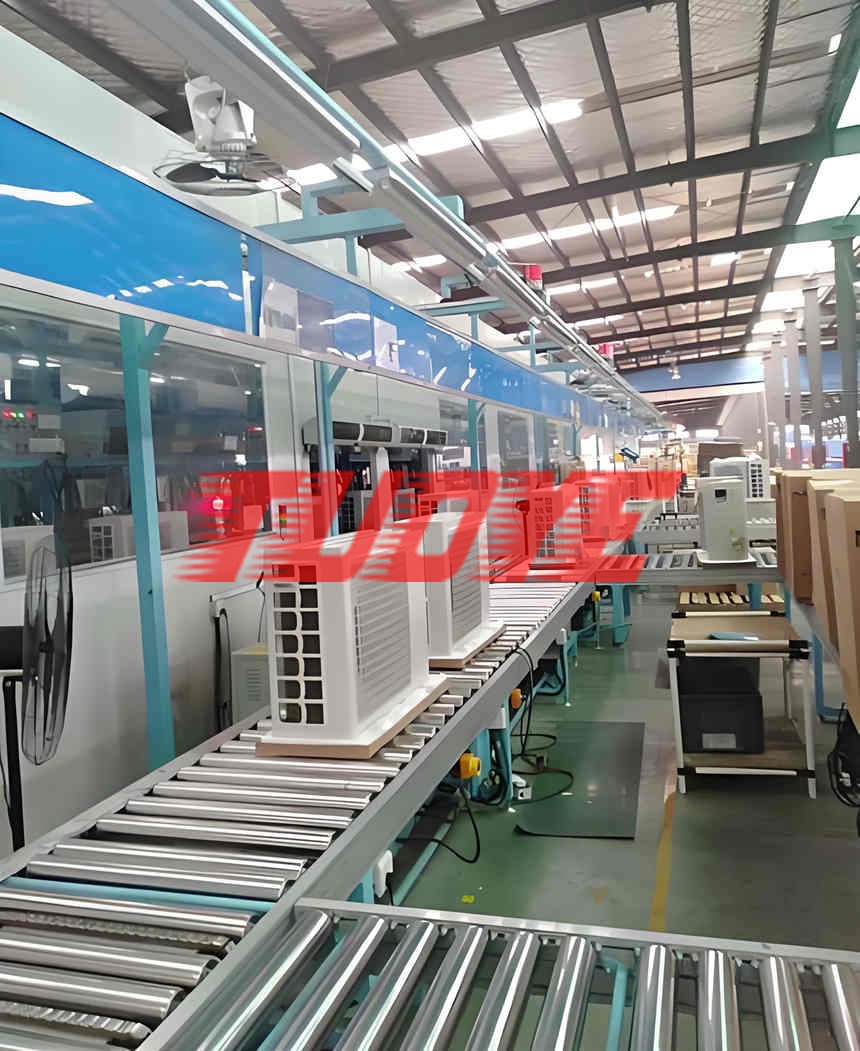
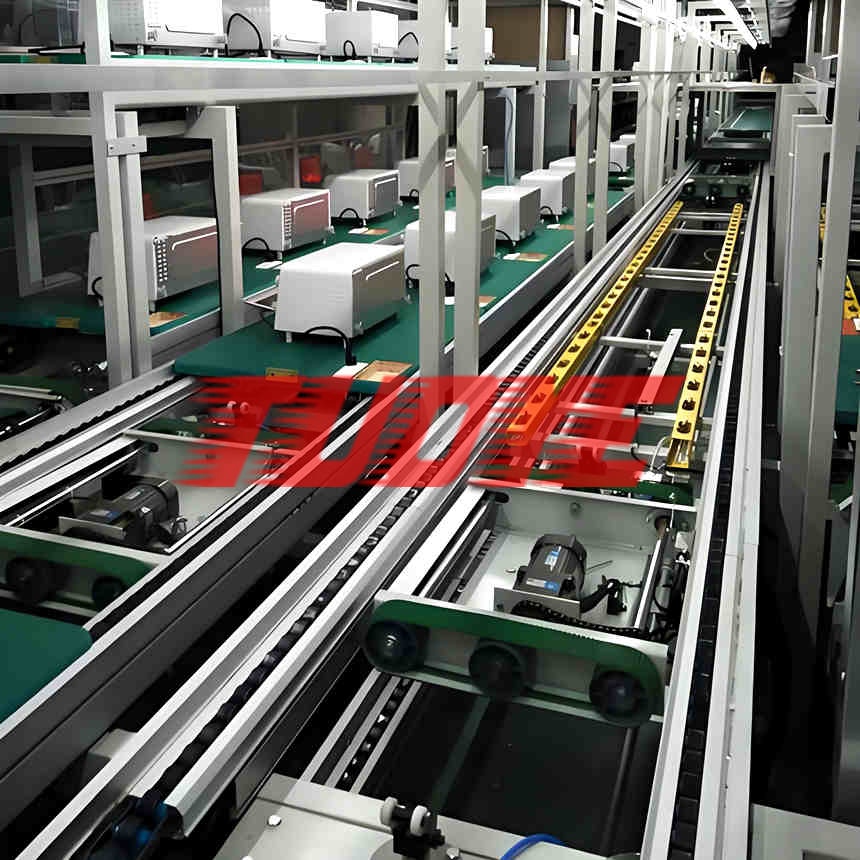
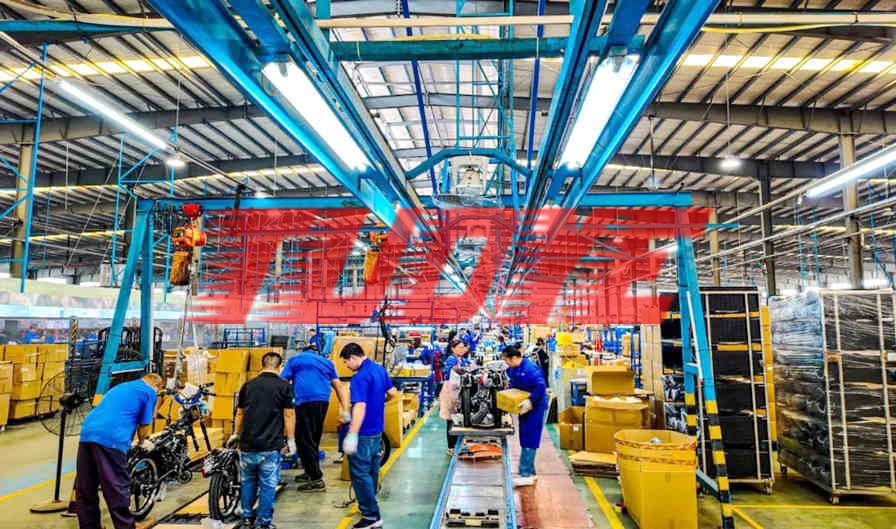
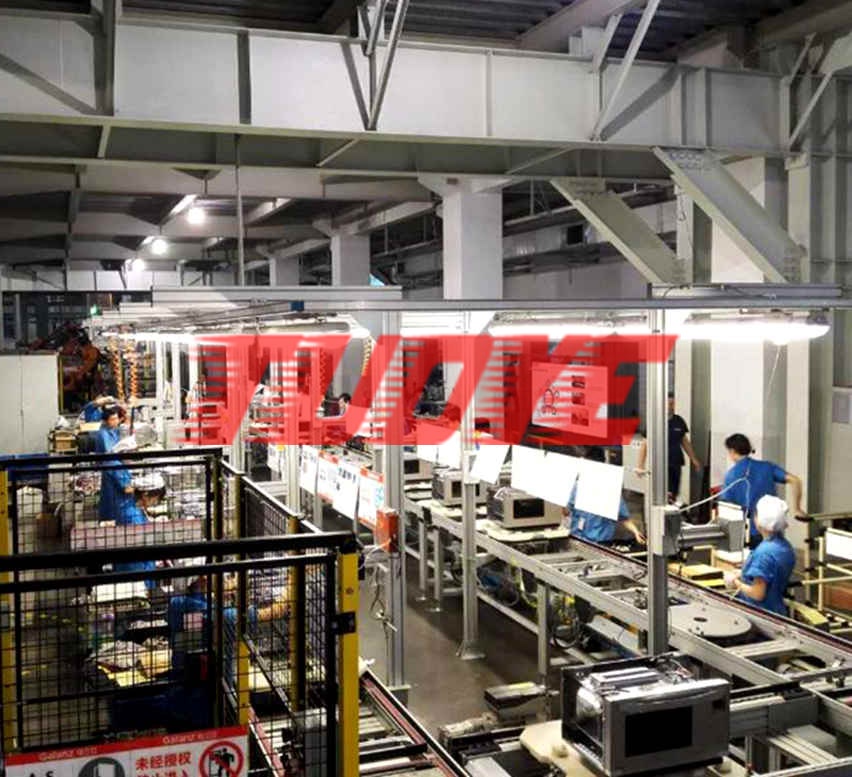
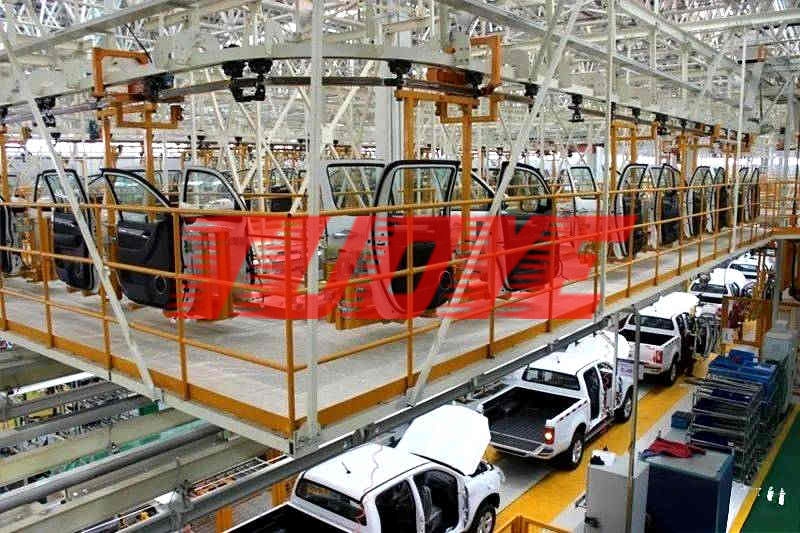
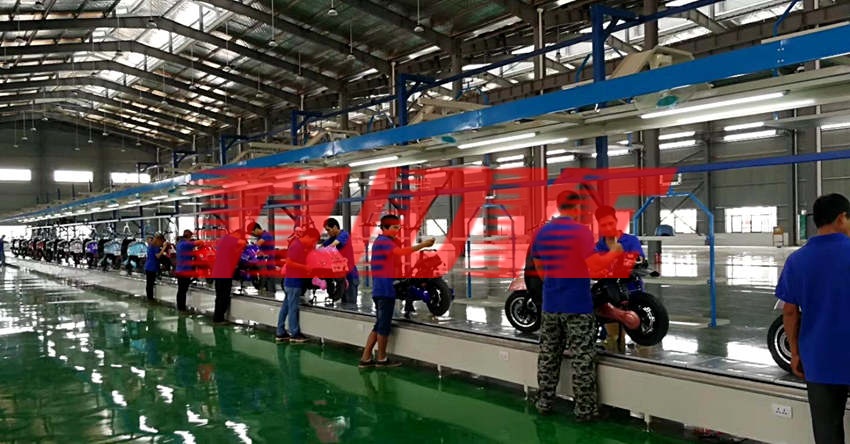
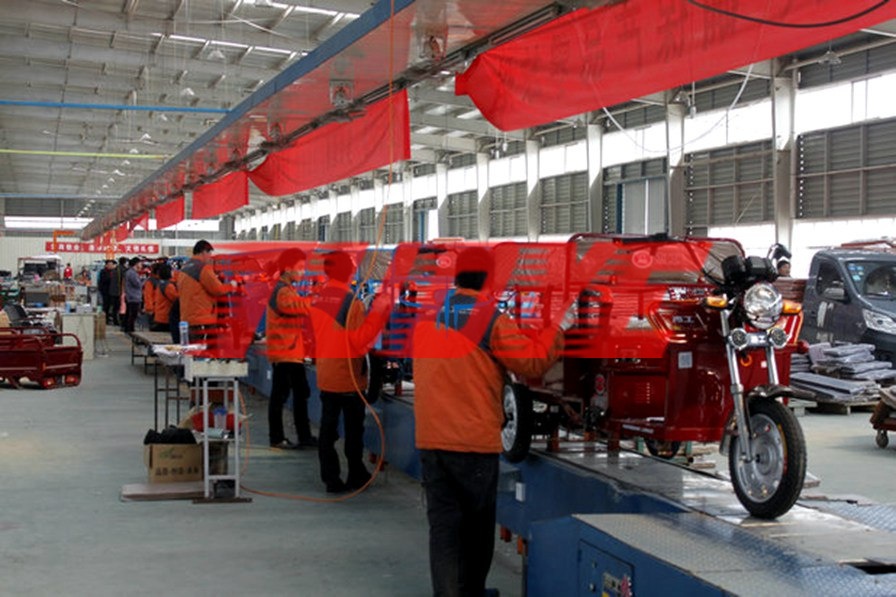
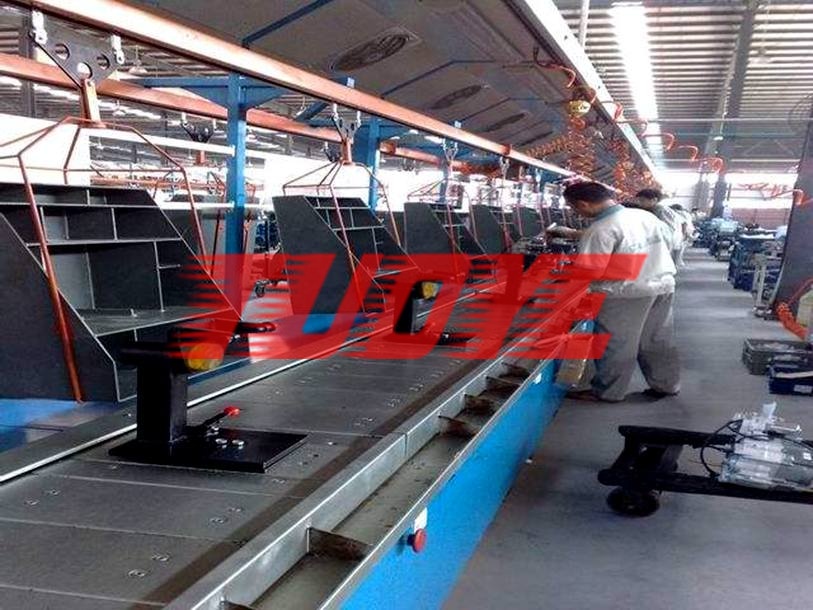
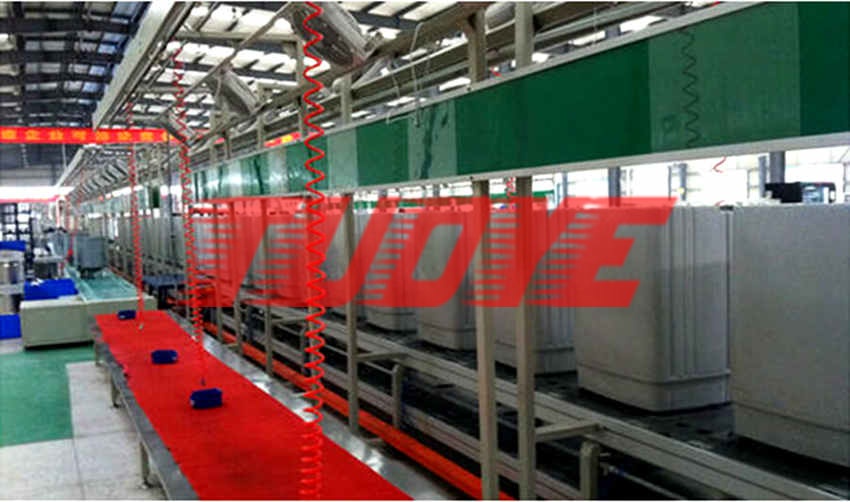
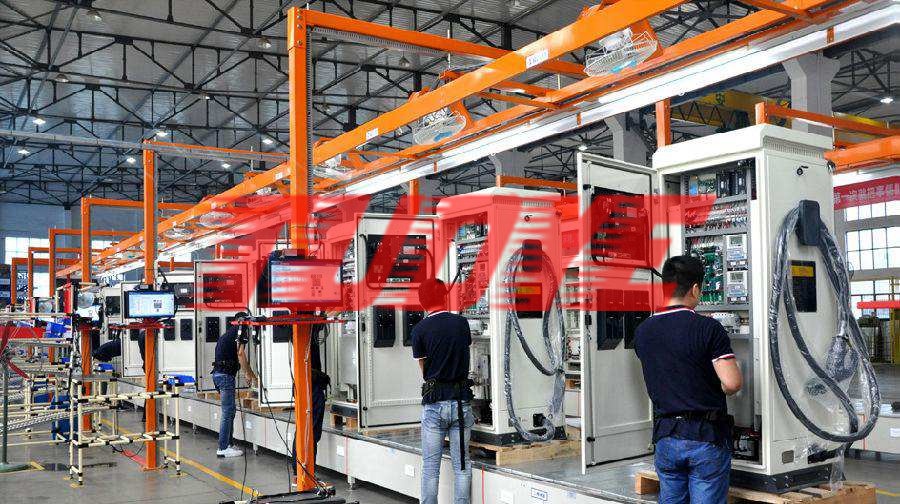
In a delivered project, the EV charger assembly line runs speedchain pallets — white heavy-duty boards at one cabinet per pallet; trusses overhead integrate station lighting and fans, some stations carrying cantilevered MES terminals for scan-at-station; lean-tube racks at the side hold harnesses and hardware, with the overhead crane landing cabinets on the line. The gun-cable station carries hanging racks and coiling fixtures so thick DC cables never chafe in transport.
3. Configuration & Selection Tips
Burn-in planning is the balance point of investment and capacity: a room sized at 1.2 times the daily program covers the need — anything larger locks up cash. The electrical test zone takes insulated flooring, physical enclosures and audible-visual warnings, with the HV test area separated from assembly. Torque tools, E-SOP terminals, scanning poka-yoke and test-data logging round out the configuration per the maker's quality system.
4. Delivery & Service
From charger type range, daily capacity and workshop conditions, Tuoye — in Wenling, Taizhou, Zhejiang, China — issues the new-energy charger line proposal; equipment enters after in-plant pre-assembly and loaded trial runs and commissions through trial production. One-year machine warranty, pallets and stopper parts supplied long-term, plus line-replacement speed-ups and burn-in expansions on existing EV charger production lines.
Permanent link: https://www.liushuixian.com/post/burn-in-section-planning-on-a-dc-ev-charger-assembly-line-capacity-cycle-time-and-safety-enclosure.html
Disclaimer: Some articles on this site are compiled from public technical sources for reference. If any content infringes your rights, please contact us for removal. Please credit the source when reprinting.