LED Display Assembly Line Batch Management: Linking Module Assembly, Burn-in and Calibration
1. Industry Overview
Order swings and screen-type variety shape how LED module lines are organized. An LED display production line — the trade also says LED display assembly line — handles the post-SMT work of module assembly, light-on testing, burn-in, calibration and cabinet building. By screen type, indoor fixed-install and outdoor advertising screens run high-volume paced production; rental staging screens live on quick-lock cabinets; fine-pitch conference screens bring small modules and dense stations; transparent and flexible screens are small-batch, many-variety work. Pallet sizes and beat design on the LED display assembly line must be set per screen type.
Batch management is the core discipline of module production. The industry demands same-batch LED beads and same-batch calibration: one batch finishes assembly, enters the burn-in room rack by rack, and comes out for re-test and pixel calibration as a whole — no mixing. Burn-in duration runs 24 to 48 hours by screen type and order, and the batch scale directly sizes the line's buffer zones and burn-in docking positions.
2. Process Flow & Line Configuration
The typical LED module production flow: LED board and bottom shell marriage (magnetic columns or screw locking) → power and ribbon connection → module light-on first check → whole rack into the burn-in room → out for re-test and pixel calibration → cabinet assembly (modules on frame, locking, connectors) → full-cabinet light-on → packing and storage. Outdoor models add a waterproofing test station.
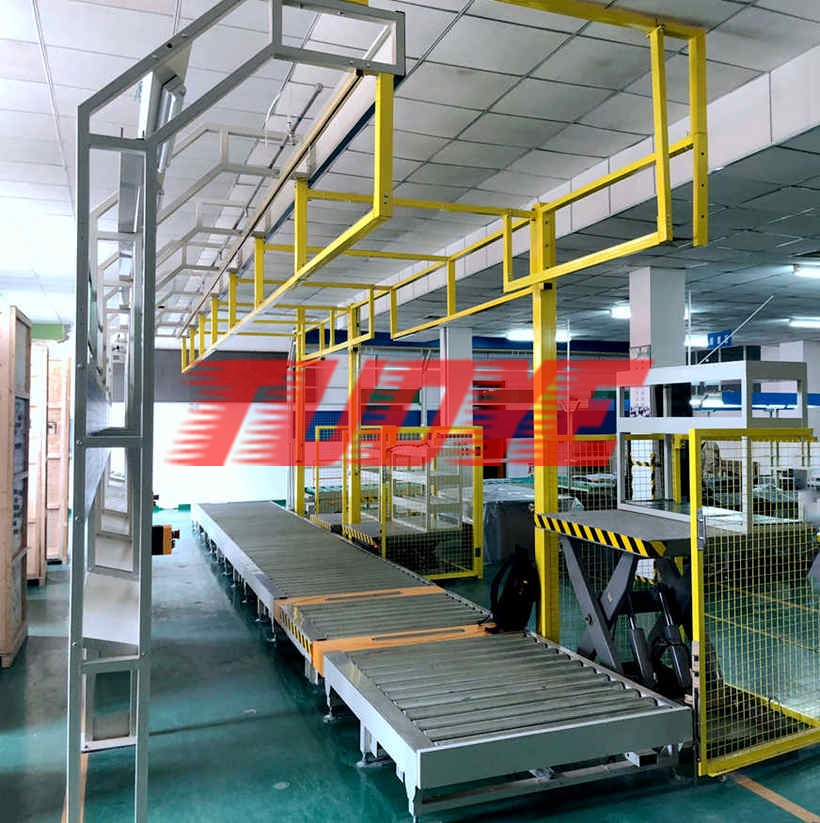
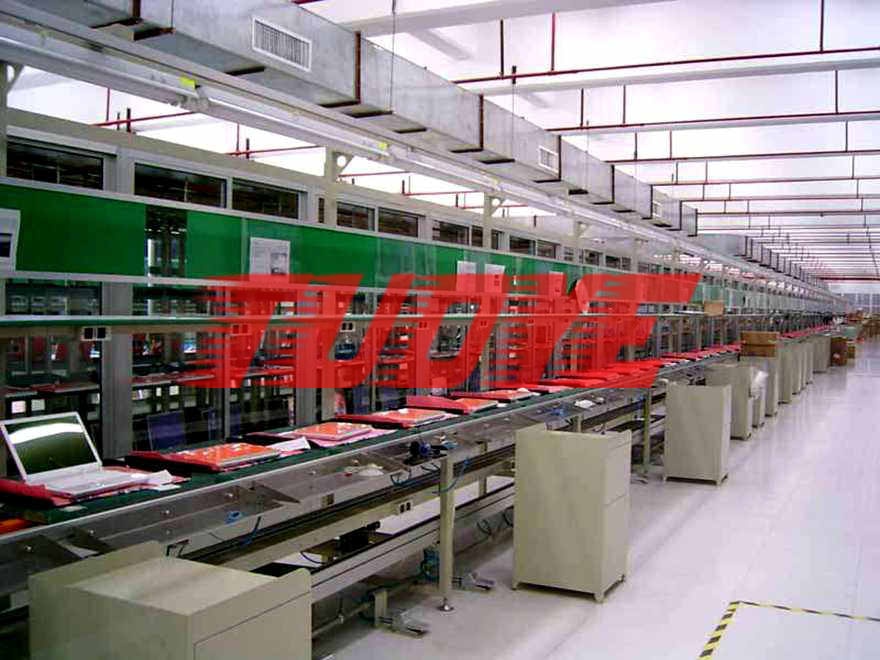
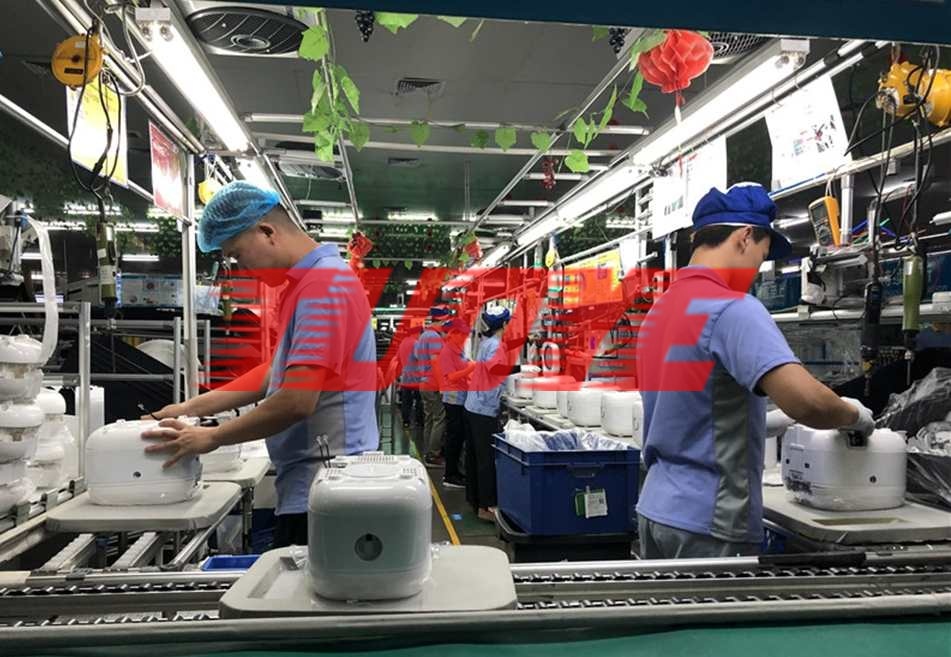
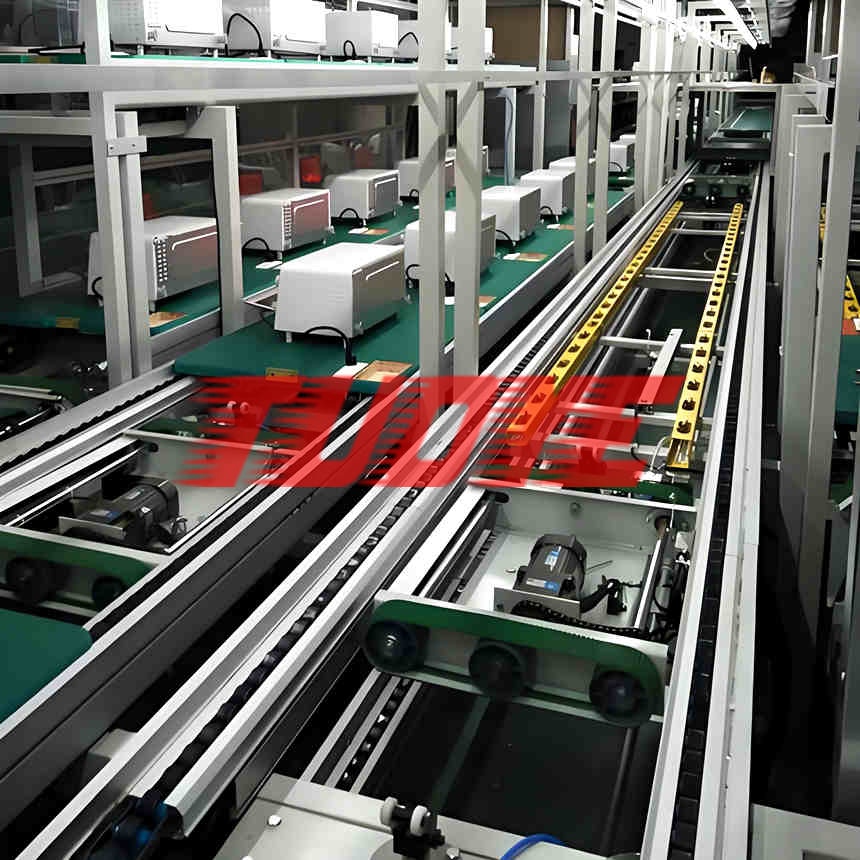
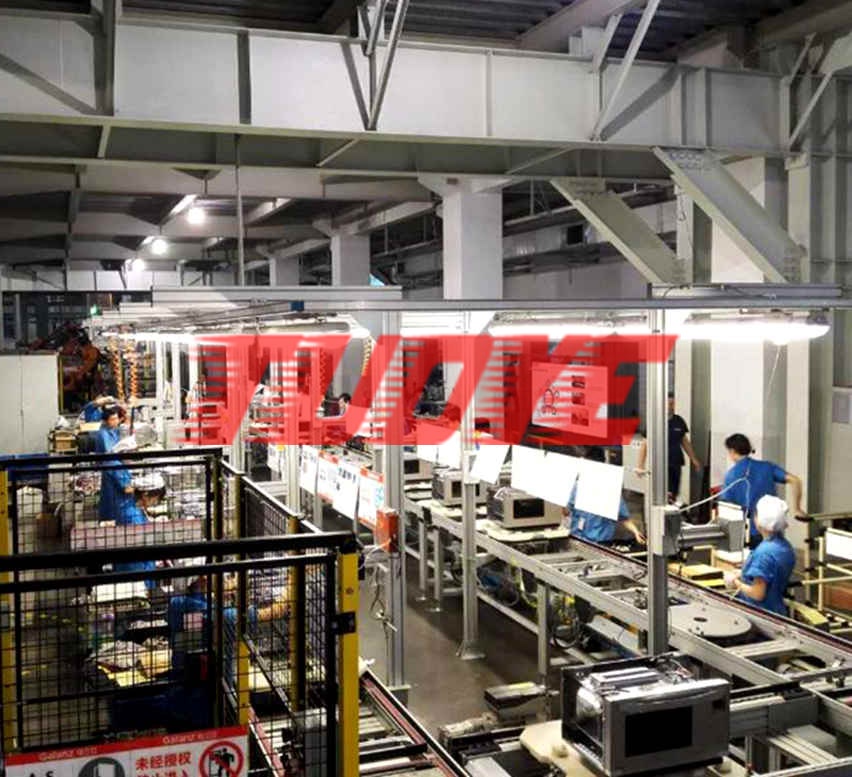
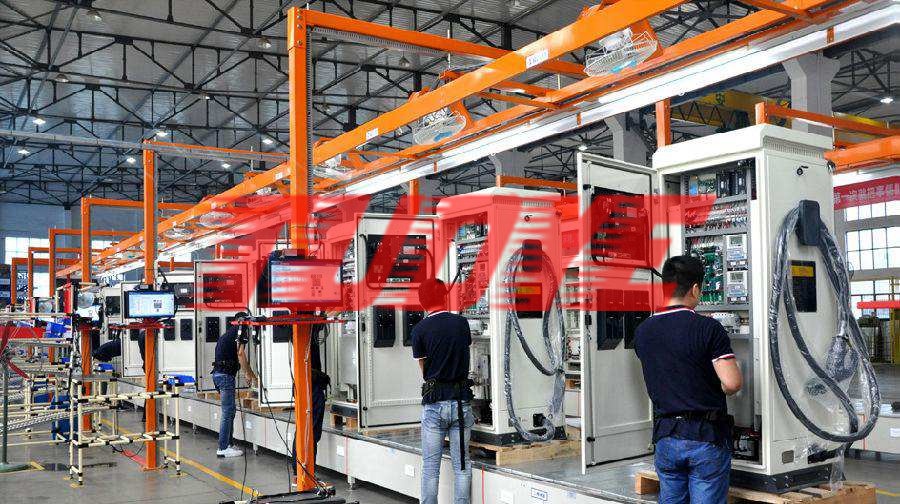
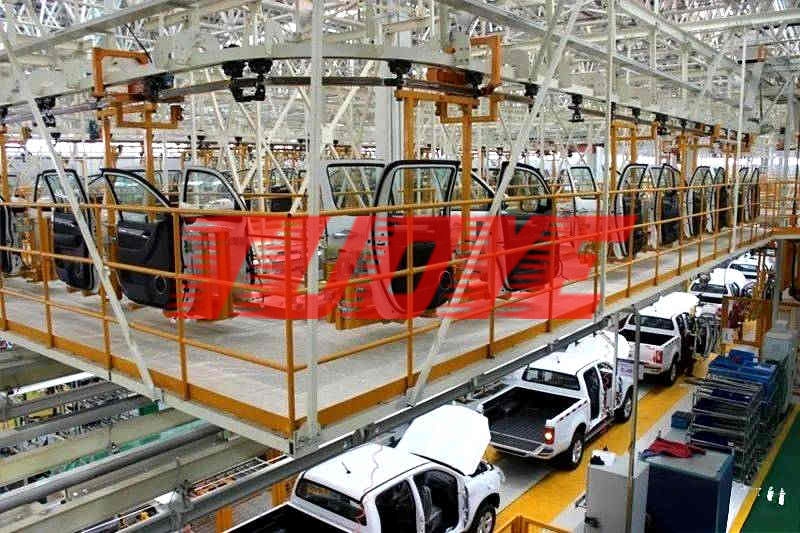
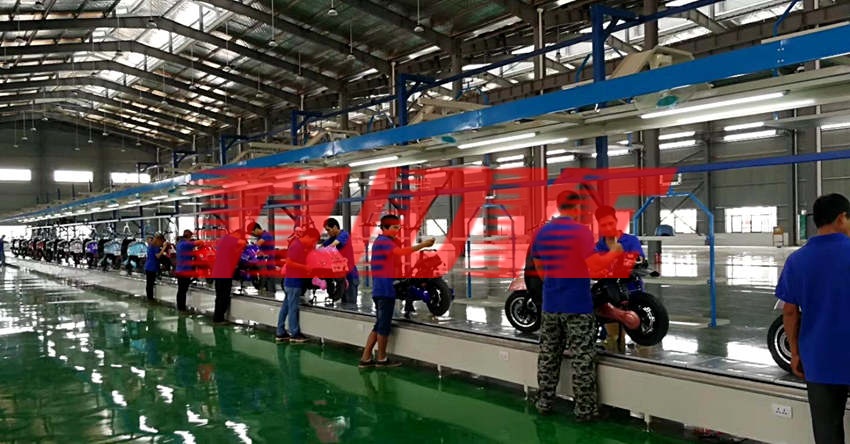
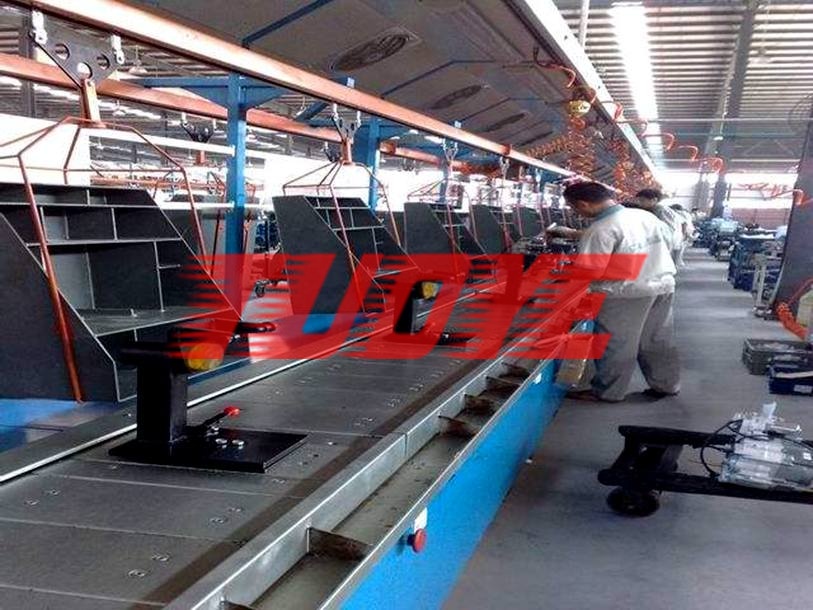
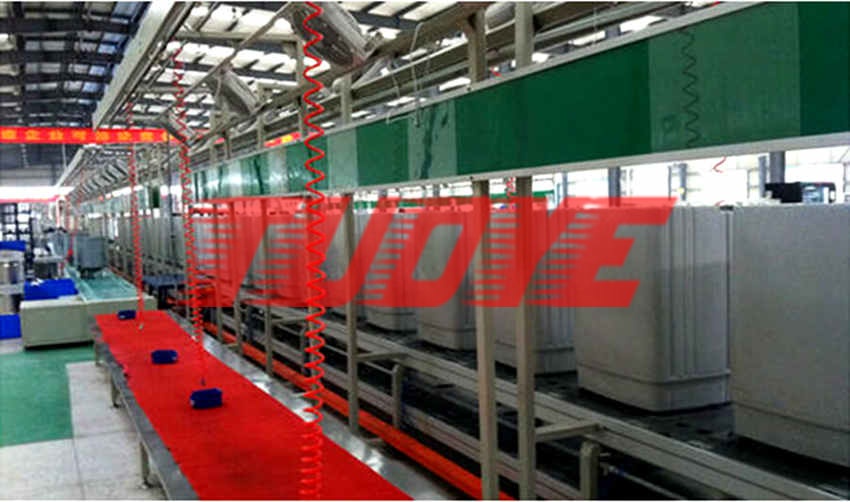
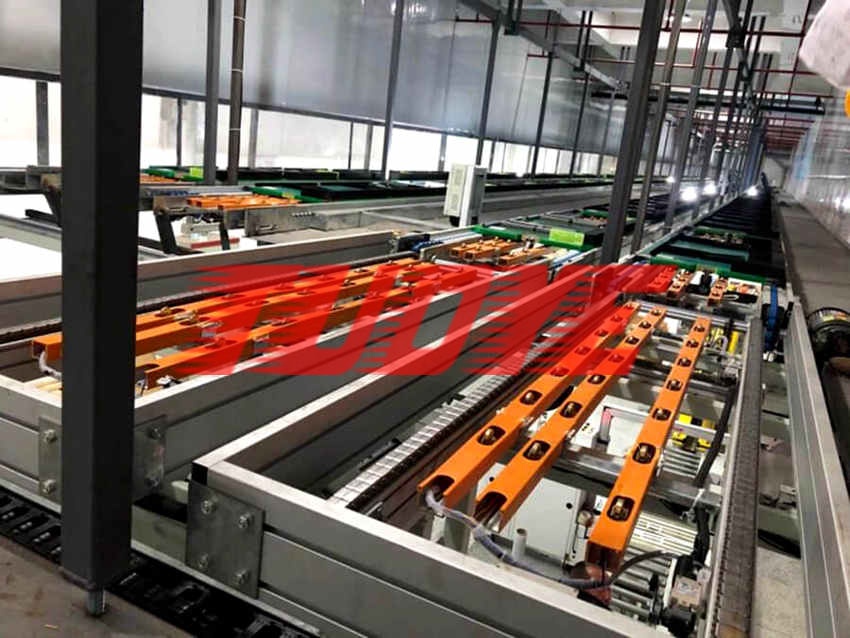
In a delivered project, the LED display assembly line uses a two-tier speedchain: the lower tier assembles, multi-slot pallets carrying modules along aluminum track with operators on both sides; the upper tier returns empty pallets and material, halving the footprint. Stoppers at the stations park the pallets precisely; ESD pallets, wrist straps and grounding chains are standard line-wide, with black drag chains carrying power and signals. Some sections add off-line benches — tight-beat work completes on the bench and returns to the line, feeding the light-on and burn-in sections beyond.
3. Configuration & Selection Tips
Configuration of an LED display production line turns on linking three sections: assembly pallets locate by module-size cutouts; burn-in docking positions are designed to rack spec and batch scale, with the burn-in room door facing the line end so in-and-out flows never cross; calibration stations control ambient light, keeping stray sources out of the pixel data. Options include MES scan-at-station, batch boards, station lighting and ionizer fans. ESD protection is standard everywhere — beads wounded by static reveal their blemishes only at full-screen light-on, and the loss runs far beyond one module.
4. Delivery & Service
From screen type and module specs, daily program and workshop conditions, Tuoye — in Wenling, Taizhou, Zhejiang, China — issues the LED display assembly line proposal with layout drawing, equipment list and quotation. Equipment enters after in-plant pre-assembly and trial runs, commissions through trial production with operators and maintenance trained. One-year machine warranty, pallets, stoppers and chain parts supplied long-term, plus burn-in expansion and calibration-station retrofits on existing lines.
Permanent link: https://www.liushuixian.com/post/led-display-assembly-line-batch-management-linking-module-assembly-burn-in-and-calibration.html
Disclaimer: Some articles on this site are compiled from public technical sources for reference. If any content infringes your rights, please contact us for removal. Please credit the source when reprinting.