From Overhead Conveying to Chassis Marriage: New Process Trends on the EV Assembly Line
1. Product & Industry Overview
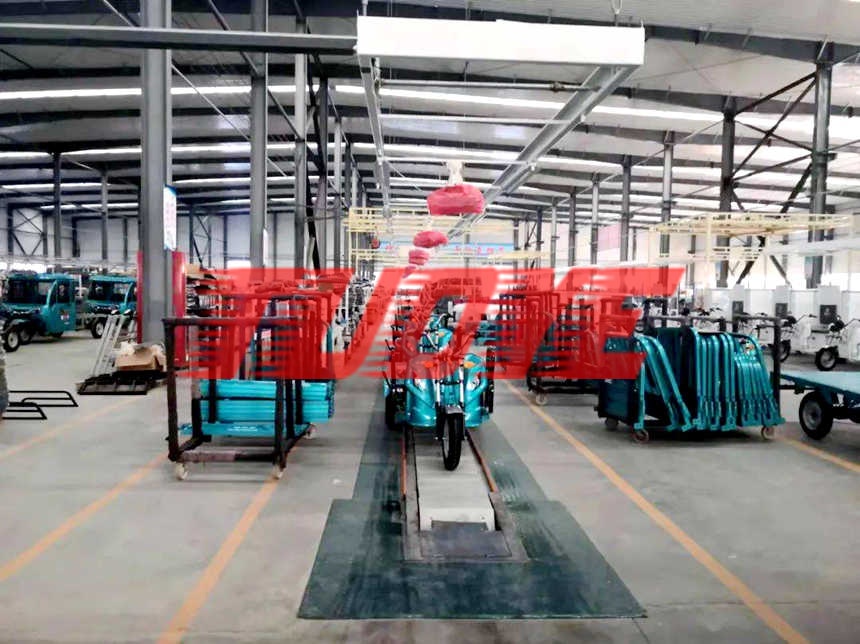
An EV assembly line — also called an EV production line or NEV assembly line — covers body conveying and assembly organization across welding, paint and final assembly. The overhead conveyor lines built by Tuoye in Wenling, Taizhou, Zhejiang, China hang bodies from the plant's upper steelwork, leaving the floor entirely to assembly work and logistics — a common choice for three-dimensional EV plant layouts.
Industry-wise, EV manufacturing keeps the four big processes — stamping, welding, painting, final assembly — but the powertrain change reshapes final assembly: battery packs and e-drive systems replace engine and gearbox, and integral chassis marriage becomes mainstream — front suspension, battery and rear suspension marry the body simultaneously in one fixture set. The body-in-white travels from welding through paint to final assembly on overhead chains or AGVs, and the painted body re-enters the trim line overhead. Overhead chains shine through paint pretreatment, ovens and body transfer, while doubling as body buffer and beat smoothing.
2. Process Flow & Line Configuration (as shown)
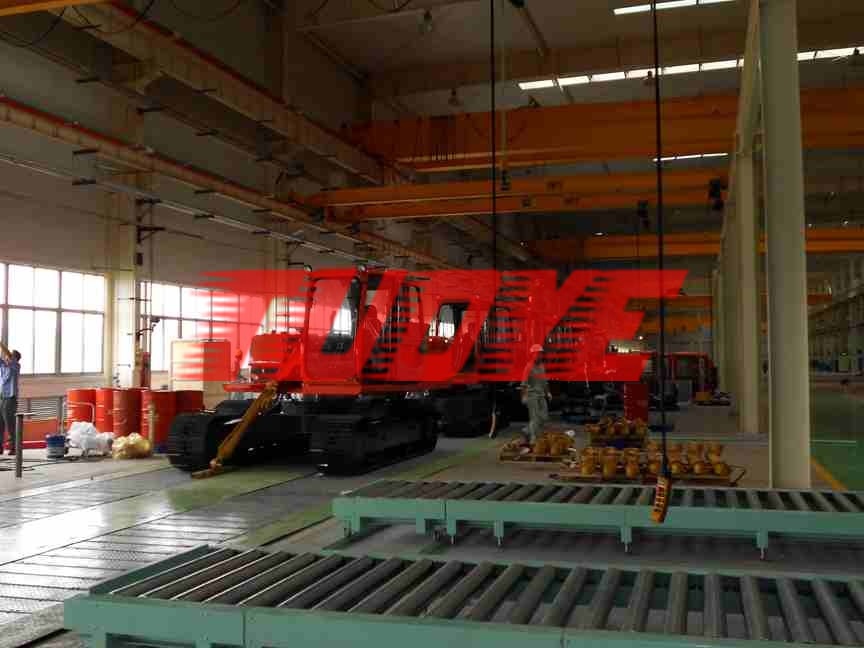
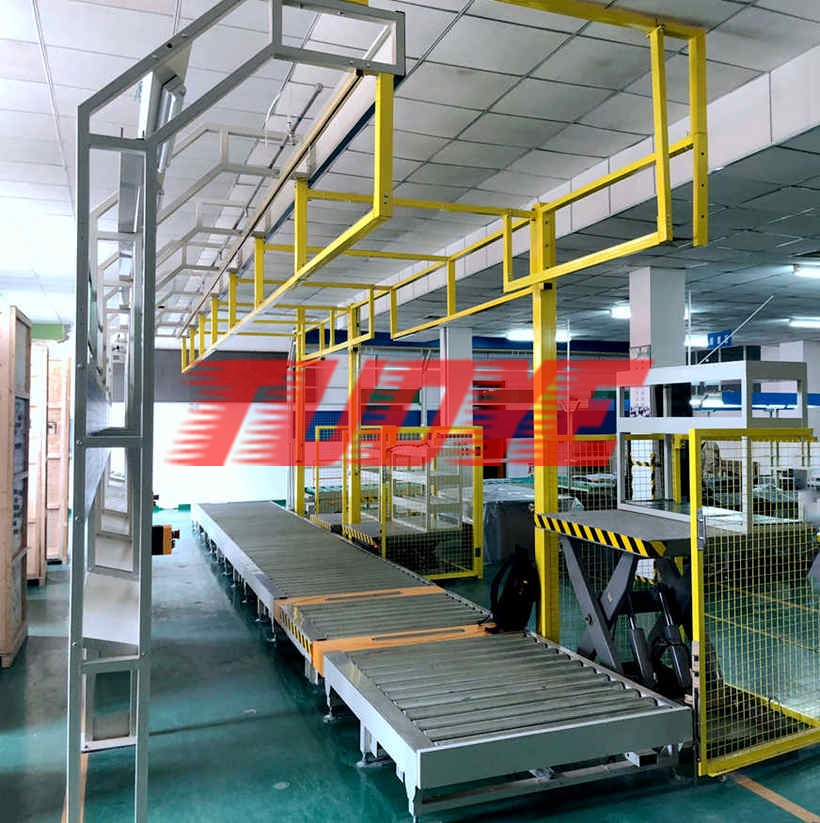
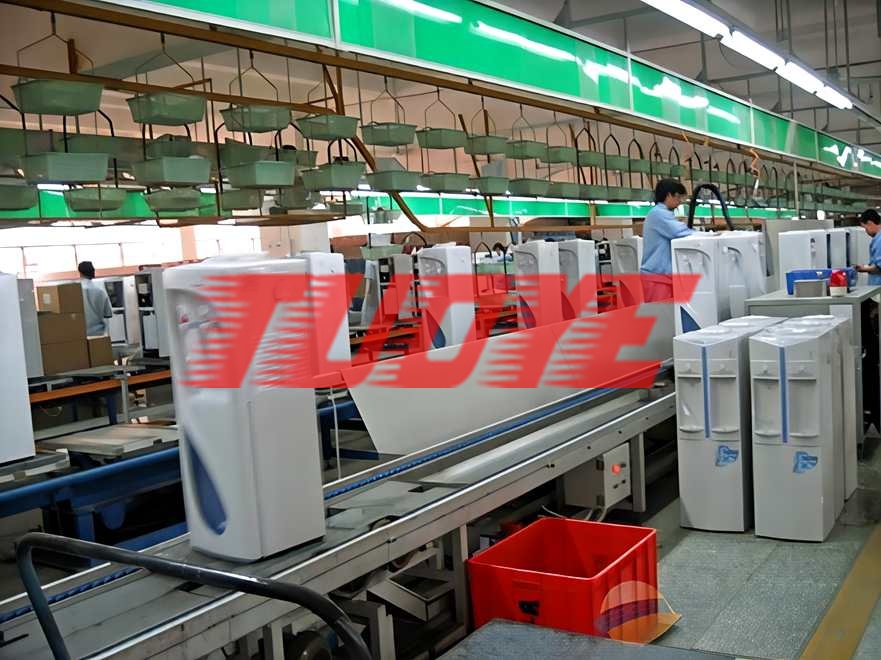
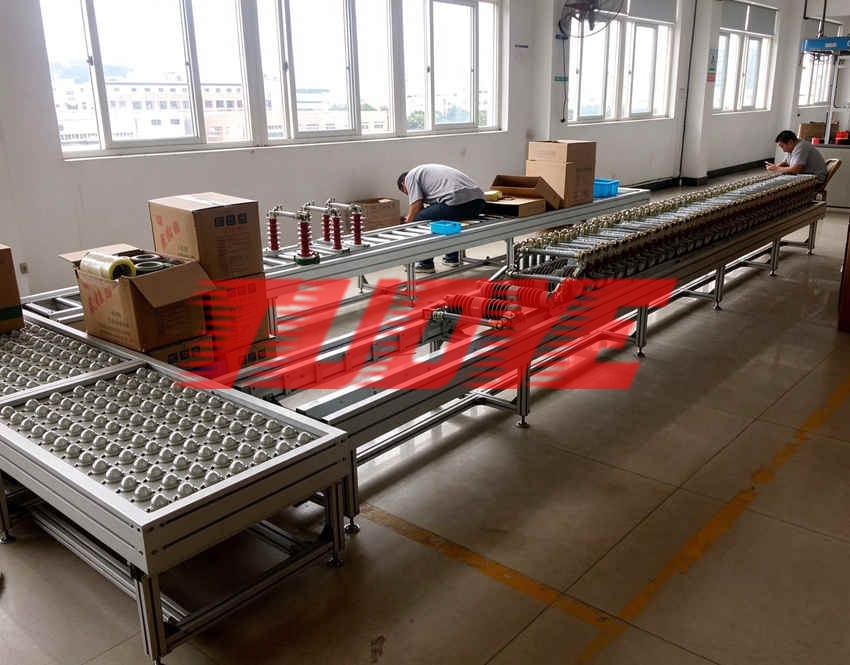
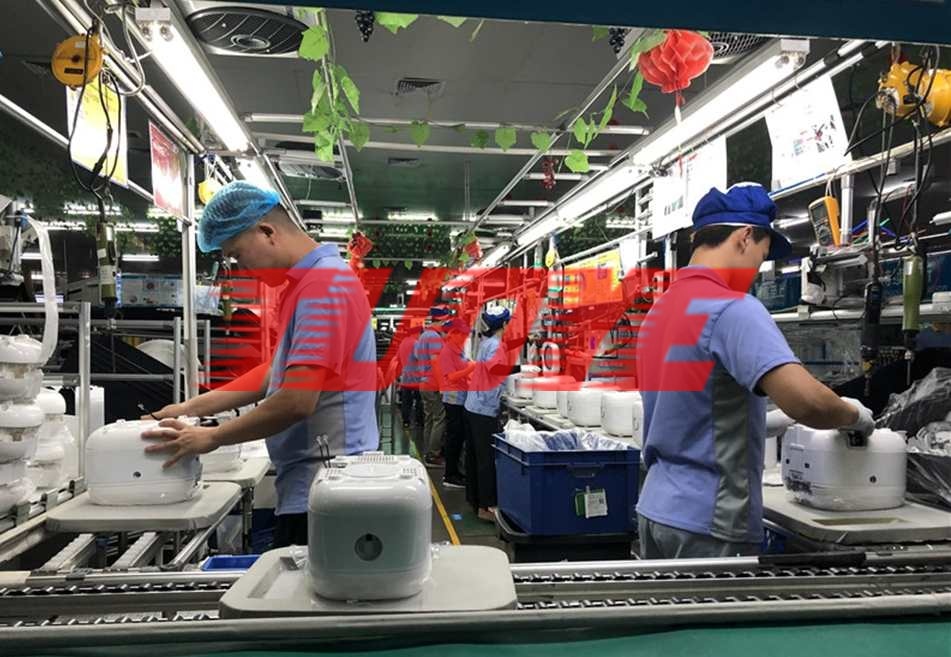
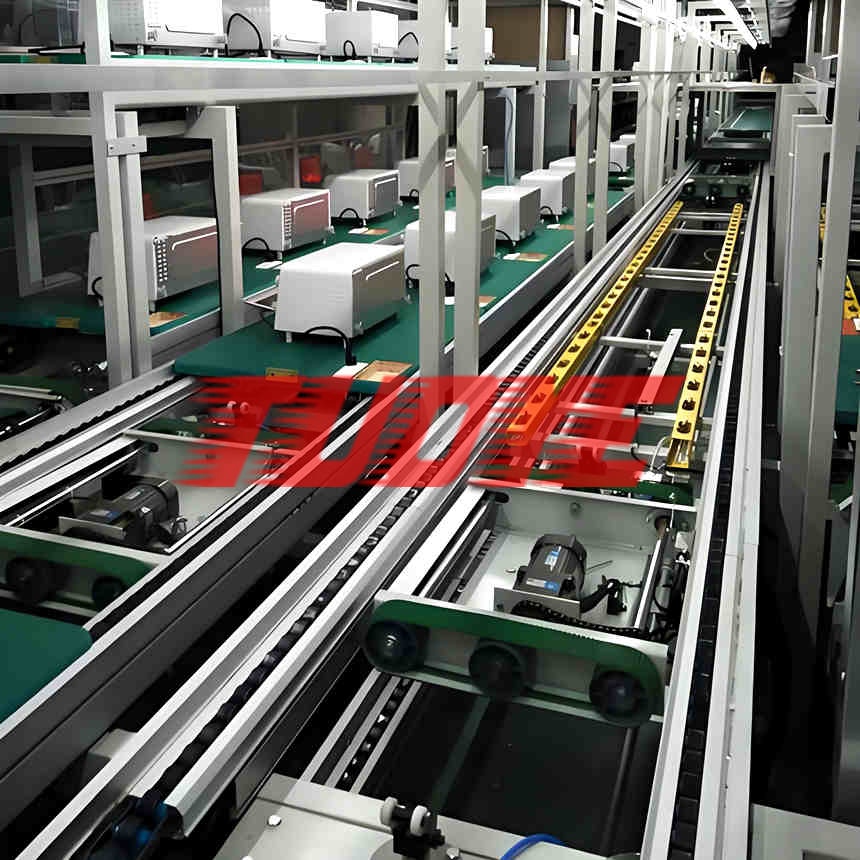
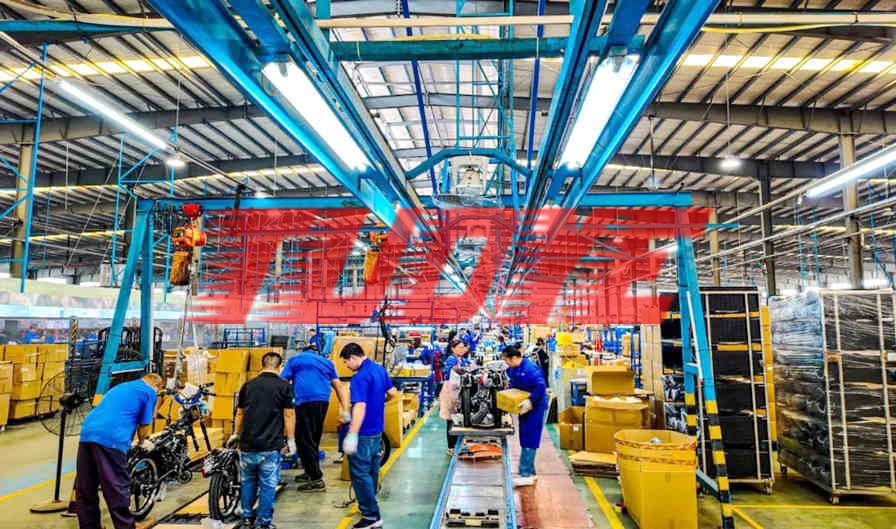
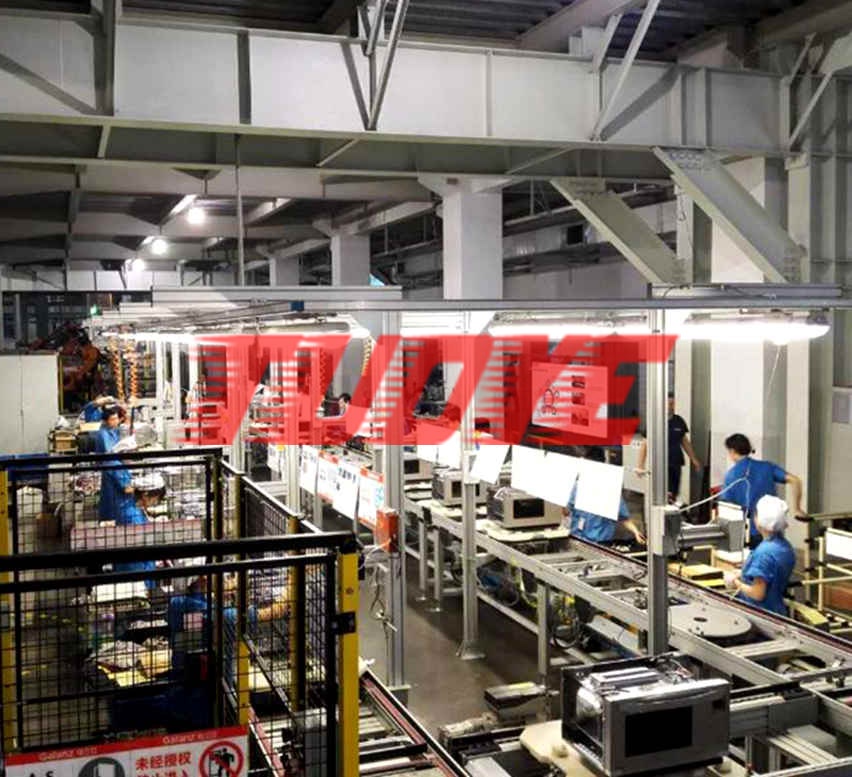
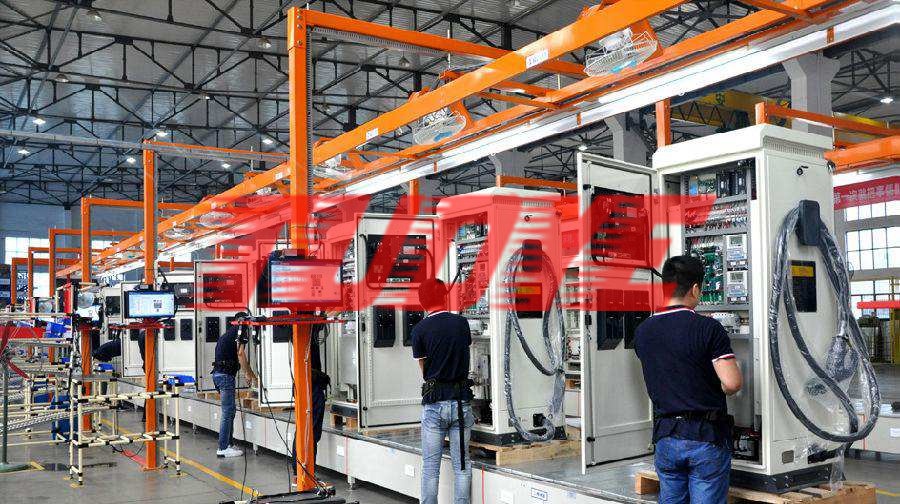
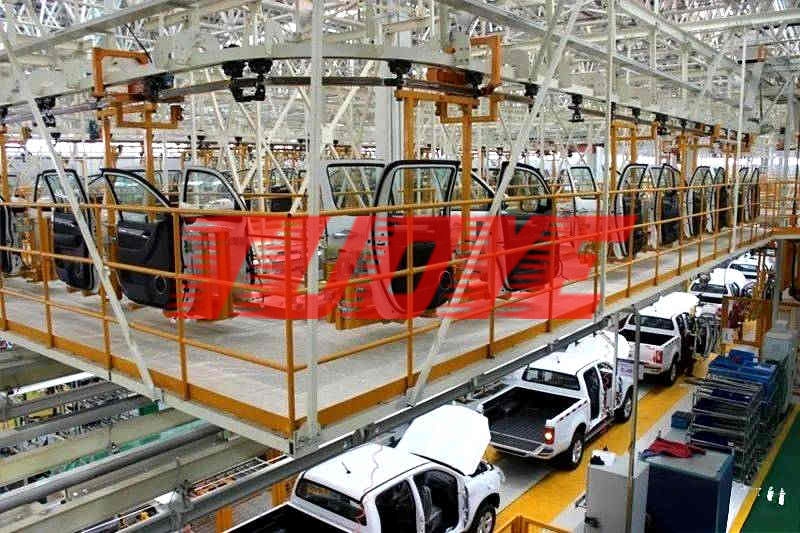
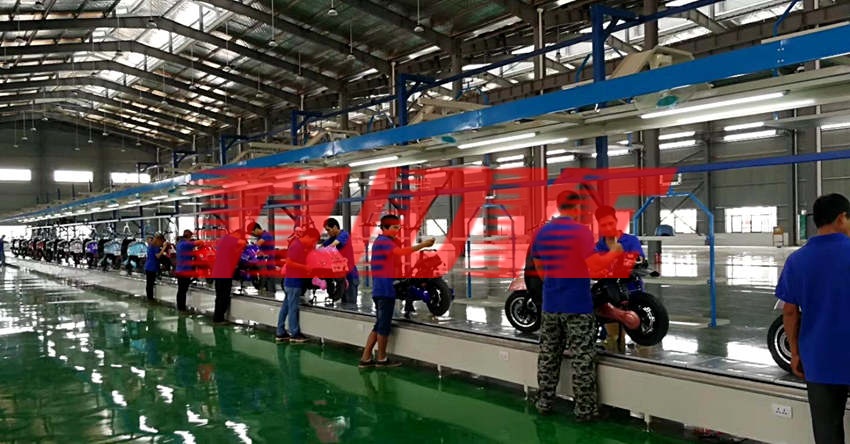
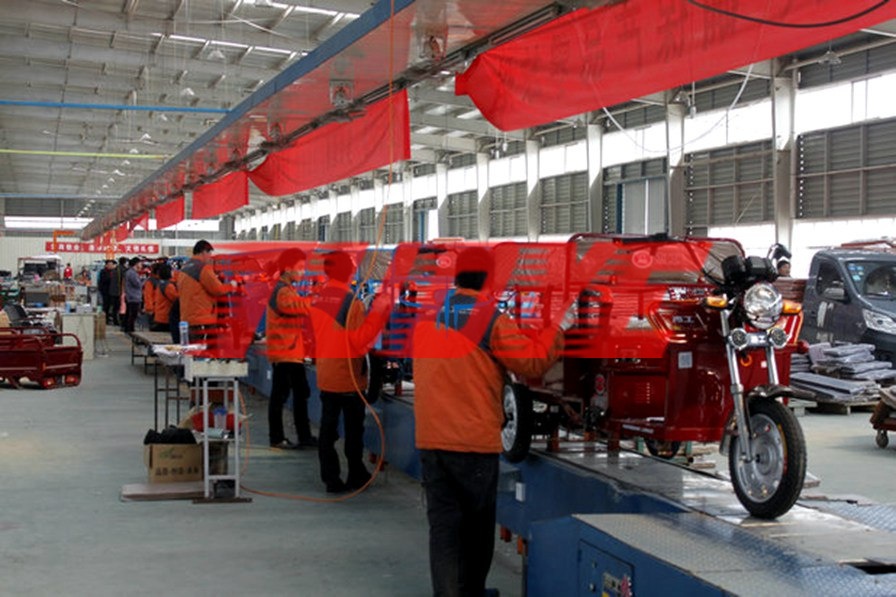
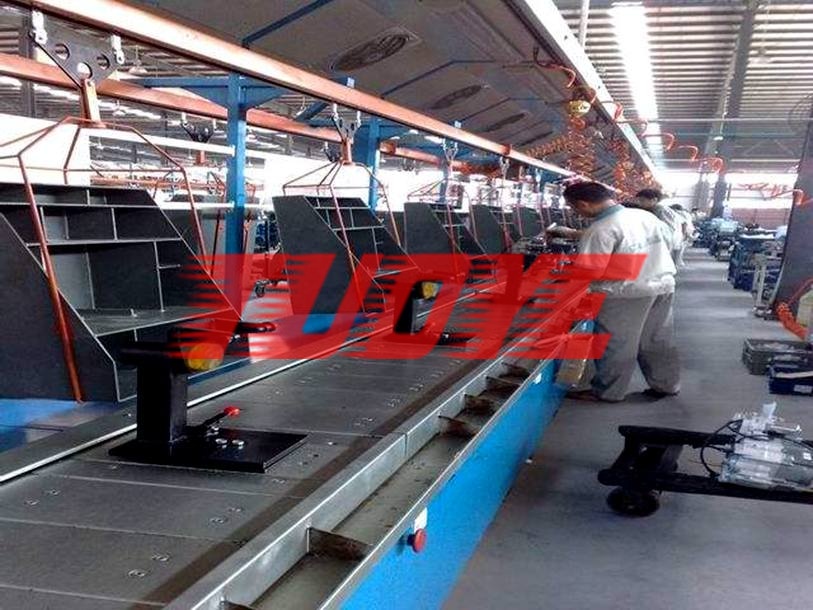
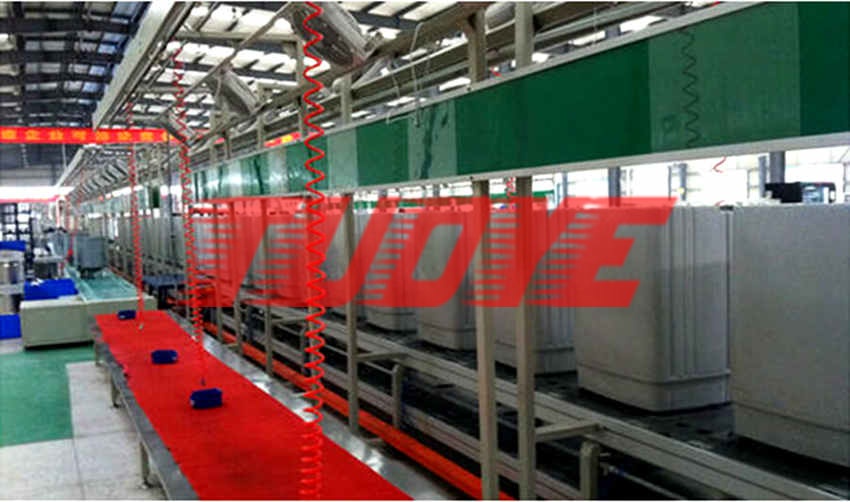
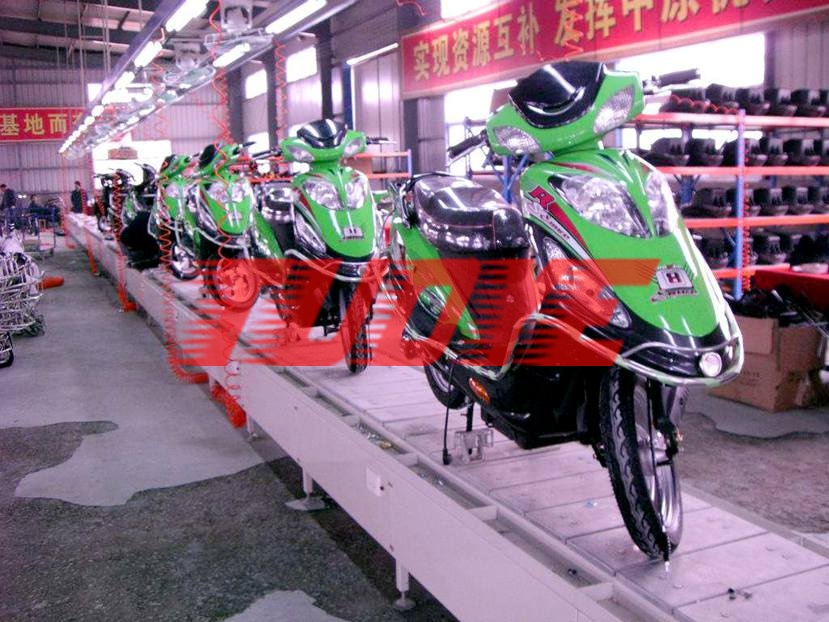
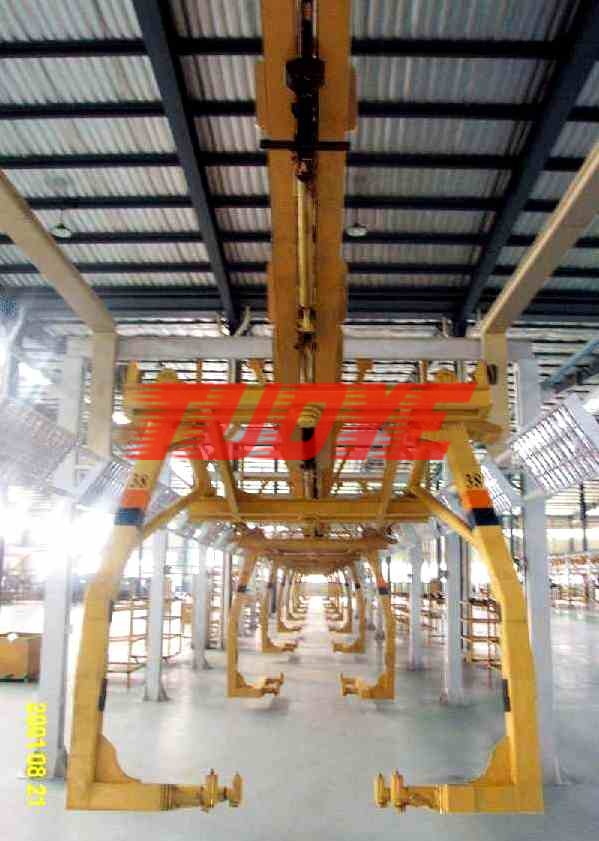
As shown (two sections of one EV production line), this case runs a yellow overhead conveyor: track laid along the roof steelwork, rows of sedan-frame carriers with conductor rail and collectors holding the line live, bodies flowing straight through in suspension with work faces on both sides; columns and steelwork support the track, lighting frames along the sides; the second section shows twin lines laid symmetrically about a central lane, yellow lift/turntable platforms bridging body on-off line, and red cabinets governing start-stop and beat. Typical flow: BIW onto carrier → overhead conveying to paint/final stations → trim assembly (harness, instruments, headliner) → chassis marriage (battery pack, front and rear suspensions to body) → body off line to floor-based final assembly → wheels, seats, doors → test line and water test → road test and off-line.
3. Customization Options
The EV assembly line is a non-standard turnkey project: track routing, lift sections and turntables laid out to workshop and process; carriers built to platform locating points with quick-change support; conductor-rail power and collectors sized to live-work needs; combinable with floor plate chain, EMS trolleys and AGV into hybrid conveying. From your platform, JPH capacity and workshop conditions, Tuoye issues the complete conveying proposal and quotation for an EV assembly production line.
4. Delivery & Service
Turnkey delivery: early alignment on platform, beat and plant steelwork conditions, with track routing, hoist-point loads and conductor-rail capacity calculated, then the general drawing and section lists; equipment ships after in-plant pre-assembly and trial runs, and after on-site track installation and load testing is accepted with trial body production, crews trained. One-year machine warranty, long-term supply of carriers, collectors, chain and drive spares, plus beat upgrades, model-change carrier retrofits and floor-line linkage upgrades. Planning a new overhead conveying system for an EV production line or a complete NEV assembly line — or upgrading an existing paint-shop overhead chain for speed and intelligence — Tuoye joins the layout planning early and delivers the complete EV assembly production line proposal and quotation. Welcome to the table.
Permanent link: https://www.liushuixian.com/post/from-overhead-conveying-to-chassis-marriage-new-process-trends-on-the-ev-assembly-line.html
Disclaimer: Some articles on this site are compiled from public technical sources for reference. If any content infringes your rights, please contact us for removal. Please credit the source when reprinting.