Header Marriage and Trial-Run Section on a Combine Harvester Assembly Line
1. Industry Overview
Combine harvester deliveries bunch hard before wheat and autumn harvest, and line construction paces backwards from the season. A combine harvester assembly line — the trade also says harvester production line — completes the marriage from frame and chassis through whole-machine trial runs. By crop and running gear: wheel-type wheat harvesters, tracked rice harvesters and corn harvesters; performance follows GB/T 8097 for combine test procedures and evaluation, with corn harvesting machinery under its own GB/T 21962.
2. Process Flow & Line Configuration
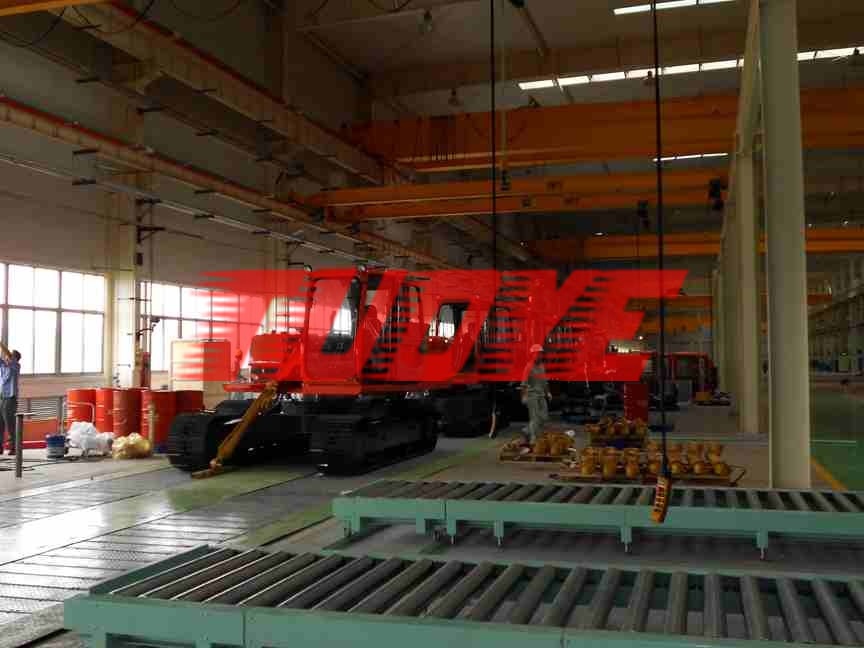
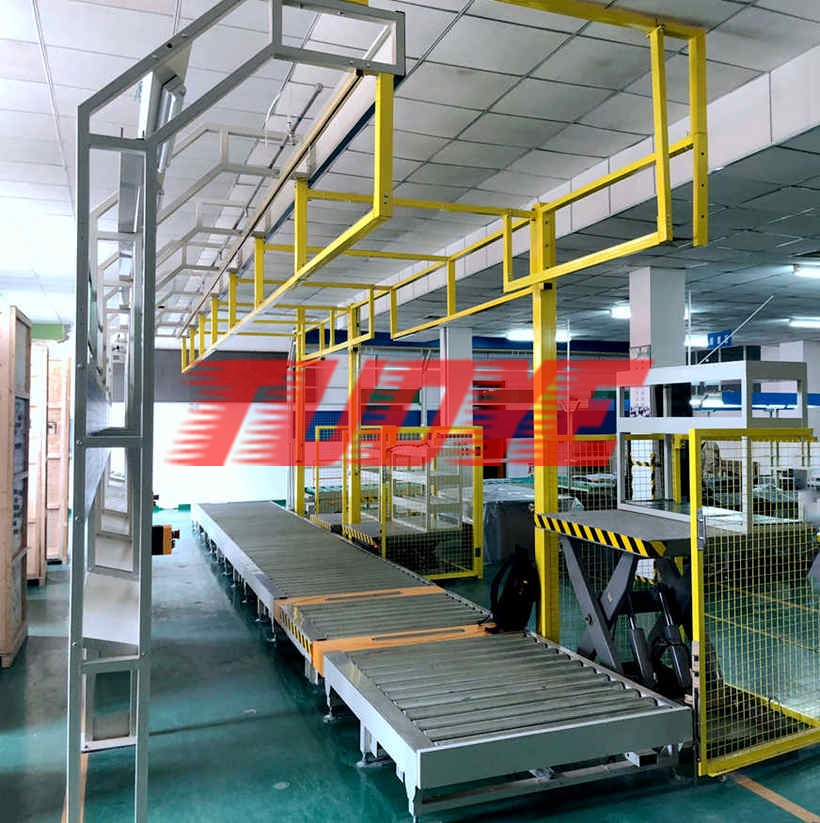
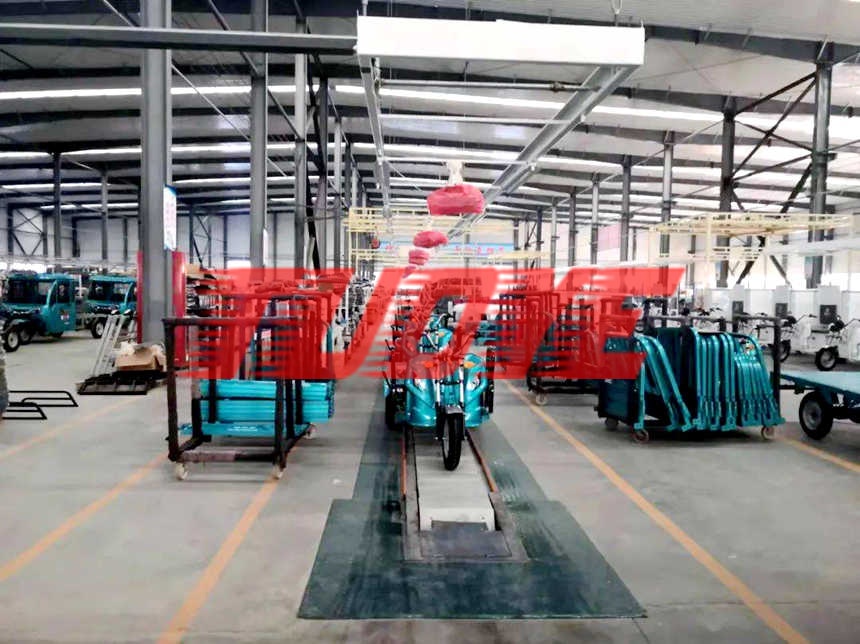
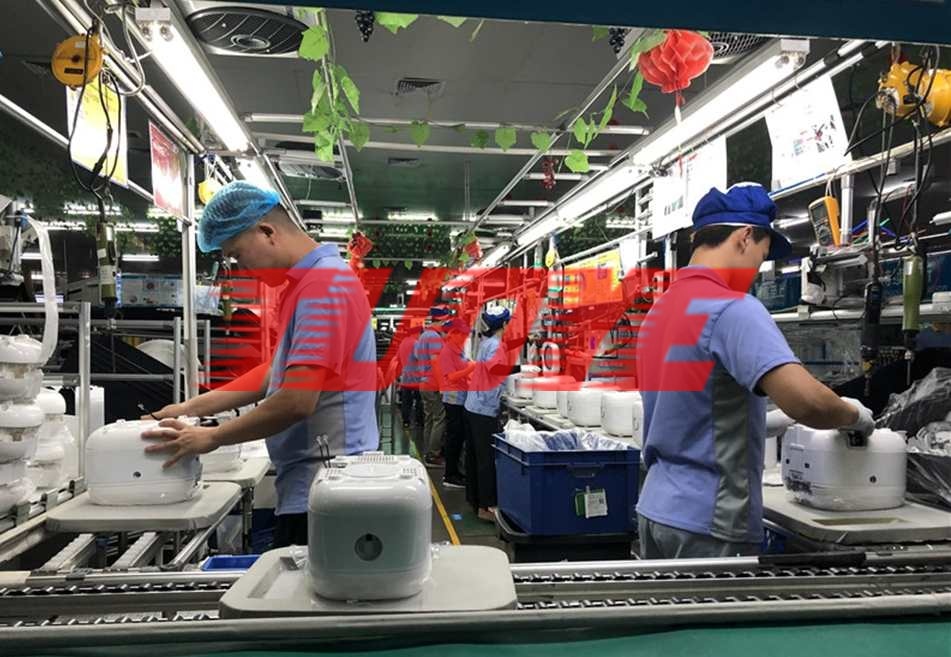
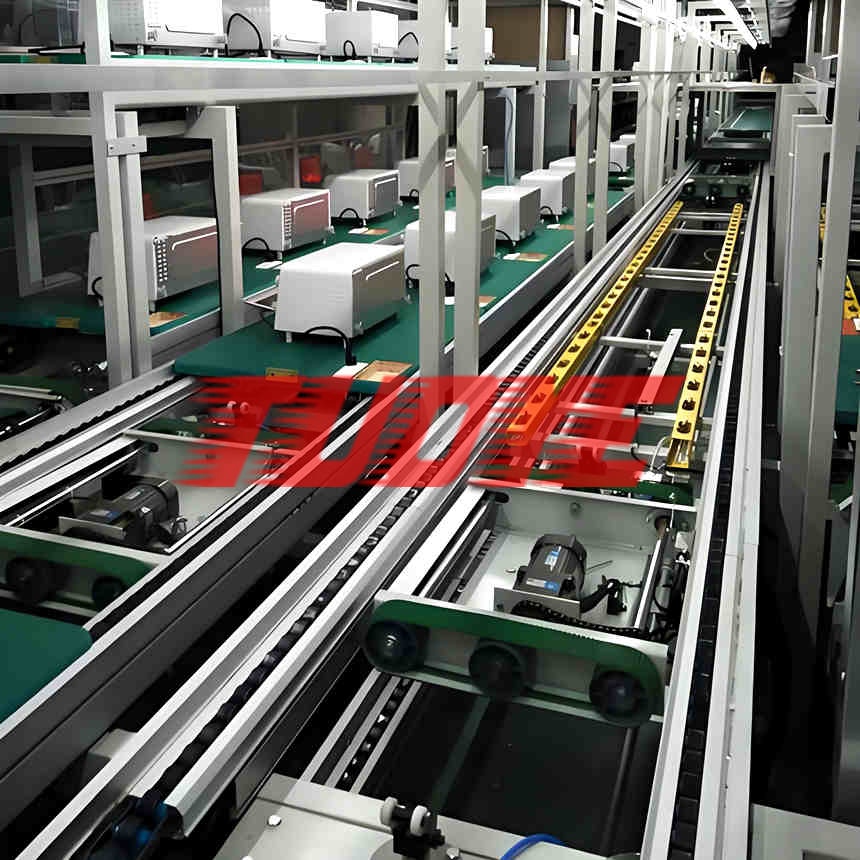
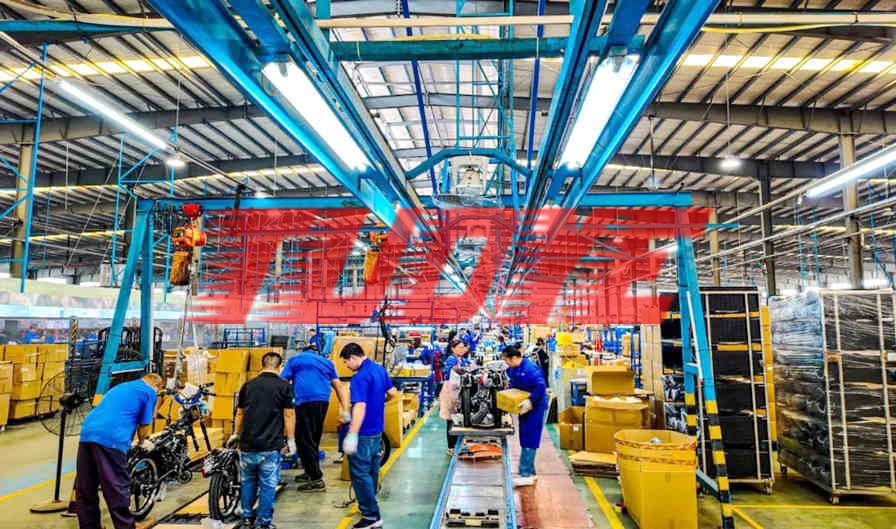
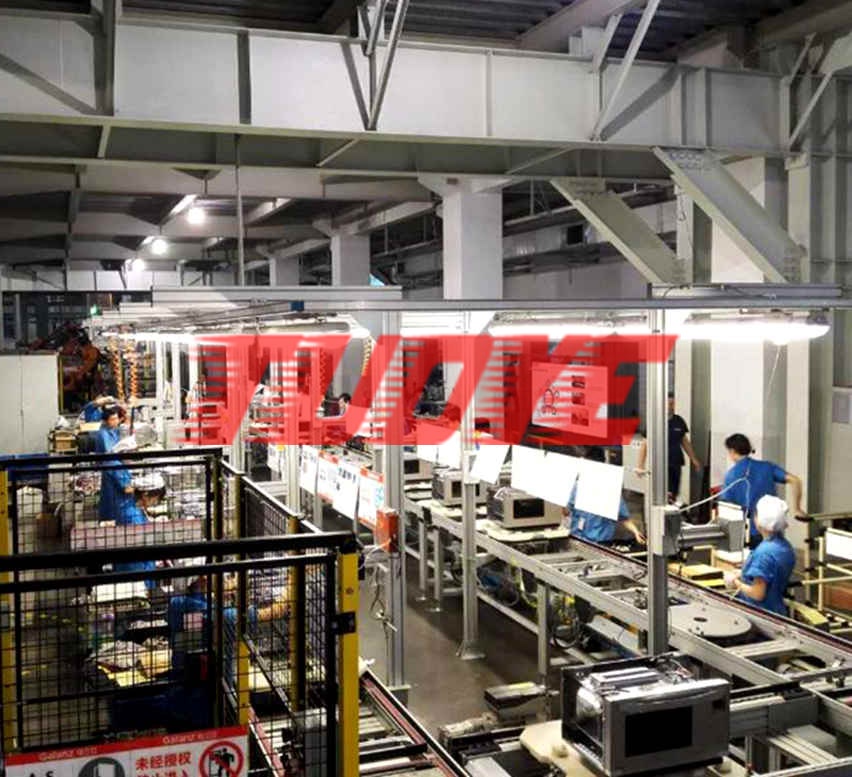
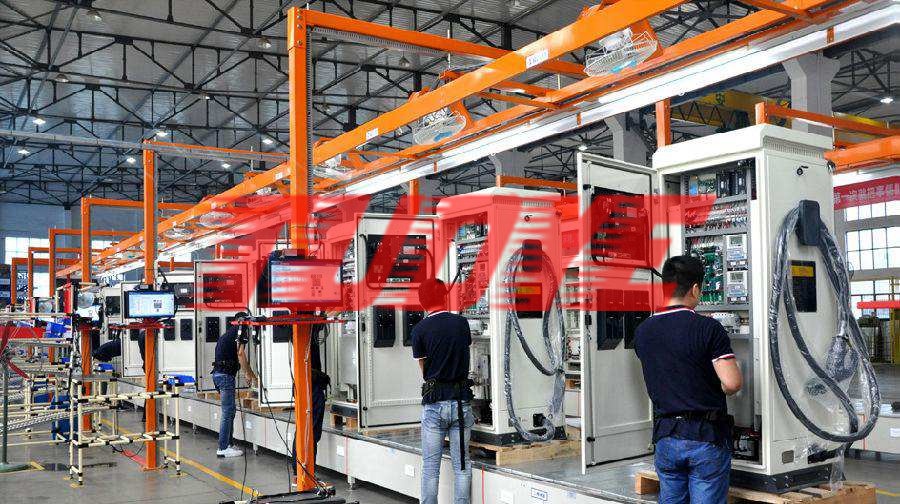
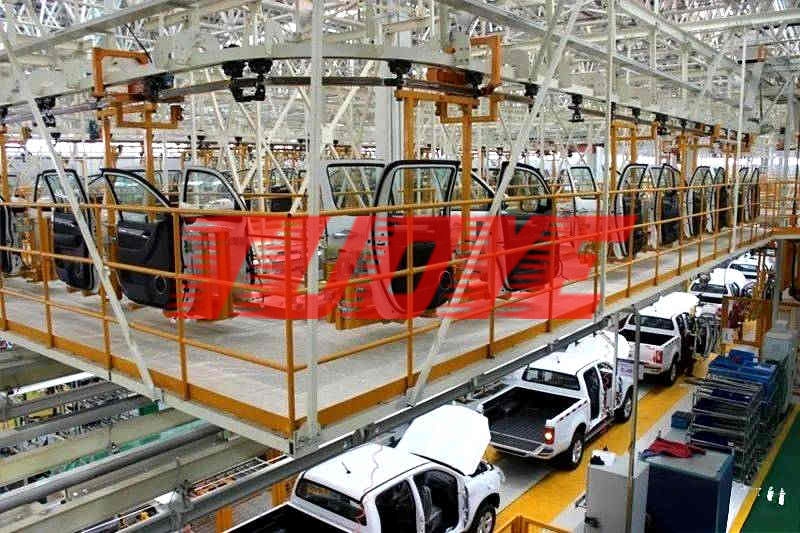
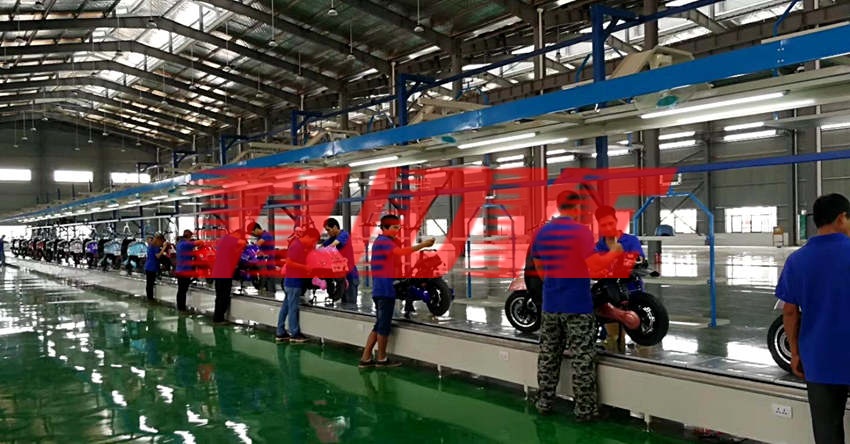
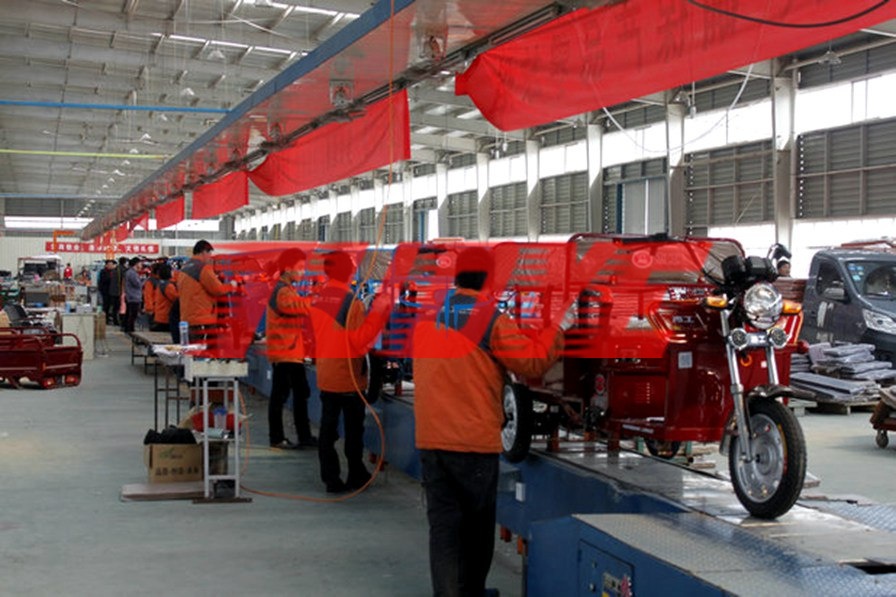
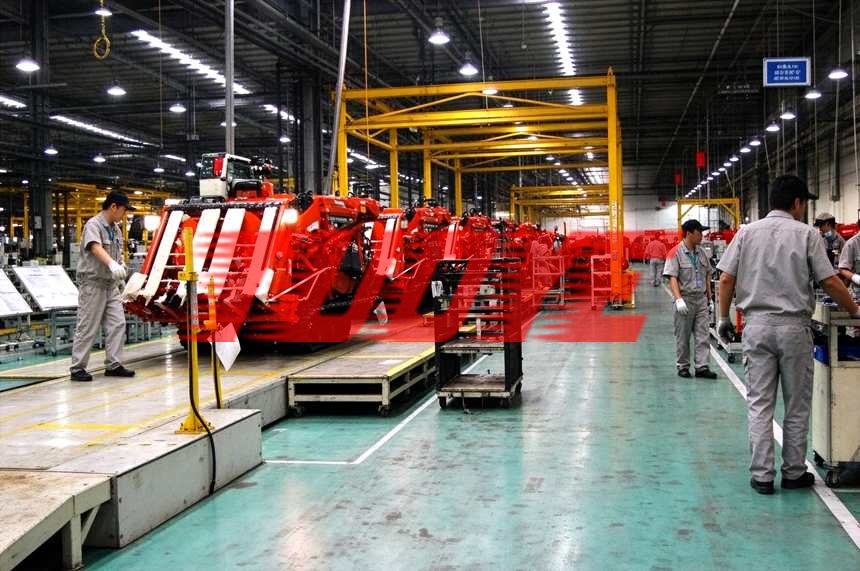
The typical combine marriage flow: frame and tracked chassis on line → engine seated → drive system → threshing cylinder and concave assembly → cleaning sieve and augers → cab mating → hydraulics → header marriage and docking → electrics and controls → whole-machine idle trial run → appearance check and storage. In a delivered project, the harvester production line runs a raised bench-style conveying line, steel deck with yellow-black edging carrying the heavy machine parts; a yellow gantry spans the line for fixed-point lifts of headers and cabs, 8-15 stations blocked by assembly.
3. Configuration & Selection Tips
Headers and unloading augers run over-length: their logistics lane runs alone along the shop edge, never crossing the on-line hoisting. The trial-run section organizes in two steps — low speed for leaks and rattles, working speed for drive balance — with station counts checked against the model range and season peak, and bench loading rated to the tracked machines' 5-8 t weight. Balanced assembly of the threshing cylinder and drive alignment of the cleaning mechanism are the line's key control points, fitted with dedicated gauges.
4. Delivery & Service
From model range and peak-season daily capacity, Tuoye — in Wenling, Taizhou, Zhejiang, China — issues the combine harvester assembly line proposal, scheduling delivery backwards from the farming calendar; equipment enters after in-plant pre-assembly and commissions through trial production. One-year machine warranty, benches, hoists and hydraulic parts supplied long-term, plus emergency pre-season expansions on existing lines.
Permanent link: https://www.liushuixian.com/post/header-marriage-and-trial-run-section-on-a-combine-harvester-assembly-line.html
Disclaimer: Some articles on this site are compiled from public technical sources for reference. If any content infringes your rights, please contact us for removal. Please credit the source when reprinting.