How Diaphragm Gas Meters Are Verified Before Ex-Factory: Test Station Planning on a Gas Meter Assembly Line
1. Product & Industry Overview
A gas meter assembly line — also called a gas meter production line or diaphragm gas meter assembly line — is the core equipment of gas metering manufacturers, running mechanism, valve seat, counter and case assembly plus ex-factory verification. The lines built by Tuoye in Wenling, Taizhou, Zhejiang, China handle both diaphragm meters and smart meters with remote modules.
Industry-wise, household gas meters are dominated by the diaphragm type: gas drives the diaphragm back and forth, a slide-valve mechanism turns the reciprocation into the charge-discharge cycle of the measuring chambers, and gear trains accumulate the count. National standards set the maximum working pressure, maximum flow and ambient range, and every meter passes verification per the regulation — appearance, seal integrity, pressure loss and indication error — usually on bell provers or master-meter benches; smart meters add remote-function testing. With metal mechanisms, rubber diaphragms and engineering plastics, assembly precision writes directly into metering error and pressure loss, so the gas meter production line organizes around "mechanism assembly — final assembly — seal testing — verification".
2. Process Flow & Line Configuration (as shown)
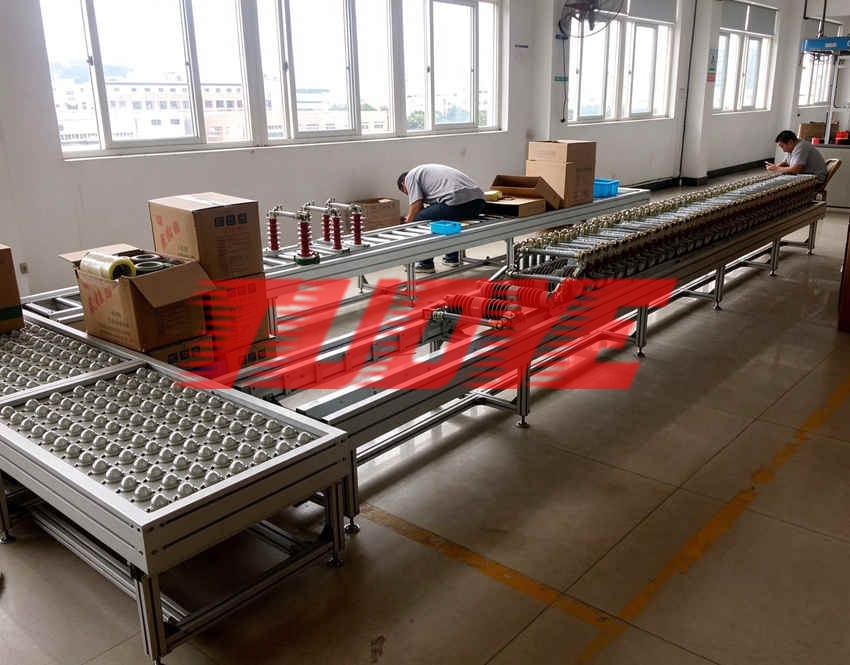
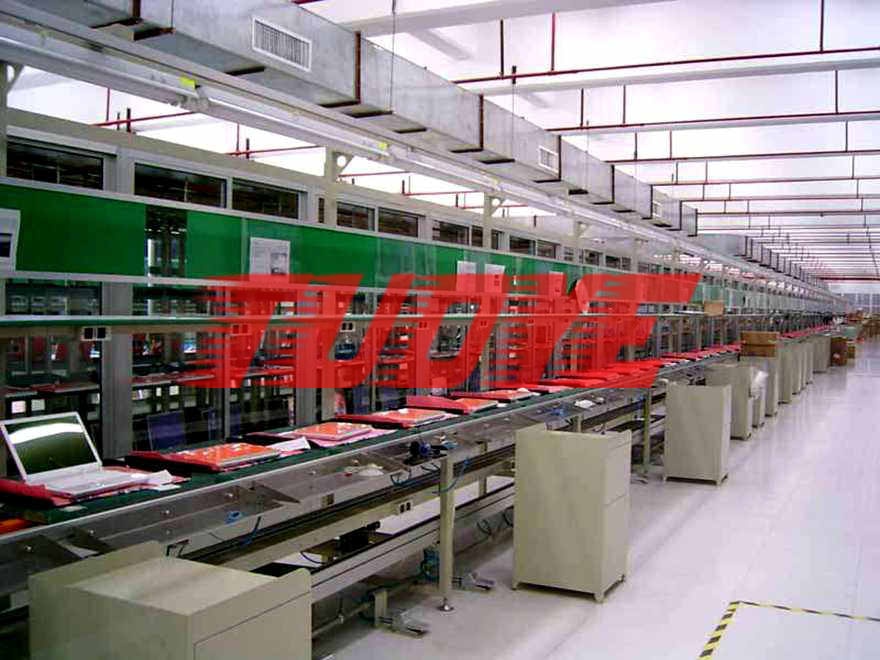
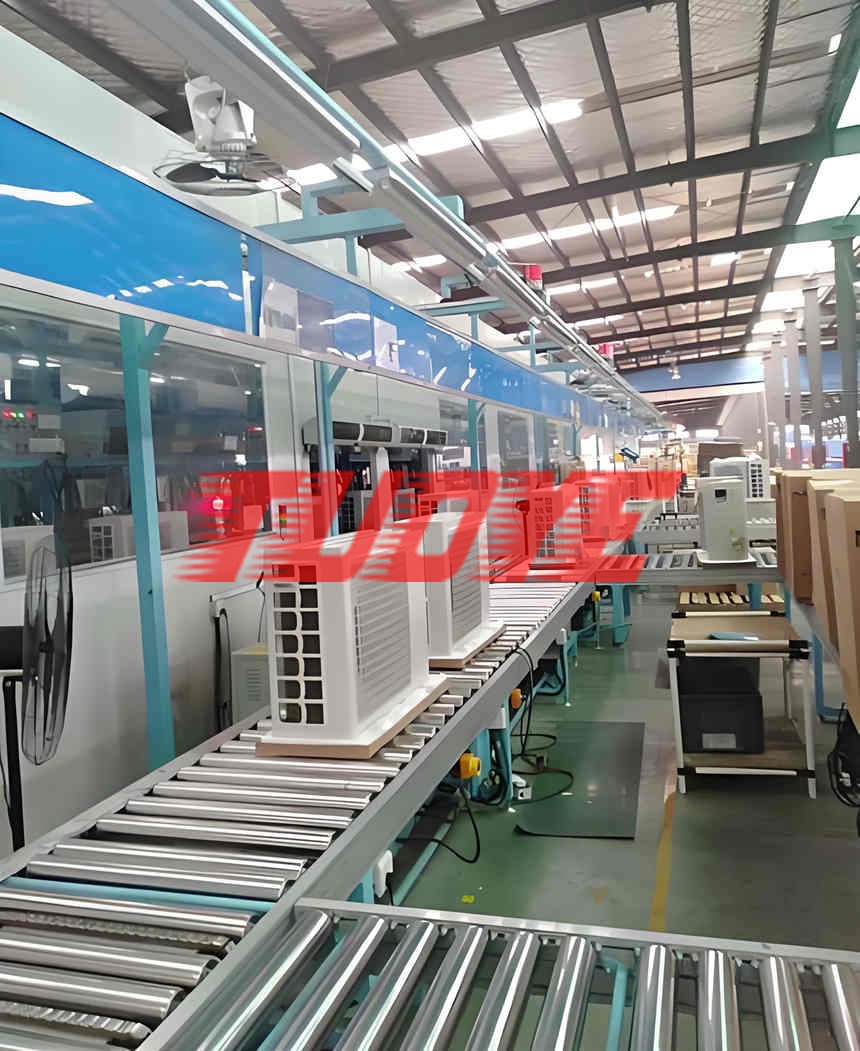
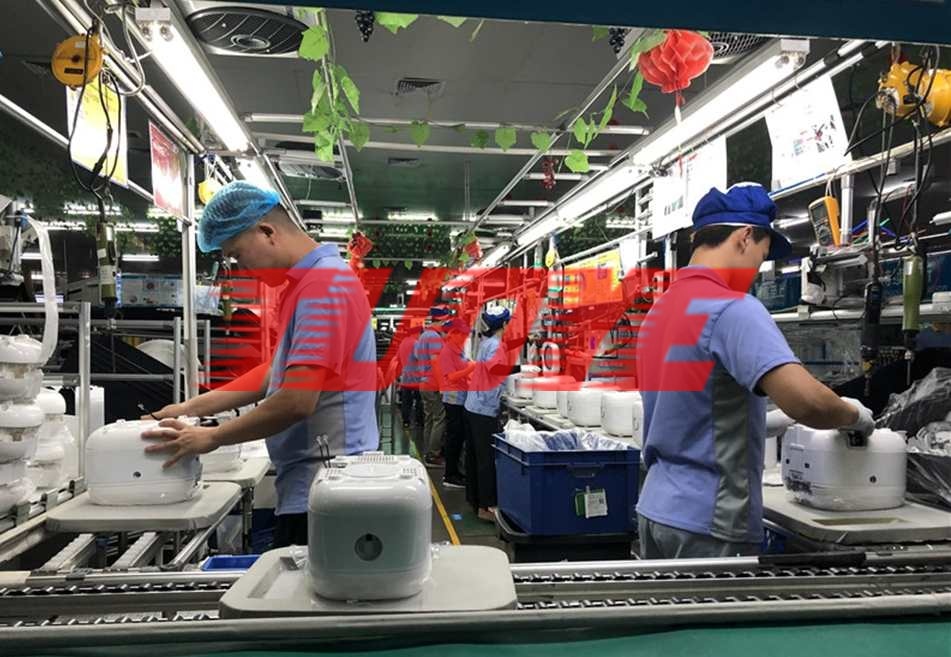
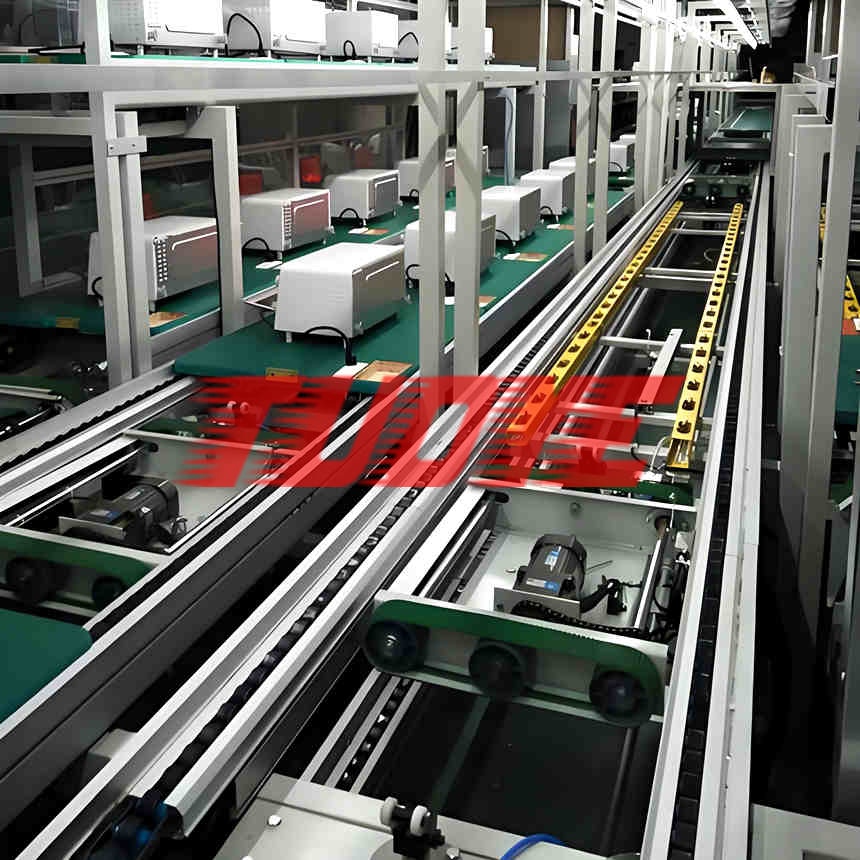
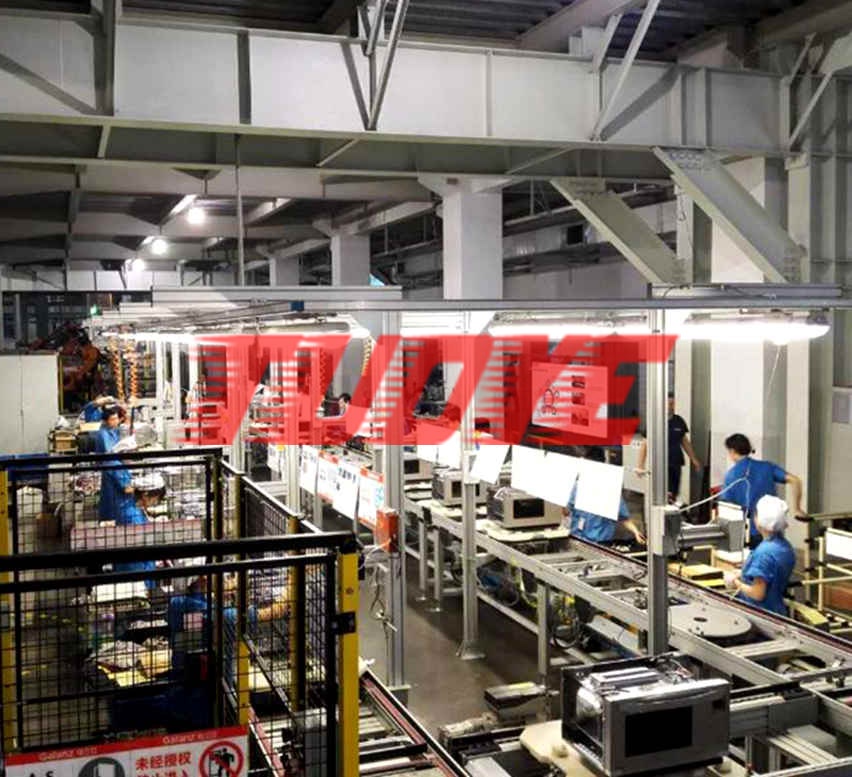
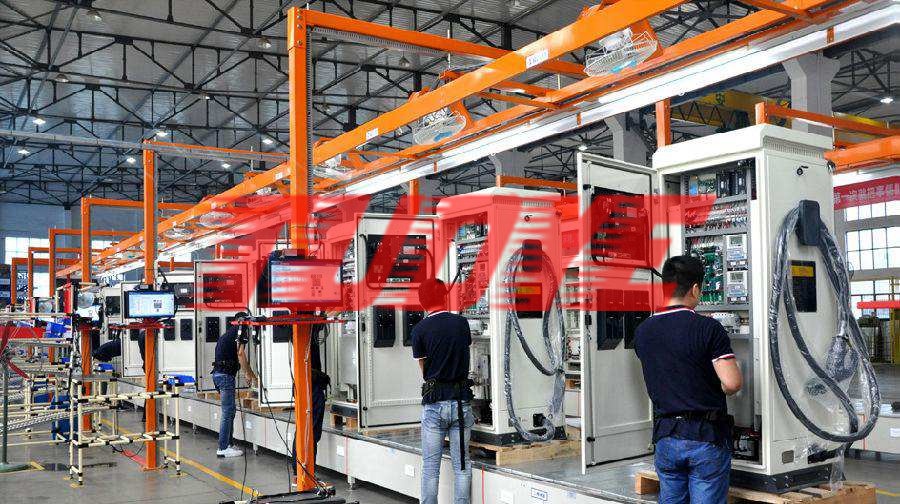
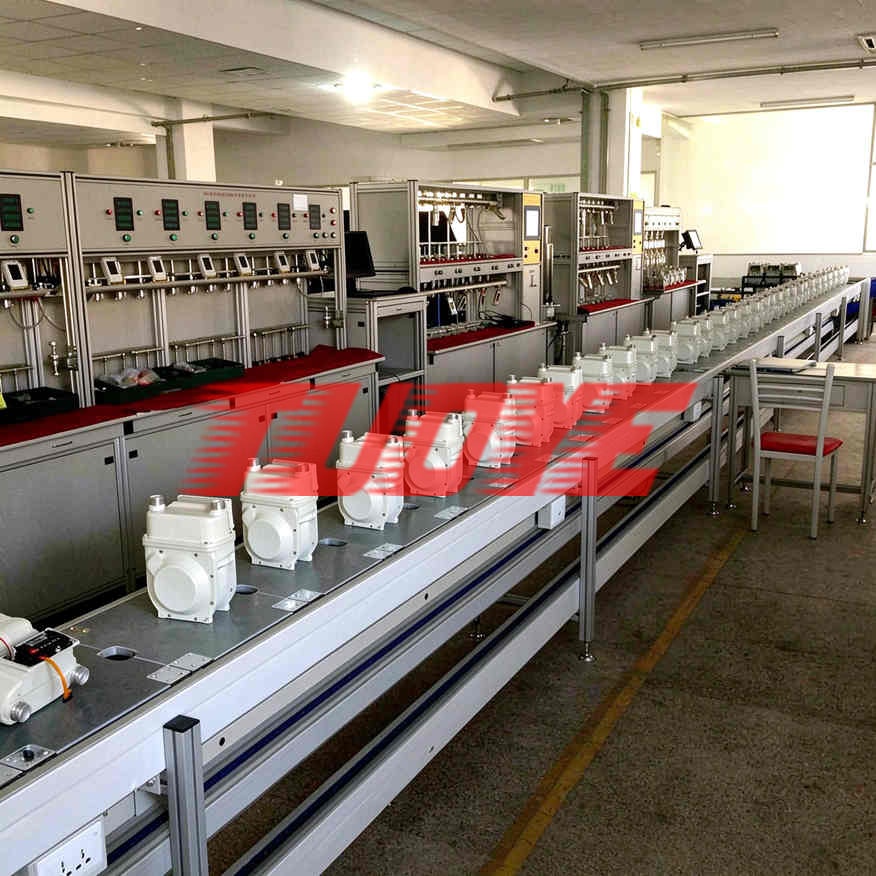
As shown, this case gas meter assembly line is an aluminum-extrusion speedchain: white pallets carry diaphragm meters down the straight center line of roughly 15-20 stations; on the right, a long strip of calibration stations with meter clamps and piping checks finished meters for seal and error; on the left, control cabinets with digital displays and pushbutton lamps showing every station's state; the line tail holds the inspection zone where passed meters are marked for storage. The typical assembly sequence: mechanism on line (diaphragm, valve seat) → slide-valve mechanism → counter and gear train → case closing and screwing → seal test (air-pressure leak check) → pressure loss test → indication error verification (bell prover or master-meter comparison) → remote module assembly and function test (smart meters) → lead sealing → packing and storage.
3. Customization Options
The gas meter assembly line is non-standard custom equipment: length and station count calculated to the capacity program; seal, pressure-loss and error-verification stations engineered jointly with prover suppliers, with verification data auto-recorded and uploaded; scan traceability, reject-discharge mechanisms and assembly poka-yoke available. From your meter specs, capacity and workshop conditions, Tuoye issues the complete layout, equipment list and quotation for a gas meter assembly production line, with later smart upgrades supported.
4. Delivery & Service
Project-based delivery: engineers verify meter specs (G1.6 through G6 diaphragm, smart remote) and capacity, plan mechanism, final assembly, seal and verification stations, and issue layout and equipment list; equipment ships after in-plant pre-assembly and trial runs, is installed and commissioned on site and accepted in trial production on your meters, with training included. One-year machine warranty, long-term supply of pallets, meter clamps and speedchain parts, plus verification-station expansion, twin-line conversions and data-system upgrades. Building a new diaphragm gas meter production line or smart meter assembly-and-test line — or integrating automatic verification, scan traceability and reject sorting into an existing gas meter production line — Tuoye measures on site, quotes to the facts, and welcomes inquiries on proposals and lead times.
Permanent link: https://www.liushuixian.com/post/how-diaphragm-gas-meters-are-verified-before-ex-factory-test-station-planning-on-a-gas-meter-assembly-line.html
Disclaimer: Some articles on this site are compiled from public technical sources for reference. If any content infringes your rights, please contact us for removal. Please credit the source when reprinting.