From Copper Busbar Fabrication to Factory Testing: Electrical Assembly on a Switchgear Assembly Line
1. Product & Industry Overview
A switchgear assembly line — also called a switchgear production line or distribution cabinet assembly line — is the core equipment of low-voltage switchgear manufacturers, running the flow from cabinet on-line through primary and secondary circuit assembly to factory inspection. The lines built by Tuoye in Wenling, Taizhou, Zhejiang, China cover the common types: GGD fixed cabinets and GCS/MNS withdrawable cabinets.
Industry-wise, LV switchgear splits into fixed and withdrawable: GGD fixed cabinets assemble frames from 8 MF cold-formed steel with local welding, components hard-mounted; GCS and MNS load breakers and other units into drawers for interchangeable maintenance. The heart of switchgear production is electrical assembly: copper busbars go through cutting, bending, punching, embossing and tinning, with joint faces holding down contact resistance and temperature rise through embossing, bolted clamping and conductive paste; primary components (breakers, switch-disconnectors, transformers) and secondary components (meters, relays, terminal strips) install and wire to drawing, closing with phase-sequence, clearance, insulation and power-on checks. With heavy cabinets and long busbars, the line must combine heavy conveying with crane cooperation.
2. Process Flow & Line Configuration (as shown)
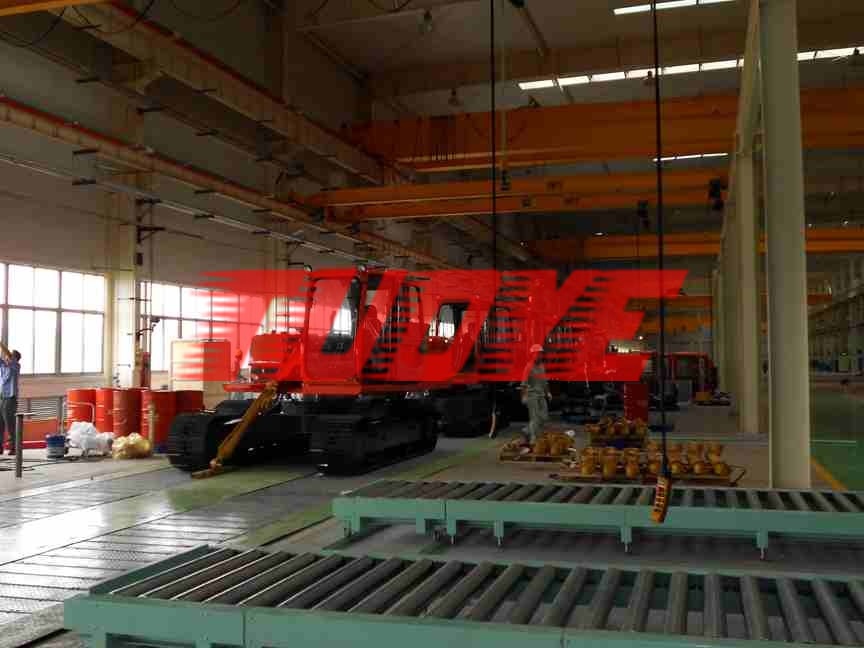
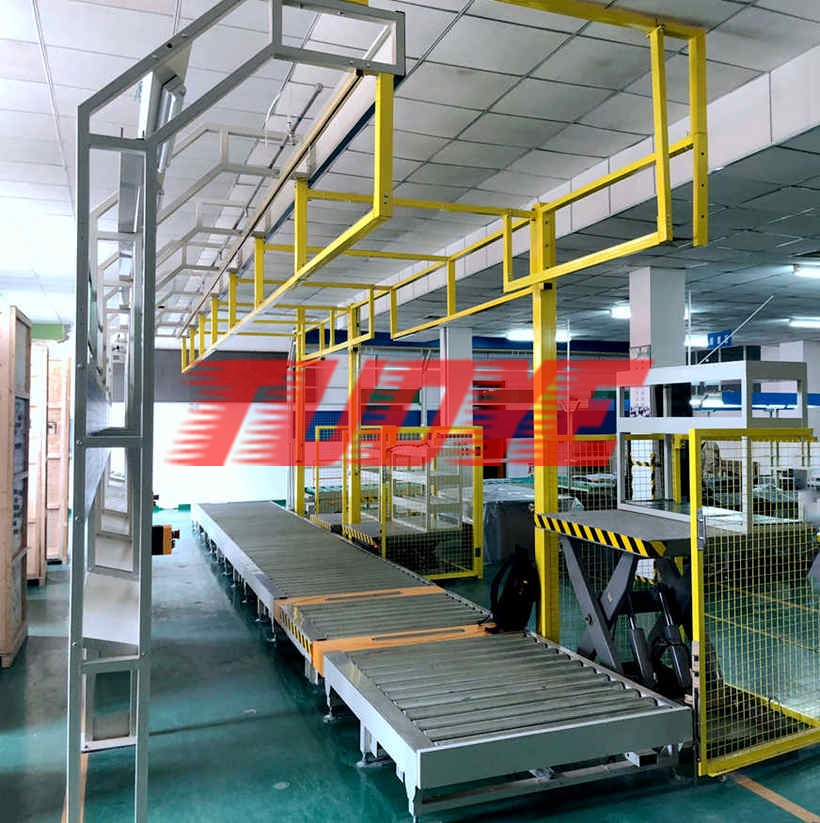
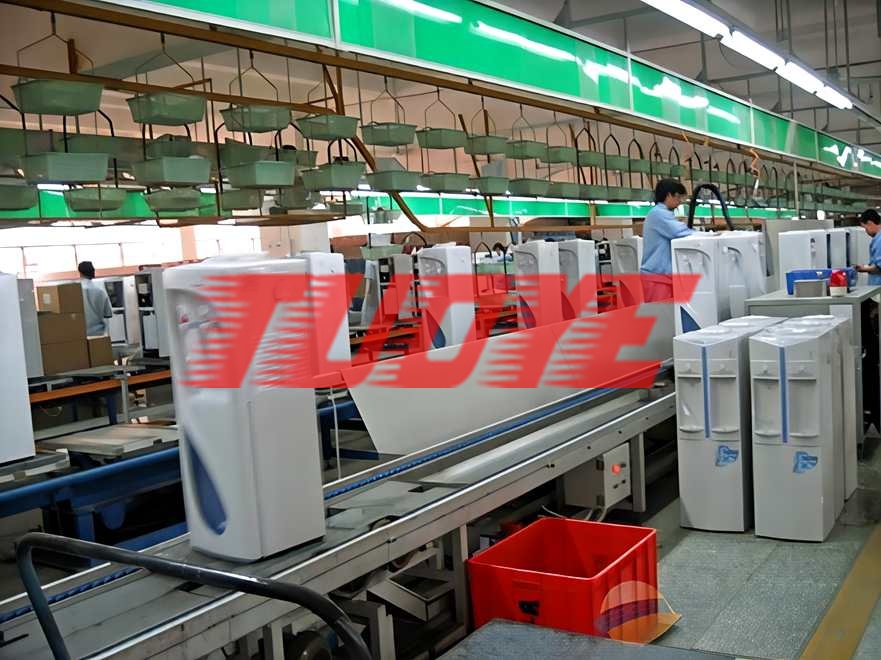
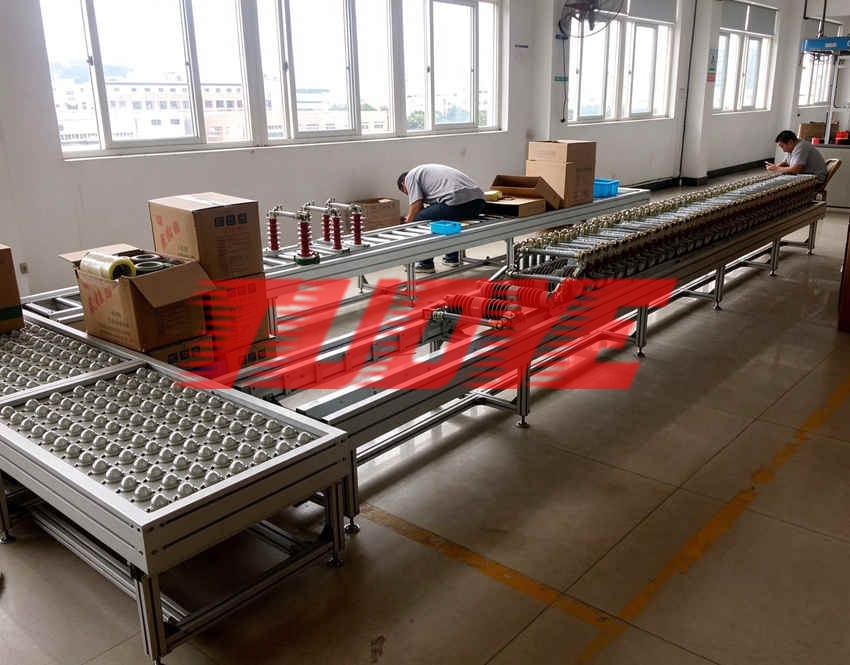
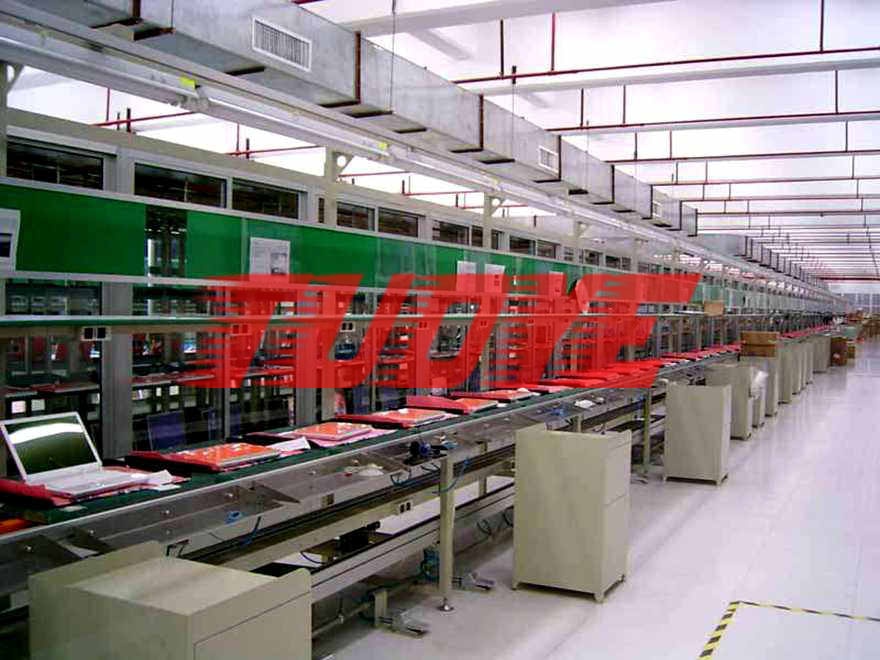
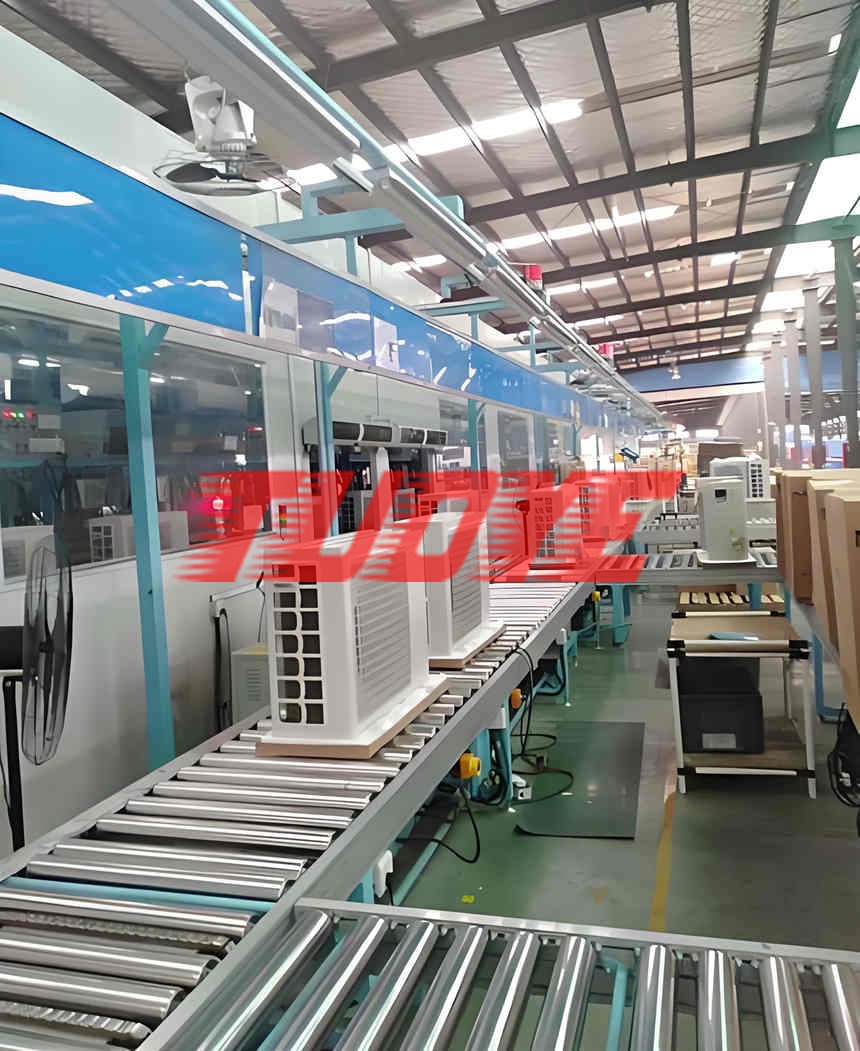
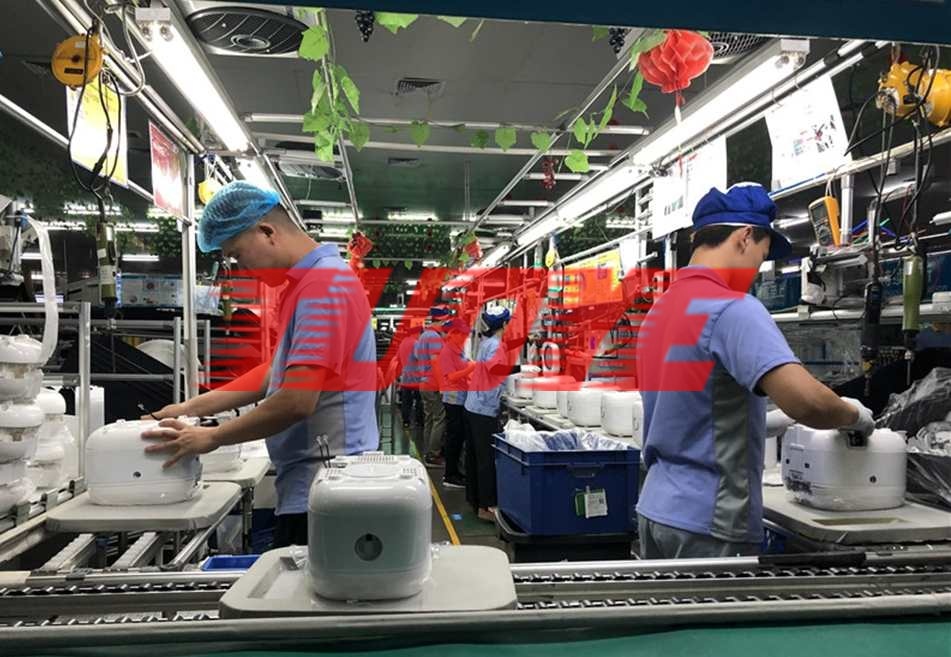
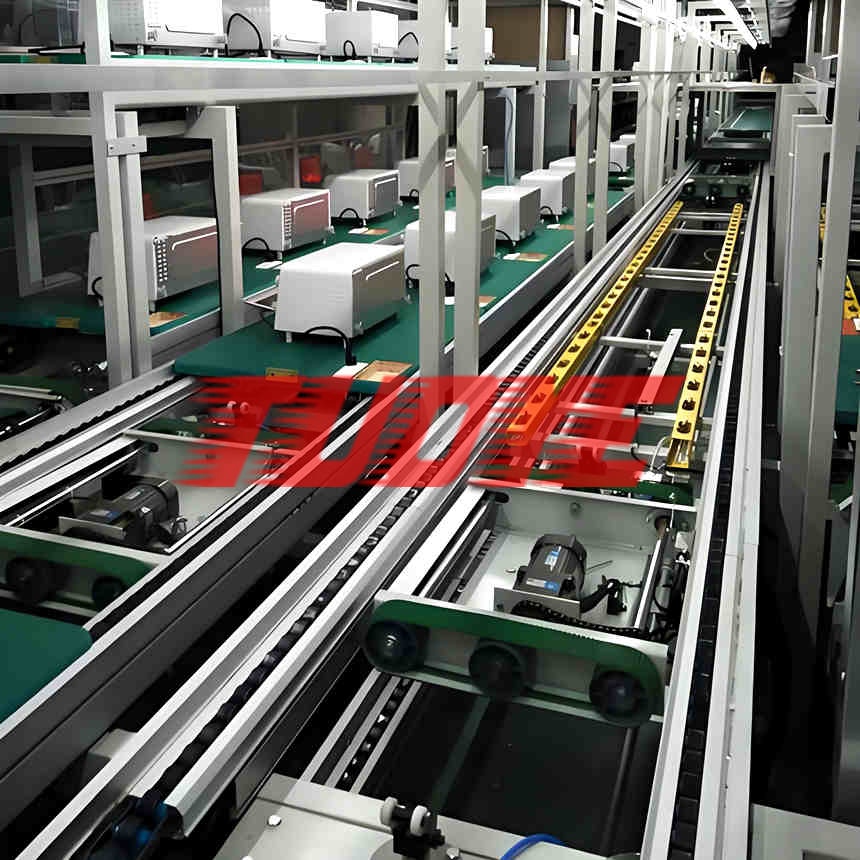
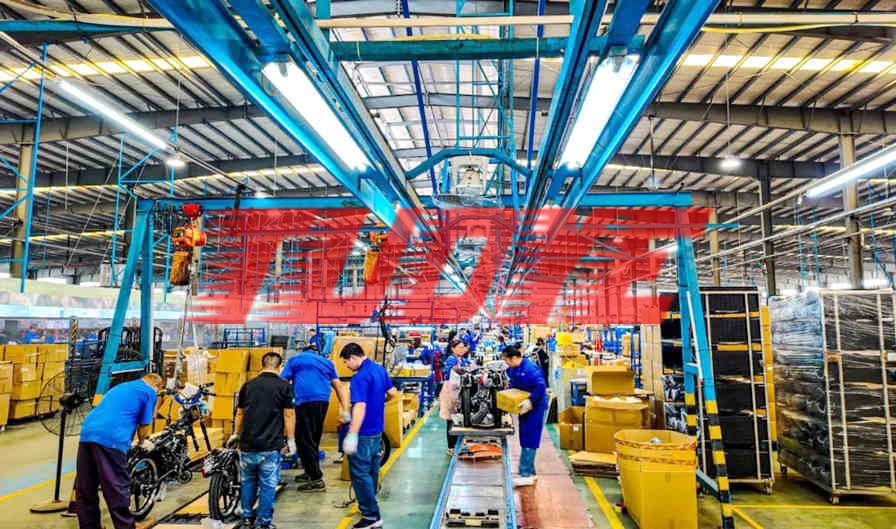
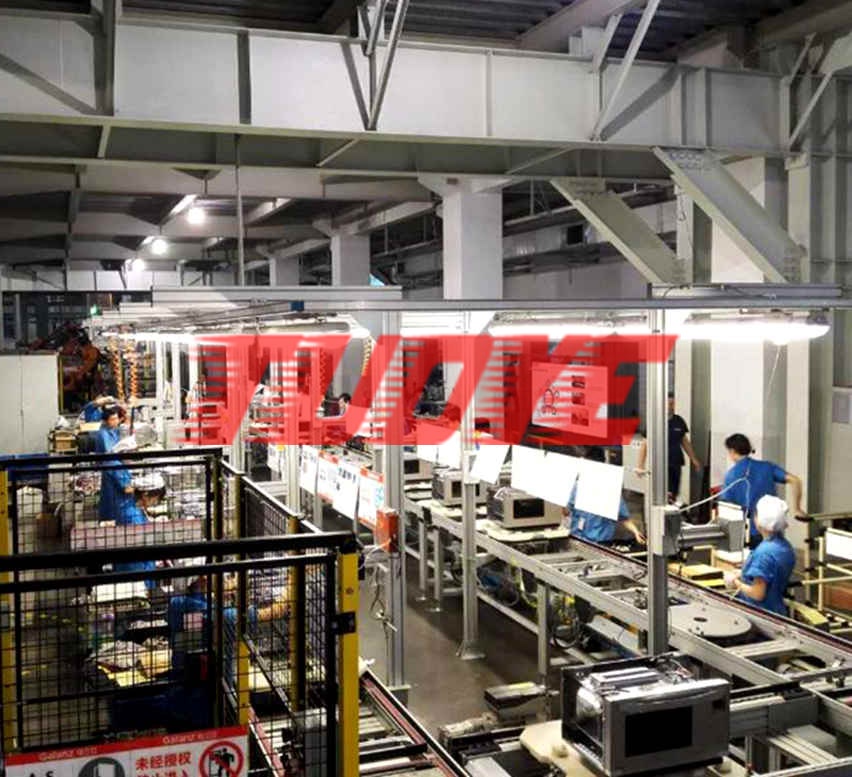
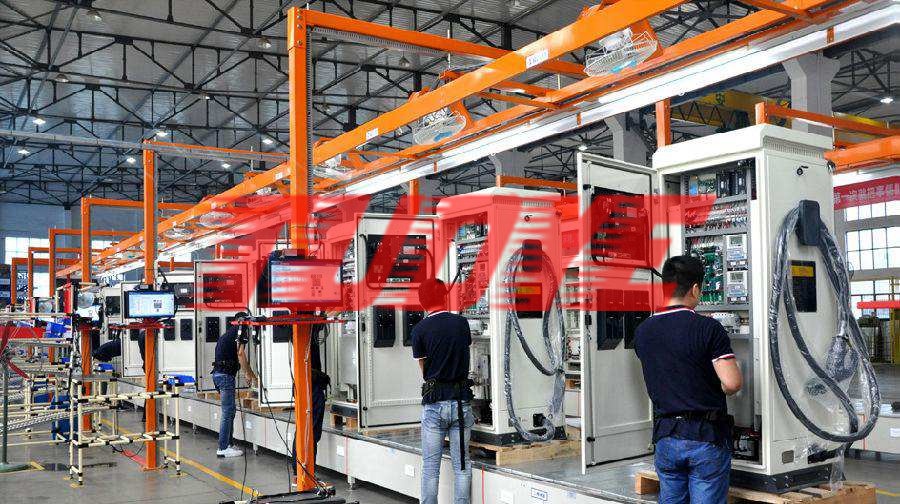
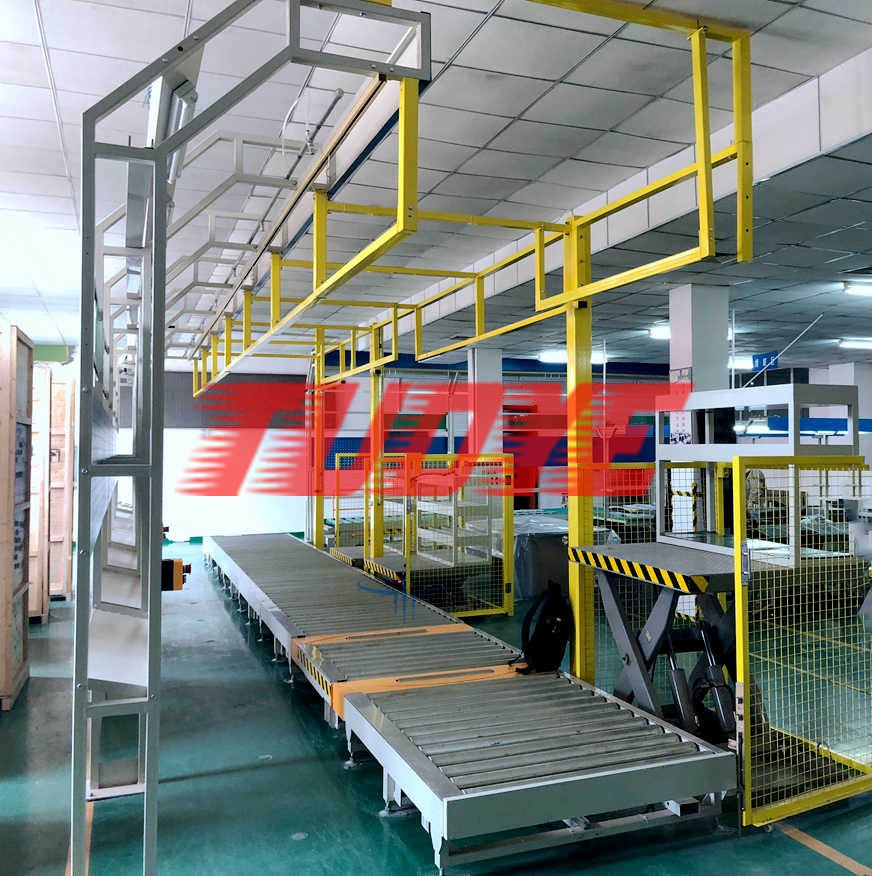
Two photos show the two line forms of a switchgear production line. First, the roller line: cabinets ride the rollers, a scissor lift with yellow-black hazard striping handles height transitions mid-line, yellow safety netting fences the hoisting zone, and the overhead lifting frame with crane handles cabinets and busbars, workbenches and racks taking over at the end. Second, the speedchain pallet line: perforated metal pallets carry cabinets along aluminum track, dropping off-line to dwell for long assemblies, multi-row parallel in a comb-loop layout with cabinets crossing lines through transfer sections; busbars and components pre-assemble right on the line. Typical flow: cabinet on line (frame pre-welded) → primary busbar and neutral assembly (torque fastening, conductive paste) → breakers and primary components → secondary components and wiring → drawer units (withdrawable) → insulation and power-on checks → factory inspection and off-line.
3. Customization Options
The switchgear assembly line is non-standard custom equipment: roller, speedchain and plate chain combine per cabinet type and beat; loading rated to cabinet weight; lift platforms, transfer machines, turntables and crane docking sections integrable; stations can hang torque wrenches and dock busbar fabrication equipment. From your cabinet range, capacity and workshop conditions, Tuoye issues the complete proposal and quotation for a switchgear assembly production line.
4. Delivery & Service
Project-based delivery: engineers verify the cabinet range (GGD fixed, GCS/MNS withdrawable and non-standard bodies) and capacity program, plan the on-line, busbar, secondary-wiring and inspection stations, and issue layout and equipment list; equipment ships after pre-assembly and loaded trial runs, is installed and commissioned on site and accepted in trial production on your cabinets, with training included. One-year machine warranty, long-term supply of rollers, pallets, speedchain parts and lift-platform spares, plus loading upgrades, loop-layout retrofits and busbar-fabrication docking. Building a new distribution cabinet production line or LV switchgear assembly line — or adding cross-transfers, crane docking and torque traceability to an existing switchgear production line — Tuoye measures on site, quotes to the facts, and welcomes inquiries on proposals and lead times.
Permanent link: https://www.liushuixian.com/post/from-copper-busbar-fabrication-to-factory-testing-electrical-assembly-on-a-switchgear-assembly-line.html
Disclaimer: Some articles on this site are compiled from public technical sources for reference. If any content infringes your rights, please contact us for removal. Please credit the source when reprinting.