How to Configure a Tricycle Assembly Line: Station Differences Across Cargo, Passenger and Delivery Trikes
1. Product & Industry Overview
A tricycle assembly line — the trade also calls it a tricycle production line or tricycle assembly line — is the core turnkey equipment of electric and fuel tricycle manufacturers, assembling frame, front fork, motor and rear axle, battery, harness, wheels, cargo bed and canopy into finished vehicles in process order. The tricycle assembly lines designed and built by Tuoye in Wenling, Taizhou, Zhejiang, China serve vehicle and conversion plants making cargo trikes, passenger trikes, leisure trikes, senior-mobility trikes, delivery trikes and sanitation trikes.
By use, tricycles fall into four broad groups: cargo trikes (flatbed, box, tipping) carry urban-rural logistics and farm supplies with high load and frame-strength demands; passenger trikes (canopy, taxi forms) emphasize seating space and canopy assembly; leisure and senior-mobility trikes stress low-speed safety and appearance parts; delivery and sanitation trikes face last-mile distribution and municipal duty. The parts mix and assembly beat differ visibly across types, so the station count, line length, loading and configuration of a tricycle production line must be tailored to the product positioning — exactly why the tricycle assembly line is non-standard equipment by nature.
2. Process Flow & Line Configuration (as shown)
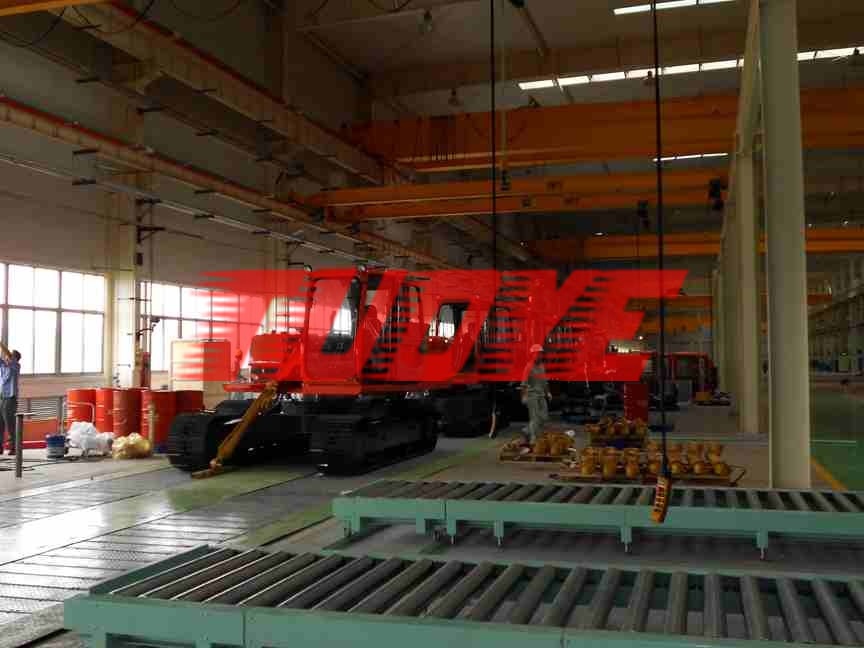
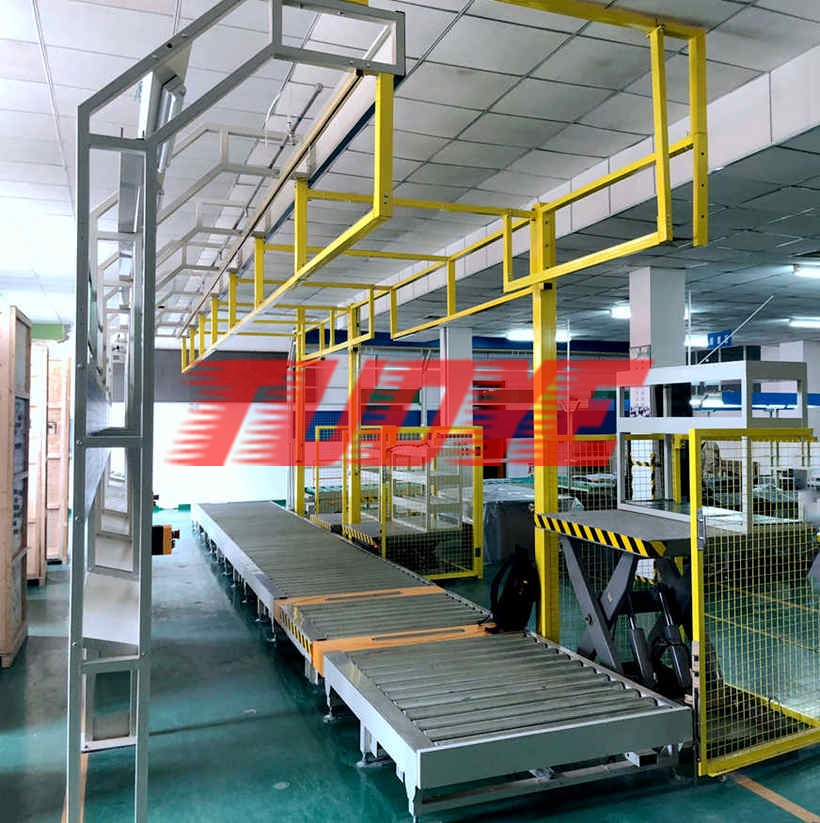
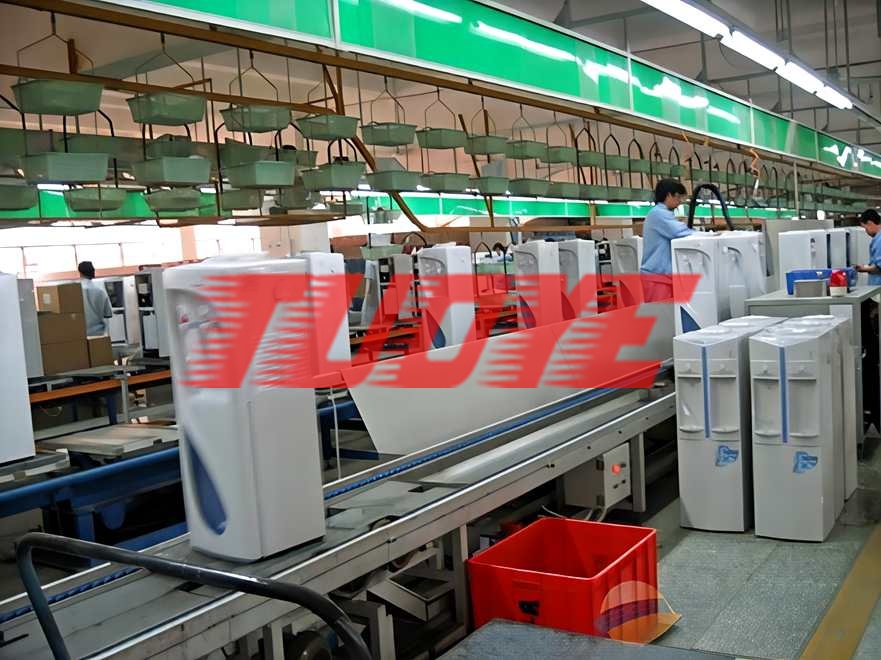
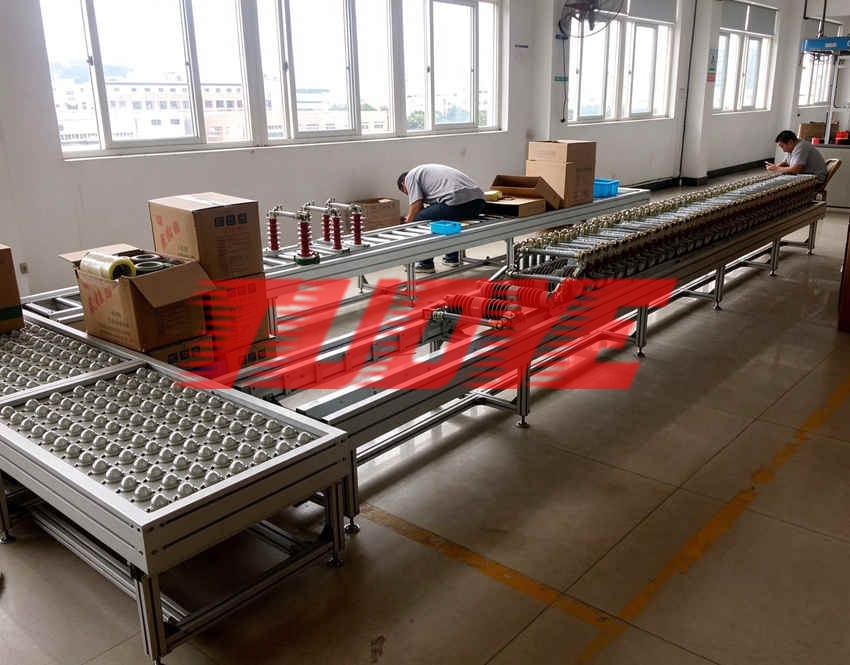
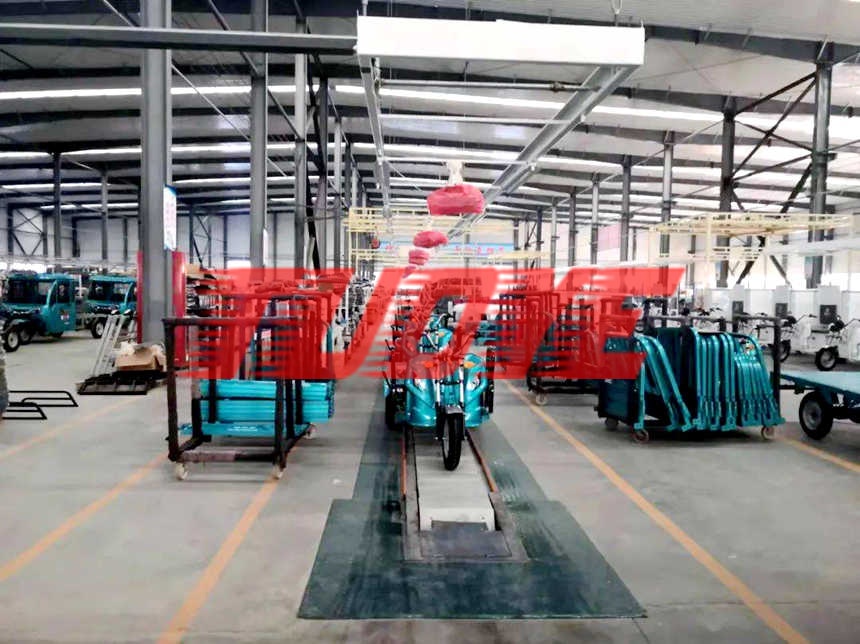
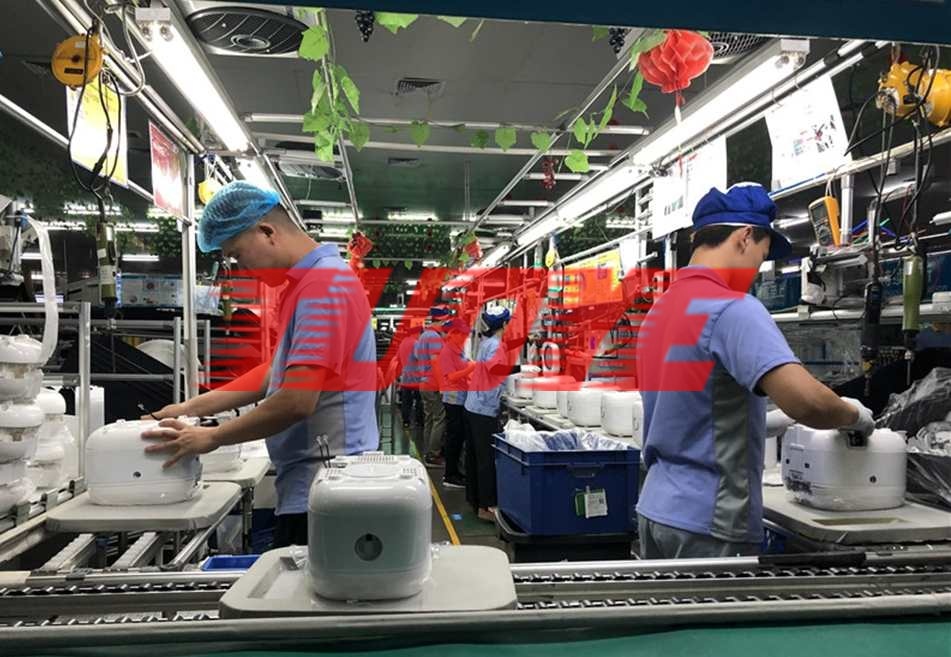
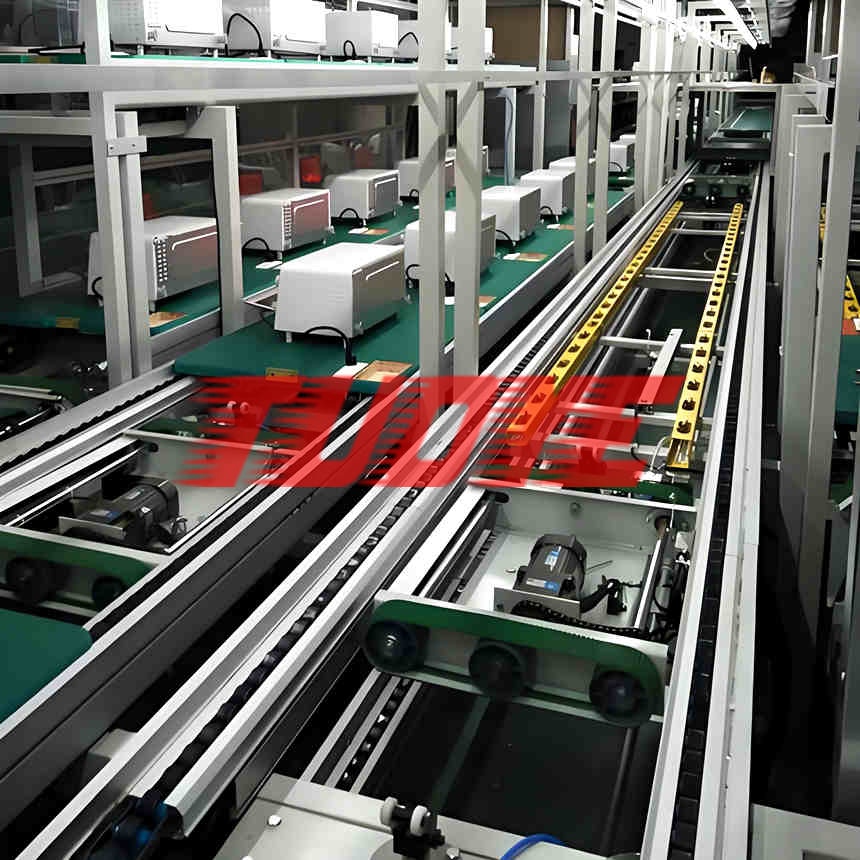
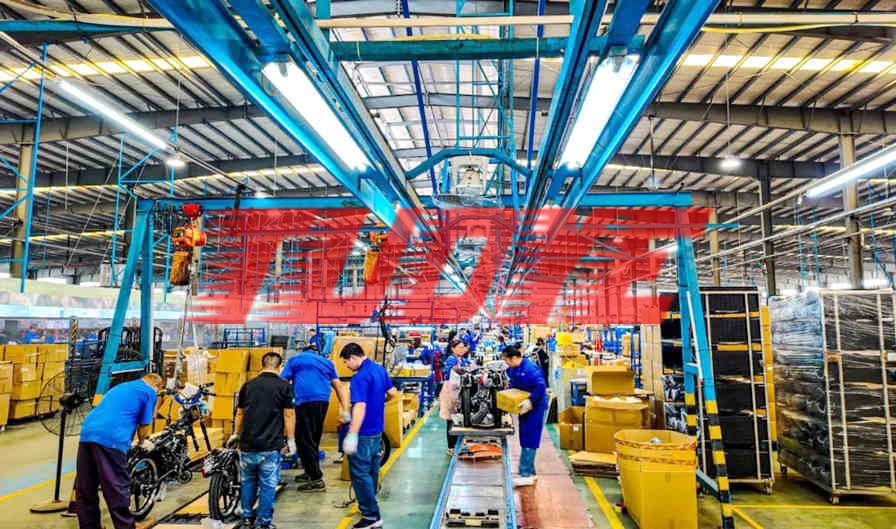
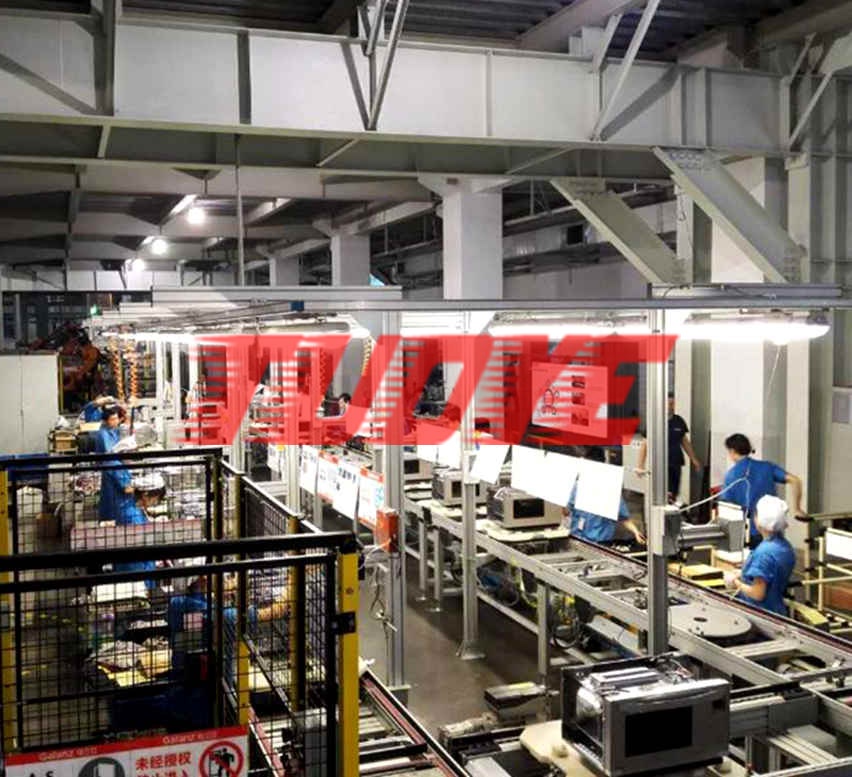
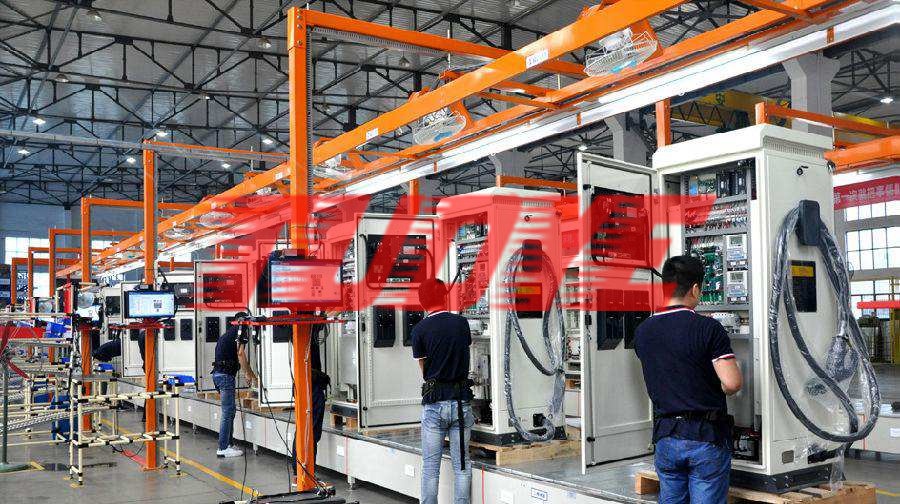
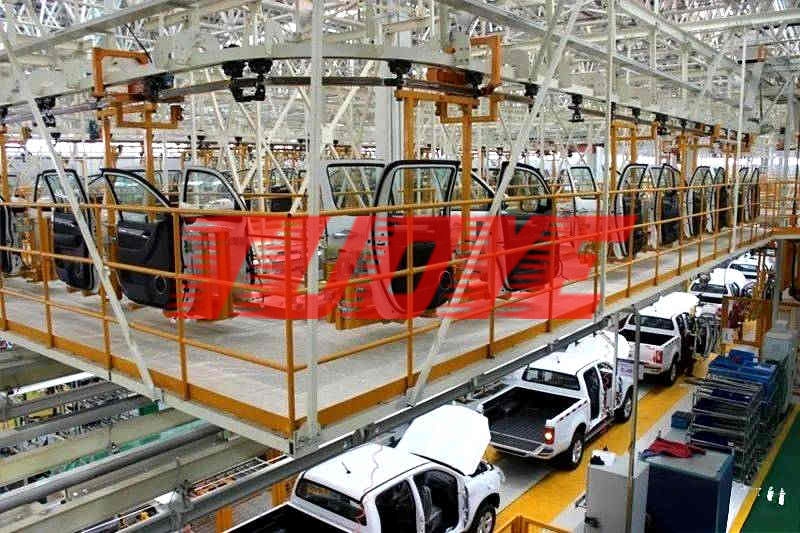
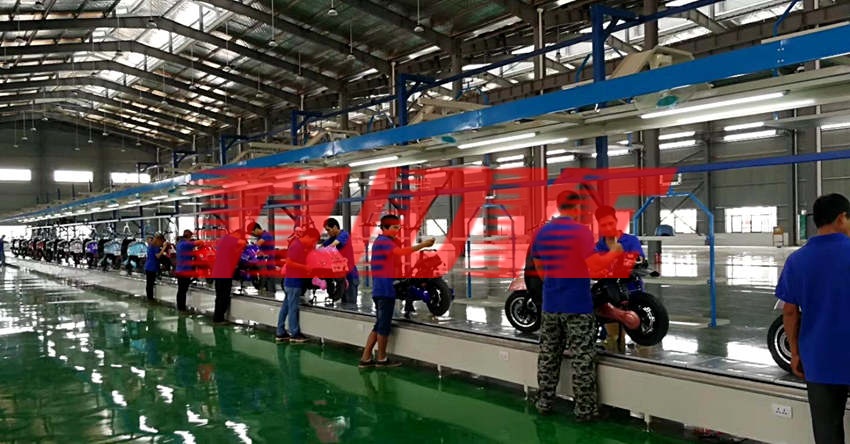
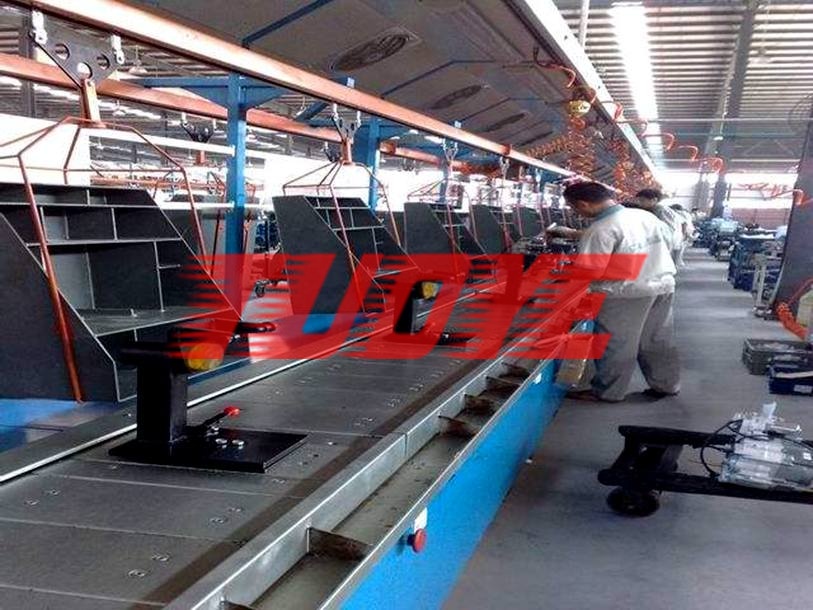
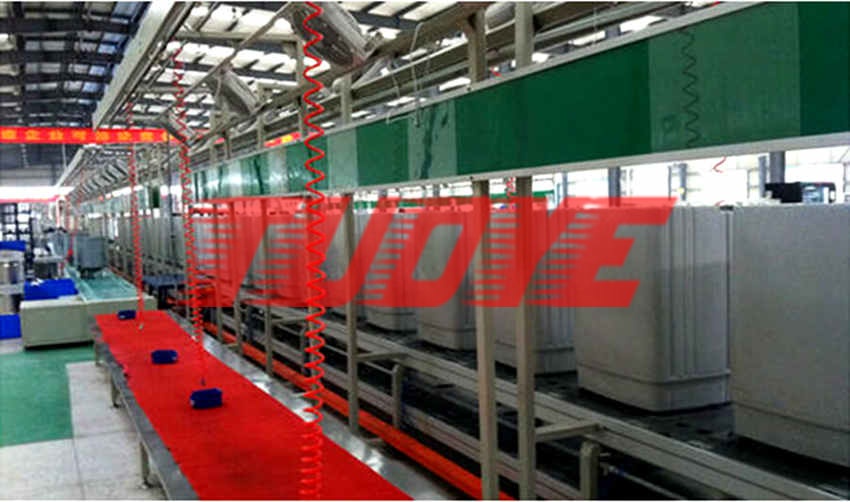
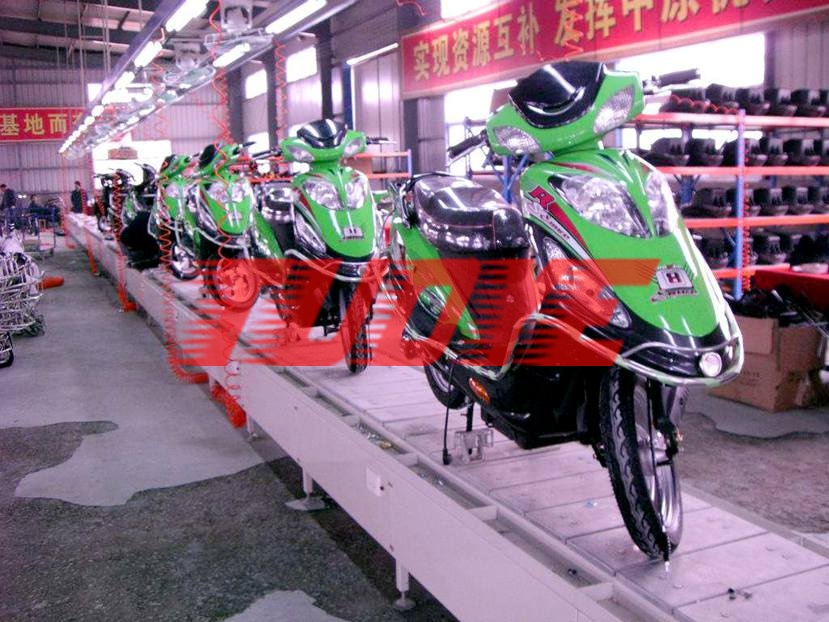
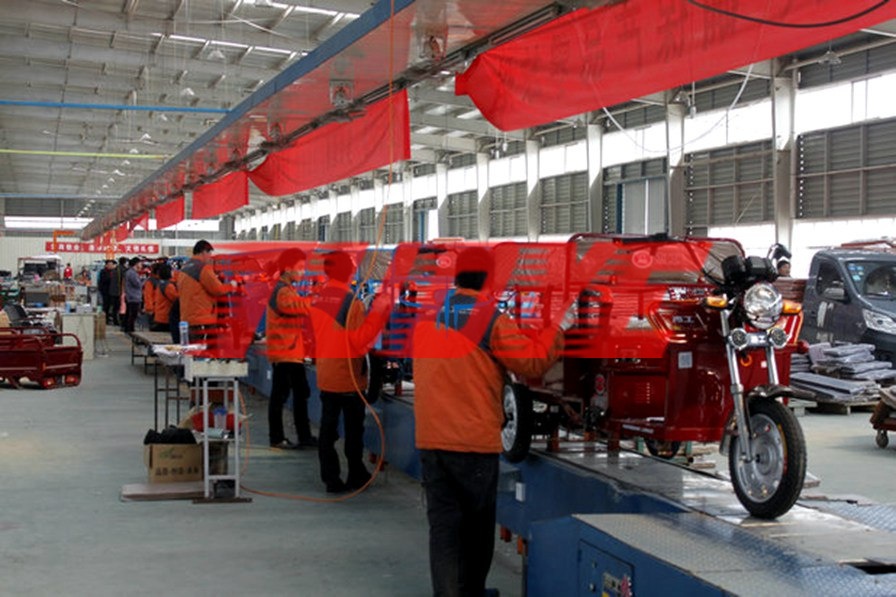
This case tricycle assembly line uses plate chain with workholding pallets: the frame advances at constant speed on its pallet while operators assemble from both sides. As the photo shows, the line runs straight in a single row of roughly 10-15 stations, with independent workbenches and parts bins along the way, station lighting booms and a red banner board overhead, and the line end feeding whole-vehicle testing and the finished-vehicle parking area. The typical tricycle production sequence: frame on line (welded, corrected, derusted and painted) → front fork and handlebar assembly → motor, rear axle and drive assembly → controller and whole-vehicle harness → battery bay and battery → wheels, brakes and dampers → cargo bed or canopy → electrical debugging → whole-vehicle testing and off-line. When the beat tightens, a tricycle production line can add traveling tooling, in-line gauges and suspended tightening systems to lift single-line capacity further.
3. Customization Options
The tricycle assembly line is non-standard custom equipment, configured to the user's model range, annual program and workshop: conveying combines plate chain, speedchain and belt; stations flex with the process and reserve margin for later upgrades; pneumatic tool balancers, station lighting, quick-change air couplings, ANDON calls and counting boards are available; line speed is VFD-adjustable to suit crews of every skill level. The line end extends into static testing, water testing and off-line packing, forming a complete tricycle assembly production line. Send your vehicle drawings and capacity needs, and Tuoye will return the tricycle production line layout proposal and quotation.
4. Delivery & Service
The tricycle assembly line runs on project management: early-stage engineers align the model range, annual program and workshop dimensions, then issue the floor layout and equipment list; during manufacturing the line is pre-assembled and dry-run in our plant, and after on-site installation and commissioning it is accepted against your actual models in trial production, with operators and maintenance staff trained. One-year machine warranty, long-term supply of pallets, chain plates and stoppers, plus old-line speed-up and expansion support. Whether planning a complete assembly production line for a new tricycle factory or adding in-line testing, automatic tightening and counting boards to an existing electric tricycle assembly line, Tuoye measures on site, quotes to the facts, and welcomes inquiries on tricycle assembly line proposals, prices and lead times.
Permanent link: https://www.liushuixian.com/post/how-to-configure-a-tricycle-assembly-line-station-differences-across-cargo-passenger-and-delivery-trikes.html
Disclaimer: Some articles on this site are compiled from public technical sources for reference. If any content infringes your rights, please contact us for removal. Please credit the source when reprinting.