How to Plan a Mobility Scooter Assembly Line Under Low-Speed EV Rules
1. Product & Industry Overview
A mobility scooter assembly line — also called a four-wheel mobility scooter production line or elderly scooter assembly line — is the turnkey conveying equipment for low-speed four-wheel EV assembly. The lines built by Tuoye in Wenling, Taizhou, Zhejiang, China assemble chassis, steering column, dampers, motor and rear axle, battery pack, harness, body panels and seats into finished vehicles, fitting elderly scooters, leisure scooters, four-wheel canopy vehicles and community shuttles.
By background, the four-wheel mobility scooter grew out of e-bike and canopy-trike technology: chassis mostly welded square tube, front axle joining both wheels with simple damping, closed or semi-closed bodies, battery-motor power as the mainstream. The market splits into leisure types (one/two seats, low speed, short range), utility types (bed or rack equipped, for campus hauling) and canopy types (full rain canopy, doors and glass). As low-speed EV technical conditions and industry rules land step by step, proper vehicle plants set higher demands on the process discipline, assembly consistency and whole-vehicle testing of a mobility scooter production line — and its station setup and in-line testing climb accordingly.
2. Process Flow & Line Configuration (as shown)
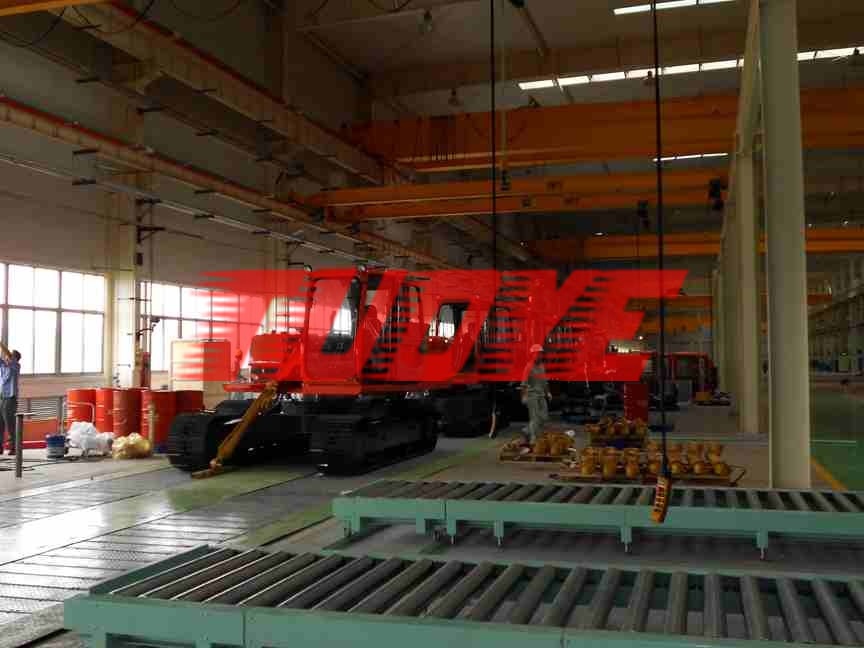
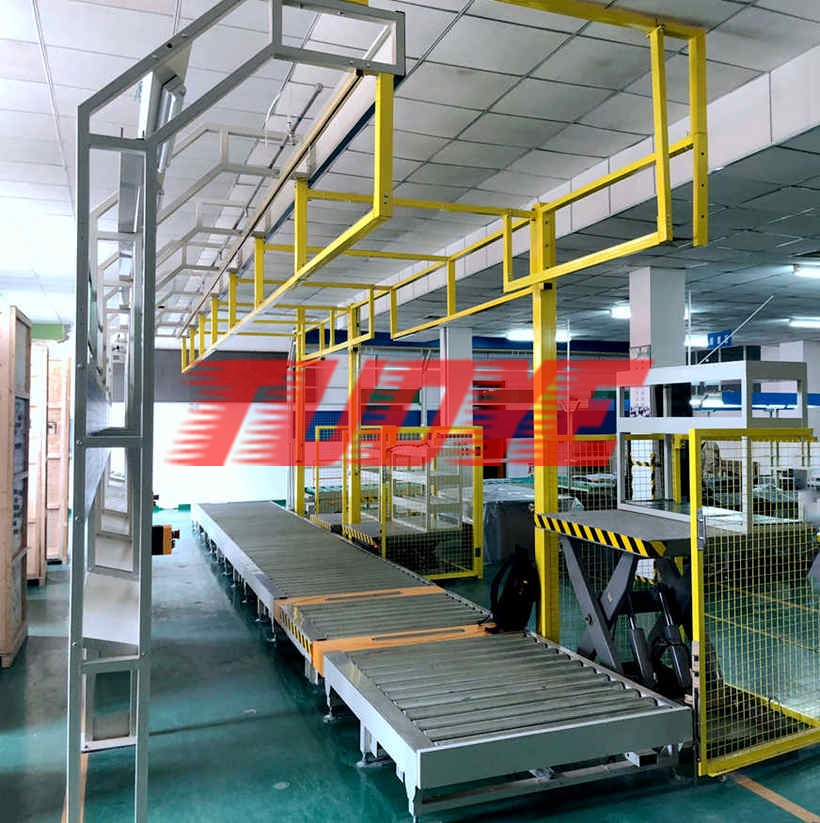
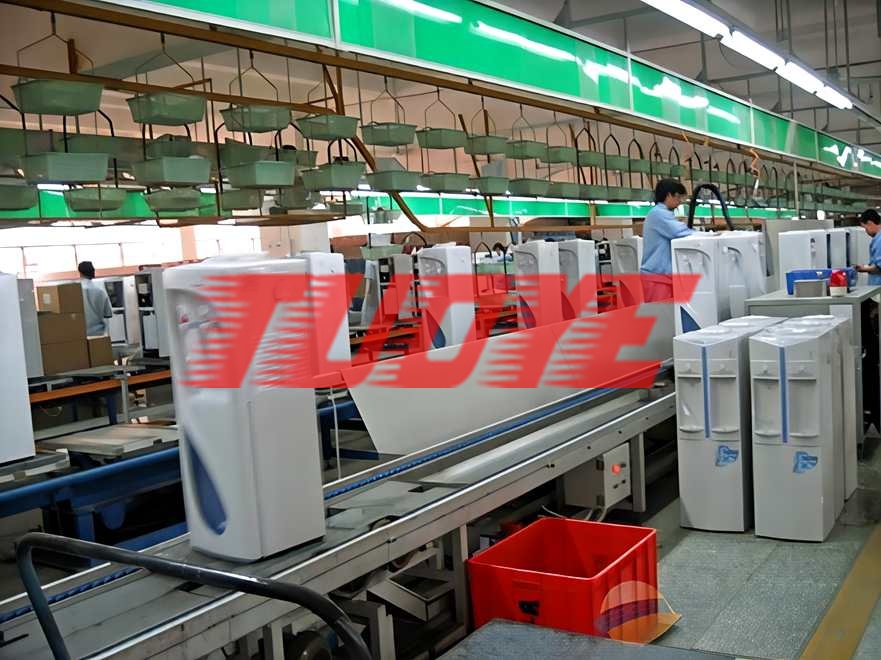
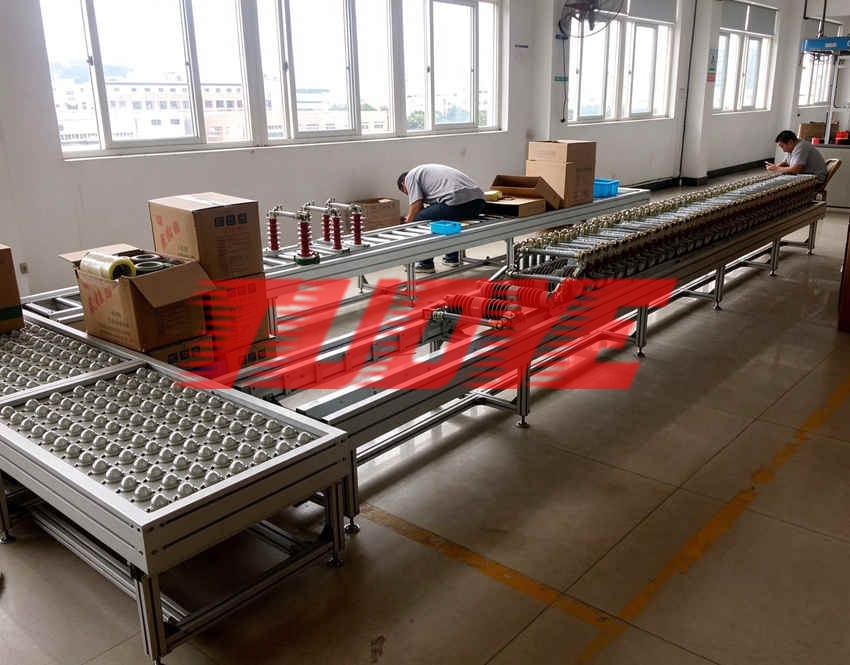
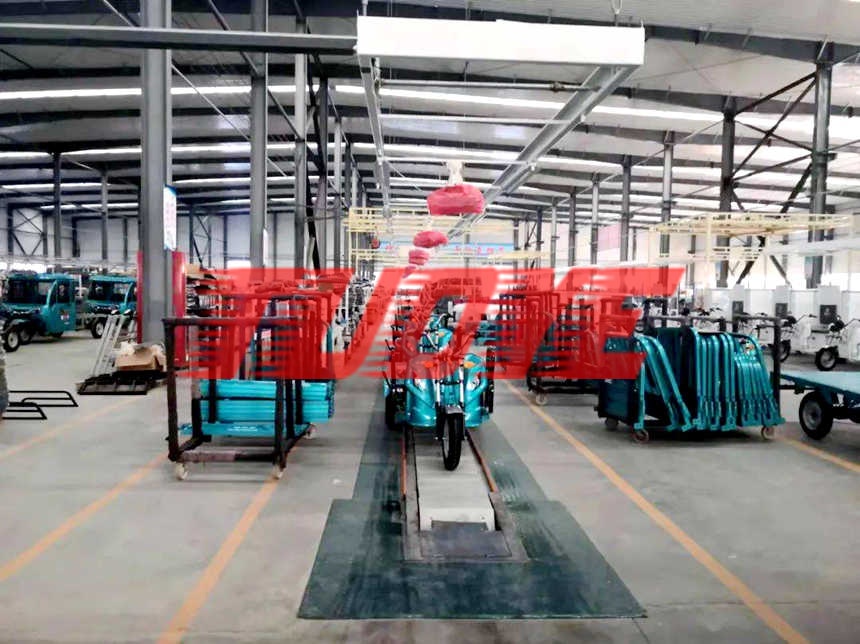
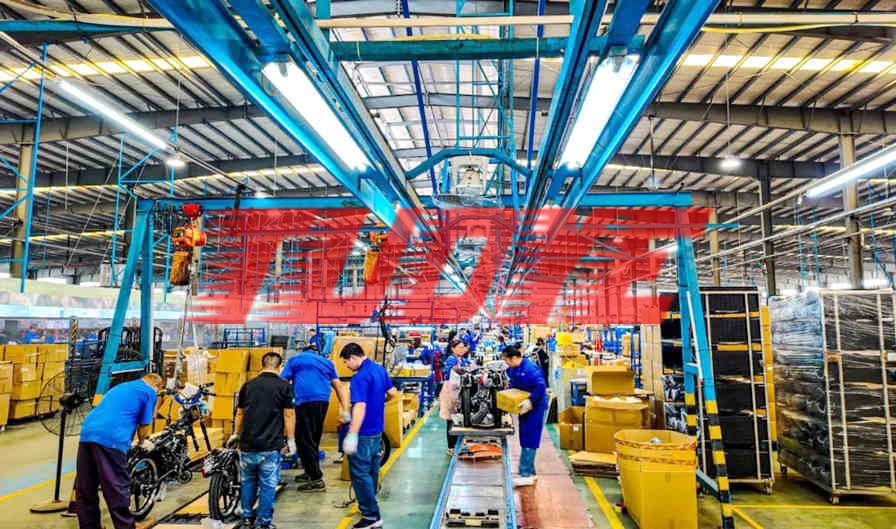
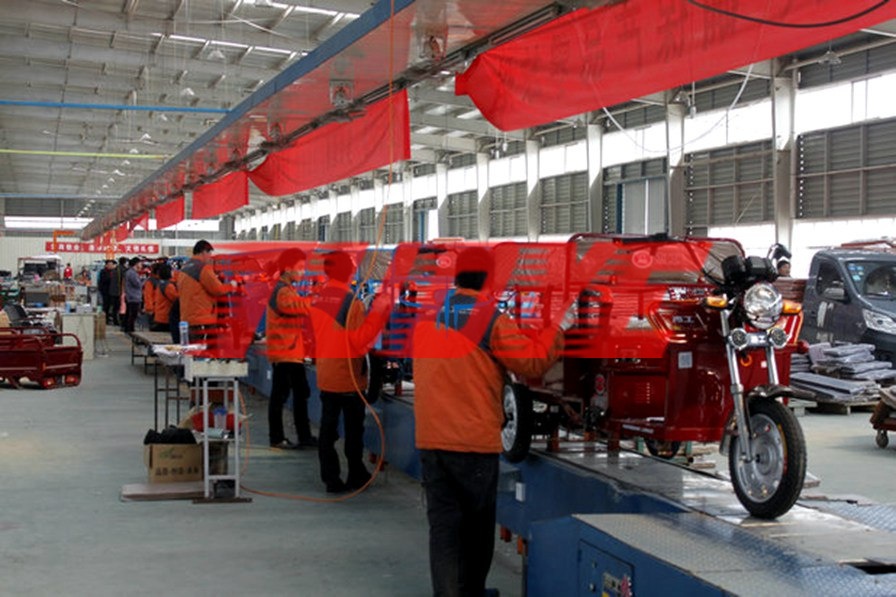
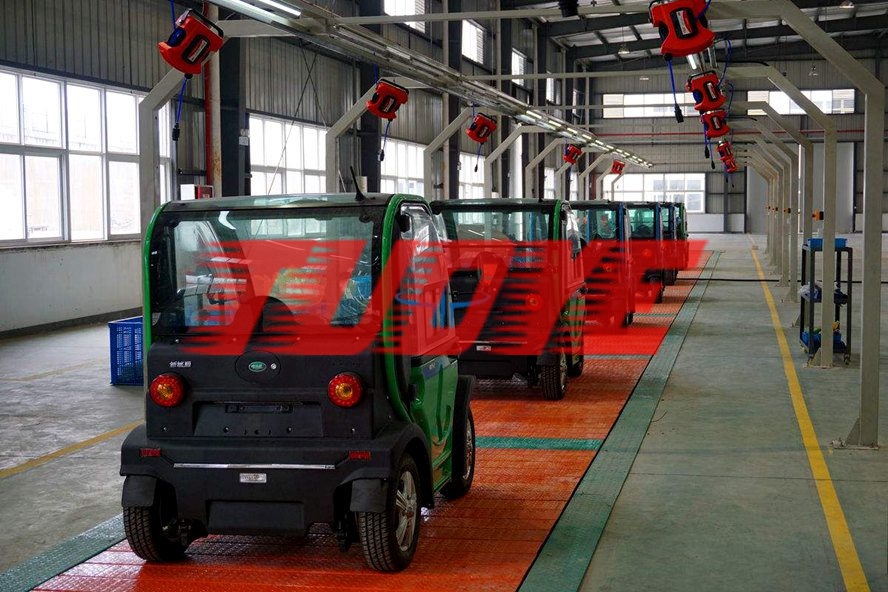
This case line, as the photo shows: red carrying plate chain on the floor, vehicles flowing straight on pallets through 6-8 assembly stations in a row, each vehicle completing chassis, powertrain and body parts in turn; suspended station lighting overhead, blue multi-tier material racks and totes on the side, yellow safety lane markings on the floor, and a bright, day-lit workshop. The typical mobility scooter production sequence: chassis on line (square-tube frame welded and corrected) → front axle and steering → motor, rear axle and drive → dampers and brakes → battery pack and controller → harness and electrical parts → body panels and doors → seats, glass and trim → whole-vehicle electrical debugging, brake test and off-line.
3. Customization Options
The mobility scooter assembly line is non-standard custom equipment: line length, width and station count are calculated from model dimensions and annual program; conveying combines plate chain, speedchain and belt; in-line voltage testing, insulation withstand testing and whole-vehicle off-line check stations can be added; stations carry air tools, lighting, fans, racks and ANDON to meet paced production on the elderly scooter production line. From your vehicle drawings, capacity target and floor plan, Tuoye issues the complete layout proposal, equipment list and quotation for the mobility scooter assembly production line, with installation, commissioning and after-sales included.
4. Delivery & Service
Project-based delivery: engineers first verify the model map (leisure, utility, canopy), annual program and workshop dimensions, then issue floor layout and equipment list; equipment ships after in-plant pre-assembly and trial runs, is installed and commissioned on site, and accepted in trial production on your models, with operation and maintenance training. One-year machine warranty, long-term supply of pallets, carrying plates and chains, plus old-line retrofits, expansions and test-station upgrades. Whether building a new elderly scooter production line or a canopy-vehicle assembly line, or upgrading an existing mobility scooter assembly production line for speed with added insulation testing and scan traceability, Tuoye measures on site, quotes to the facts, and welcomes inquiries on lead times and details.
Permanent link: https://www.liushuixian.com/post/how-to-plan-a-mobility-scooter-assembly-line-under-low-speed-ev-rules.html
Disclaimer: Some articles on this site are compiled from public technical sources for reference. If any content infringes your rights, please contact us for removal. Please credit the source when reprinting.