Mixed-Order Production in Custom Furniture: Panel Flow and Sorting on a Kitchen Cabinet Assembly Line
1. Industry Overview
Custom furniture orders come fragmented; cabinet plants nest mixed orders in batches to save board, and panel-flow order decides delivery cycles. A cabinet production line — the trade also says panel furniture production line — conveys and buffers between nesting, edge banding, drilling, sorting and order grouping. The panel-furniture chain runs: nesting (CNC saw or machining center) → banding → drilling (line drill or six-side drill) → sorting → packing. The six-side drill is the link pin, reading each panel's bar code and drilling all six faces in one clamp; sorting stations group by the same bar codes, an order packing only when all its panels gather. Under mixed-order production, the panels on the line at any moment belong to different orders — so lane design and sorting scale on a cabinet assembly line follow the order mix and daily volume.
2. Process Flow & Line Configuration
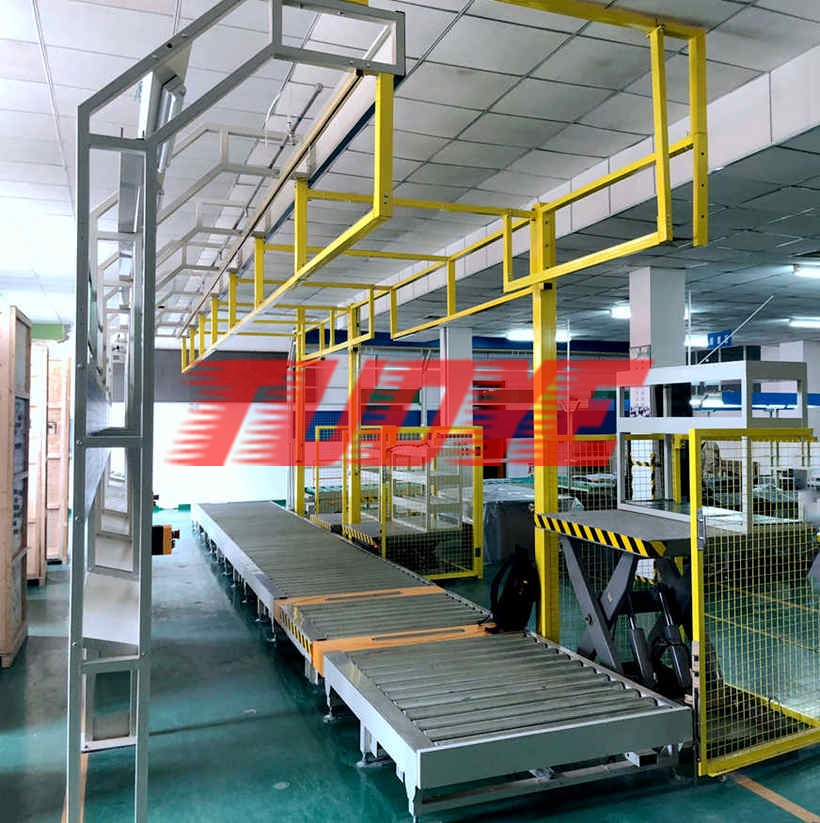
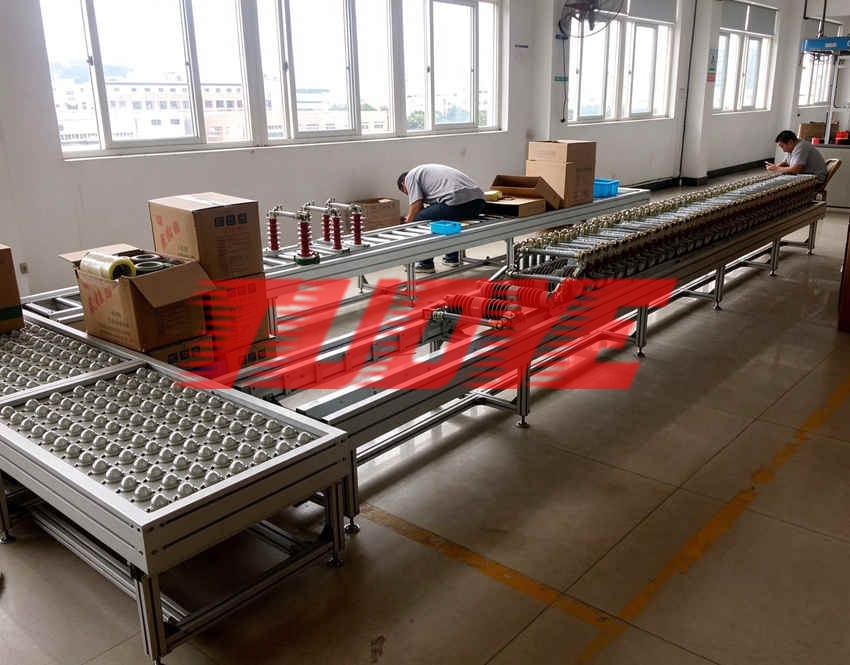
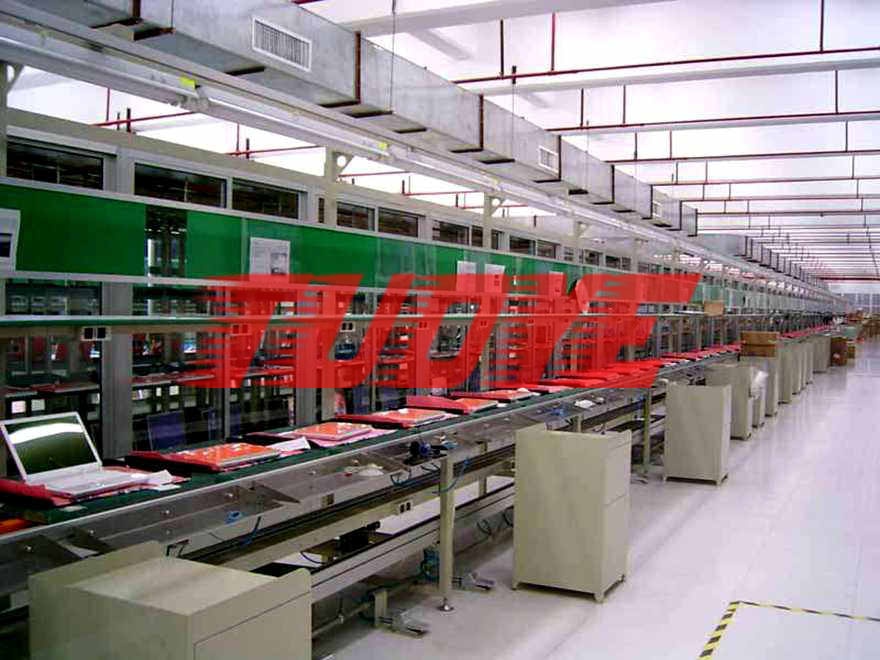
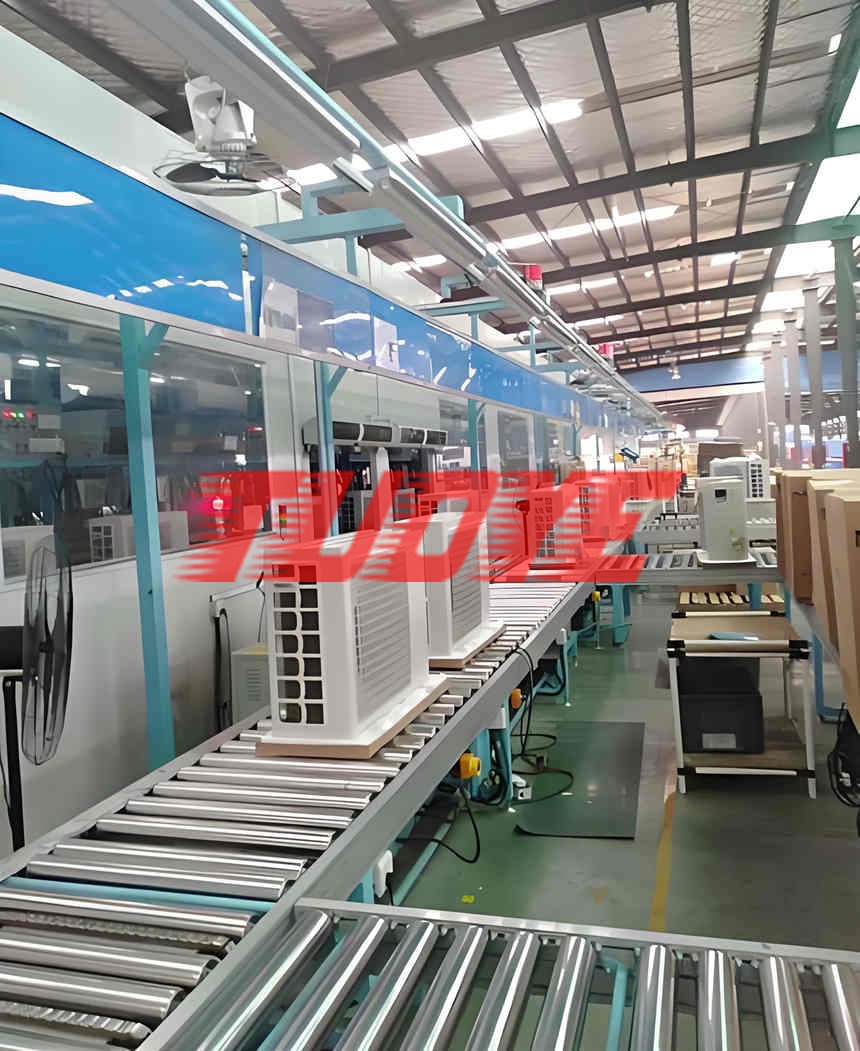
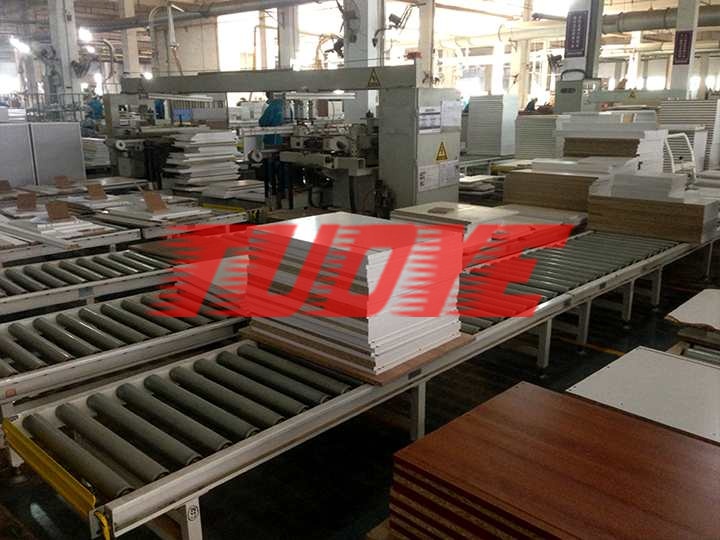
The typical panel path: nesting outfeed (bar code applied) → rollers to the bander → back through the inspection position (edge quality, scraping) → six-side or line drilling → sorting station scanning into order groups → stacking and packing → carcase assembly. In a delivered project, the cabinet production line runs multi-lane roller conveying: three lanes docking CNC drilling-class machines, stacks buffering on-line and feeding sheet by sheet; parallel roller lines extend to the bander infeed, white and wood-grain stacks zoned in buffer; the inspection position lays single panels flat for edge checks, the yellow end section doing transfer and stacking with wooden pads between stacks against scratches. Adjustable feet level the line; 16 and 18 mm panels are the standard stock.
3. Configuration & Selection Tips
Lane count on a custom furniture production line follows daily orders and machine capacity: project batches (apartments, hotels) repeat cabinet types and gain speed on high-volume lanes; fragmented retail orders need the full sorting-and-grouping path. Panel bar codes run one-code-per-order: applied at nesting, scanned at drilling, re-checked at sorting — data consistency across the three is the foundation of grouping accuracy. Roller pitch is checked against the smallest panel so nothing drops through; docking heights align to the outfeeds of saws, banders and six-side drills. Sorting stations can add scanners, screens and pick-to-light to cut grouping errors. Stack buffers belong beside the rollers — the line itself stays flowing, never a warehouse, so long-dwelling stacks never mark the roller faces.
4. Delivery & Service
From the machine list, workshop column grid and order mix, Tuoye — in Wenling, Taizhou, Zhejiang, China — issues the cabinet assembly line layout; equipment enters after in-plant pre-assembly and commissions through acceptance. One-year machine warranty, rollers and leveling feet supplied long-term, plus retrofits docking new six-side drills onto existing lines.
Permanent link: https://www.liushuixian.com/post/mixed-order-production-in-custom-furniture-panel-flow-and-sorting-on-a-kitchen-cabinet-assembly-line.html
Disclaimer: Some articles on this site are compiled from public technical sources for reference. If any content infringes your rights, please contact us for removal. Please credit the source when reprinting.