Peak-Season Mixed-Flow Scheduling: Model Changeover and Whole-Vehicle Testing on an Electric Scooter Assembly Line
1. Industry Overview
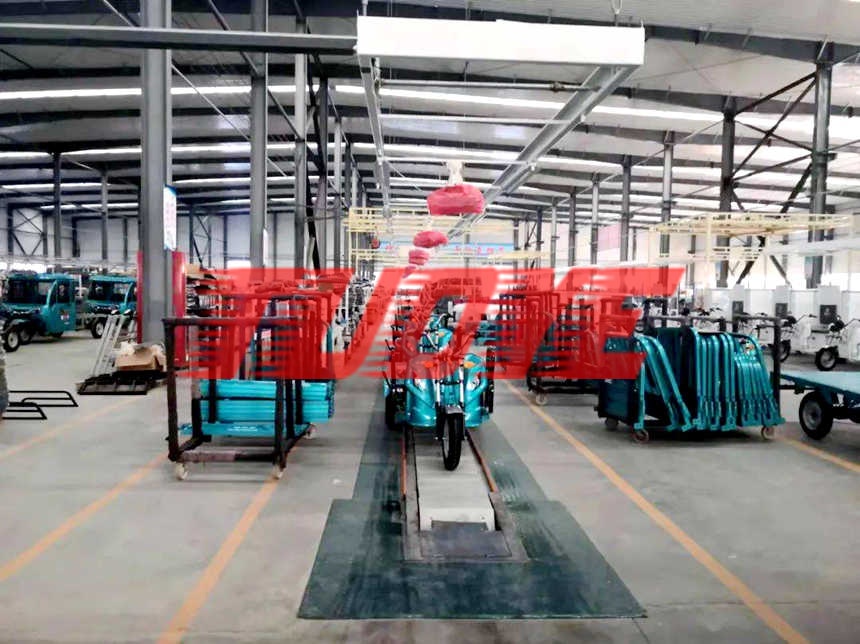
E-moped sales peak hard, plants mix flows to absorb it, and single lines deliver hundreds of units a day — demanding high availability of the final assembly line. An electric scooter assembly line starts at the painted frame and runs frame, harness, wheels, plastics and whole-vehicle testing in one pass; the trade also says e-moped production line. By type: electric motorcycles and mopeds follow motor-vehicle administration under GB/T 24158, their test records matching certificates; luxury scooters carry many panels and lamps, appearance stations dominating; heavy-load models reinforce frame and rear axle with separate torque classes; small batches of delivery and sanitation fleet vehicles mix into the main line. Two-wheeler assembly is plastics-heavy, harness-heavy and model-mixed — multi-color frames flowing one line by order is the everyday picture.
2. Process Flow & Line Configuration
The typical e-moped assembly flow: painted frame on line → main harness routing → front fork and front wheel → handlebar and instruments → controller and battery bay → rear shocks and seat bucket → motor wiring → panels, guards and lamps → brake and lamp adjustment → whole-vehicle electrical test (insulation, brakes, lamps) → off-line ride check.
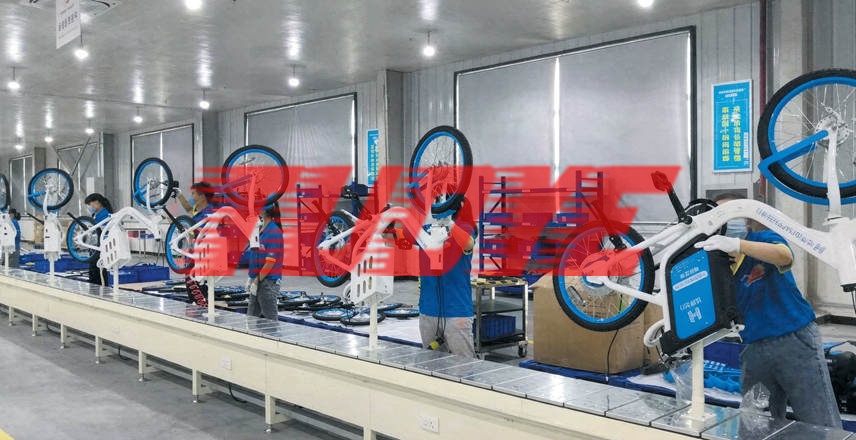
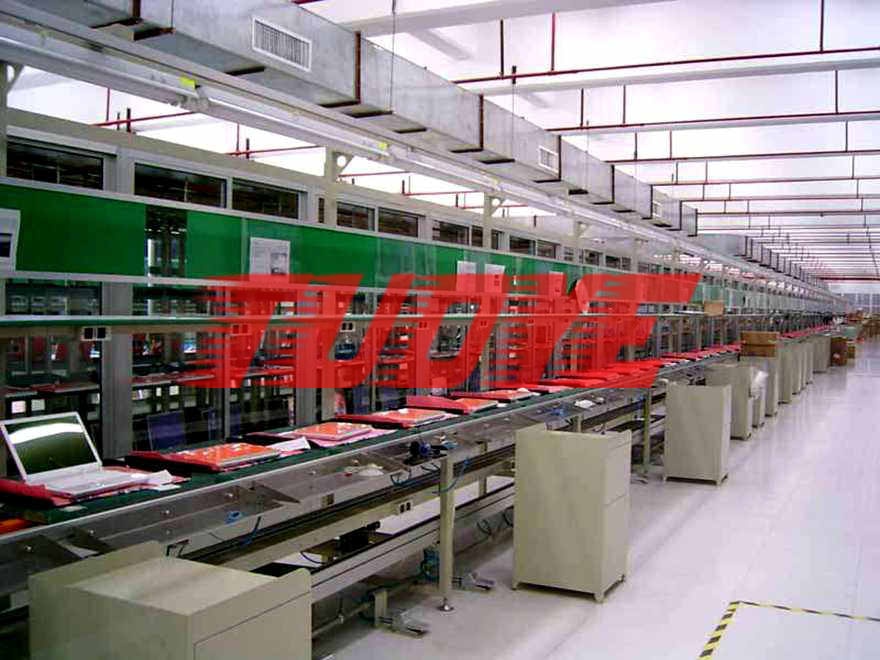
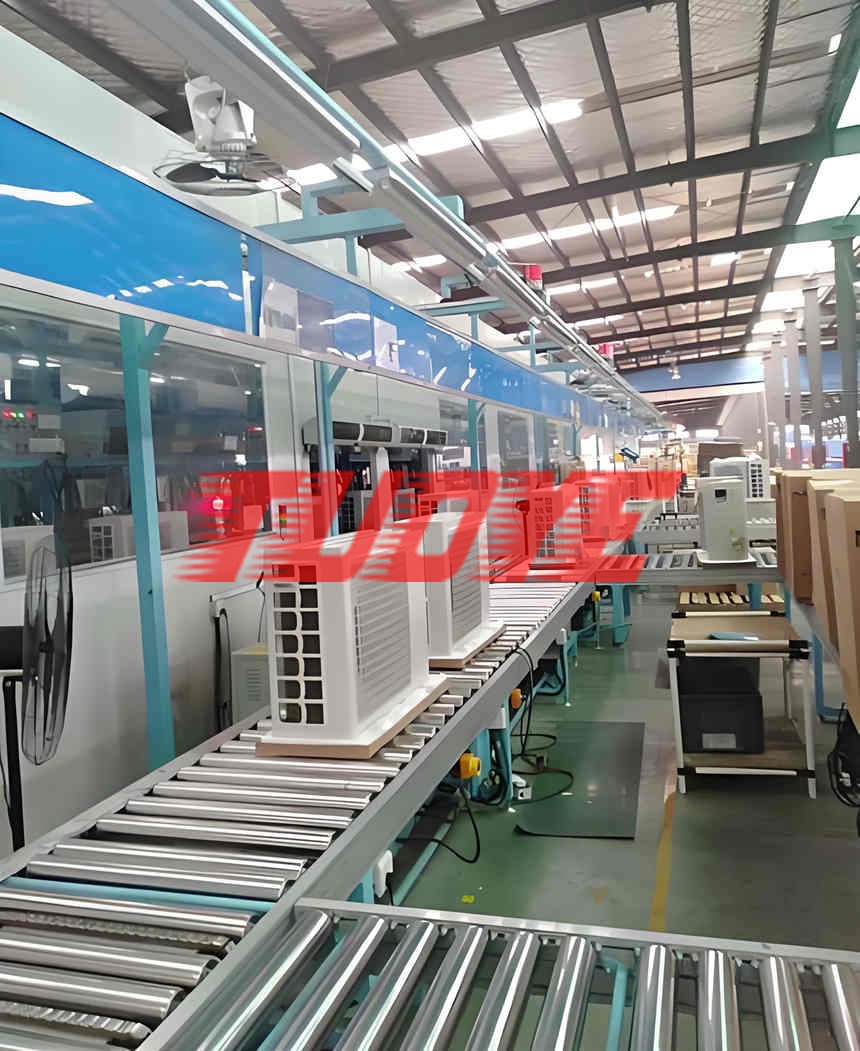
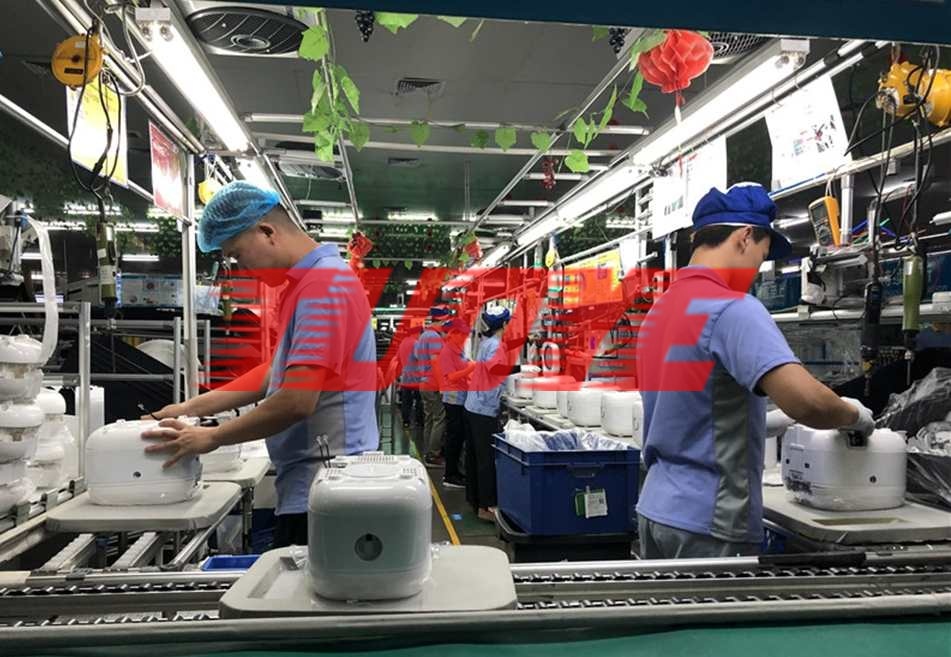
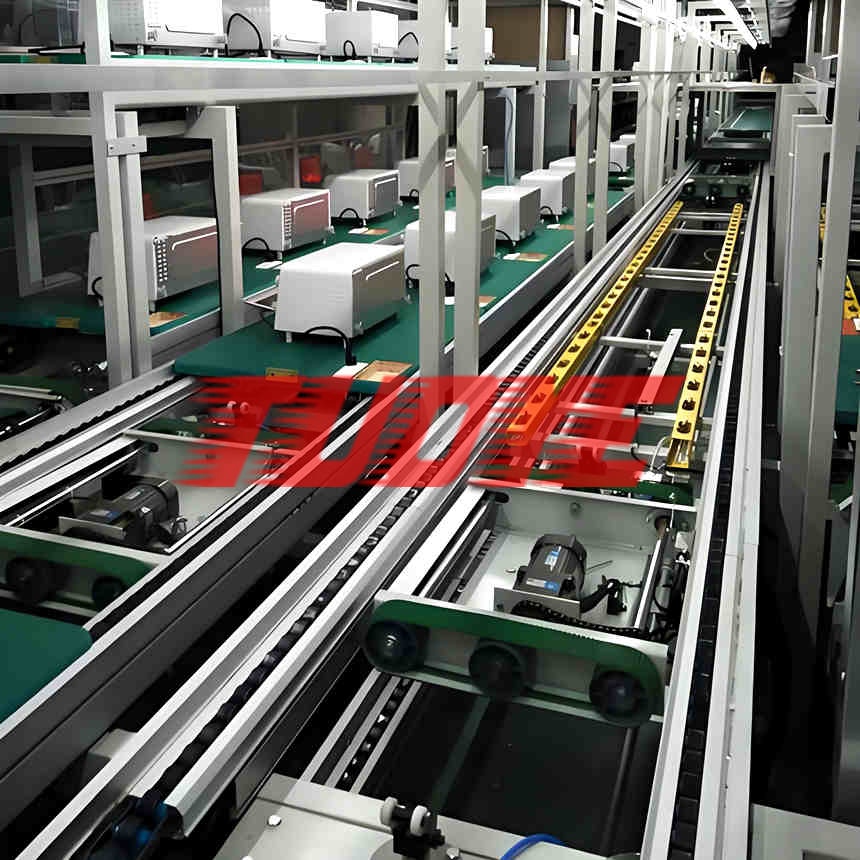
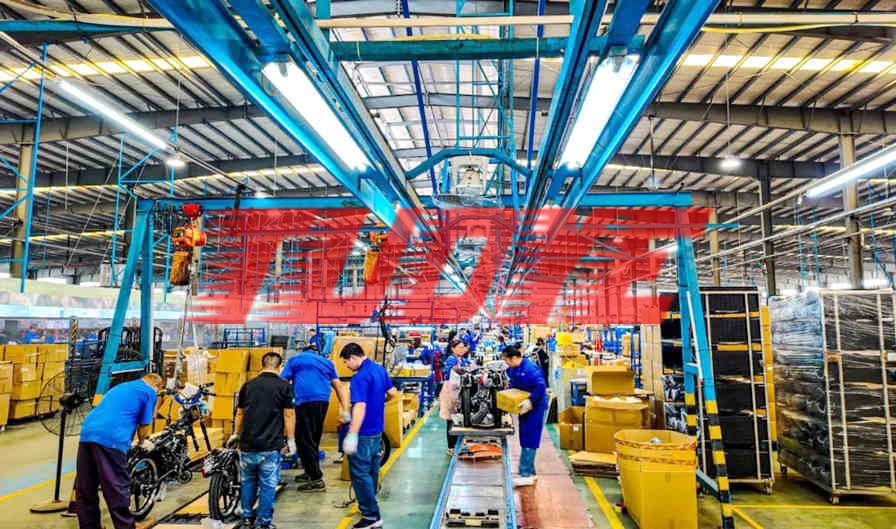
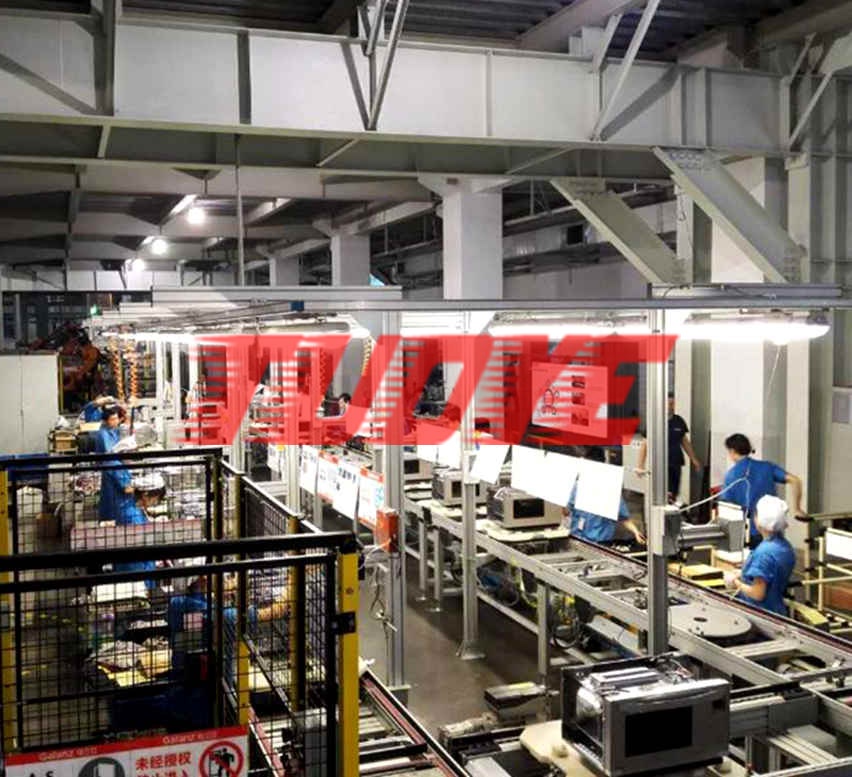
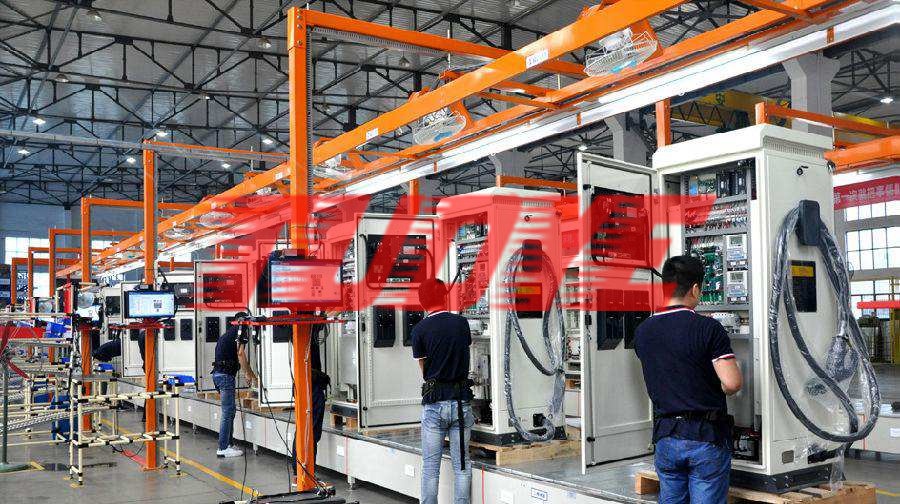
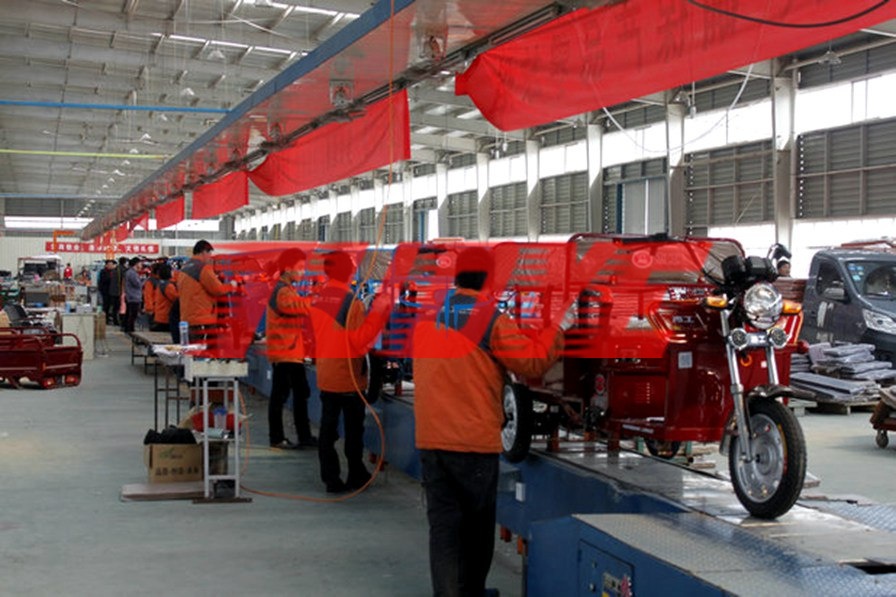
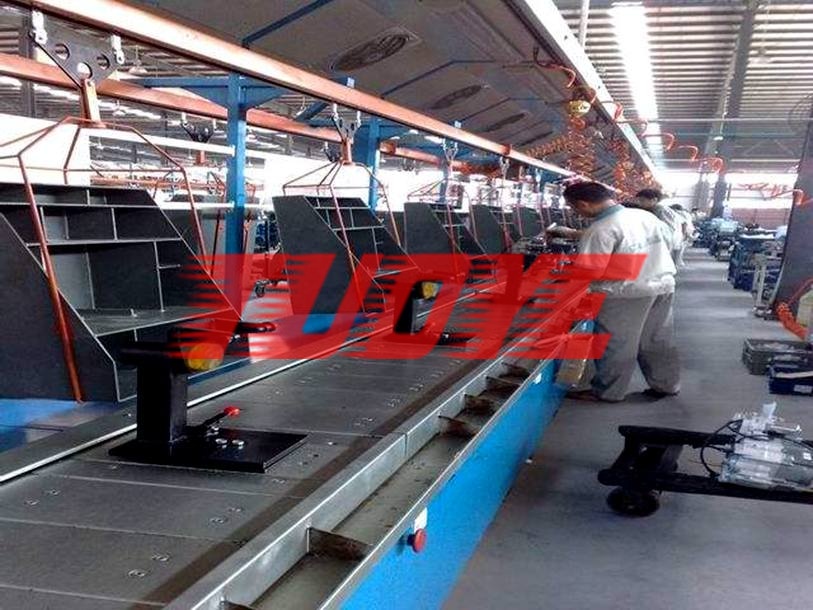
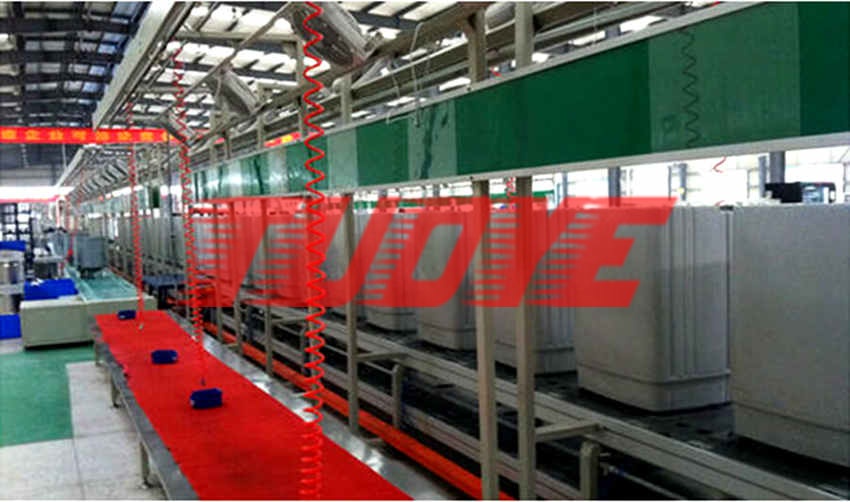
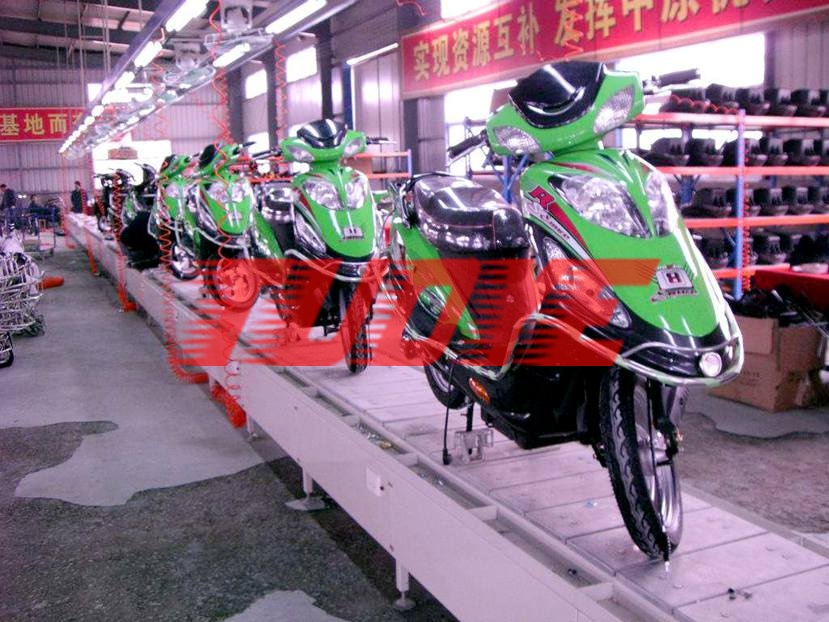
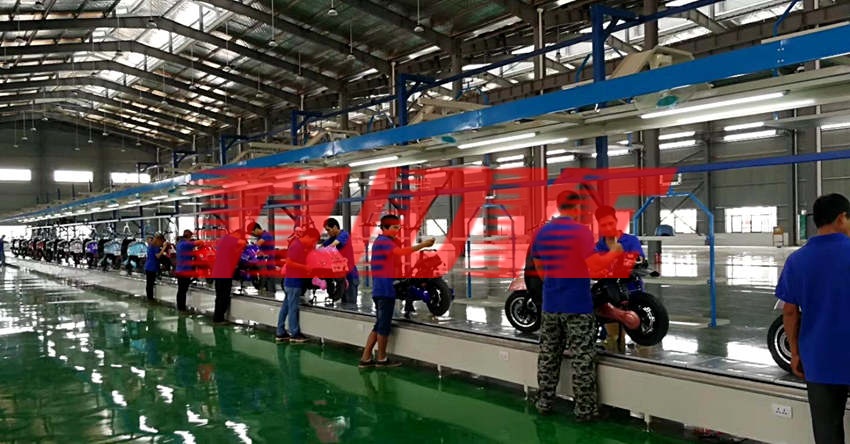
In a delivered project, the electric scooter assembly line runs twin parallel plate chains with white continuous tabletops, frames located by simple pallet boards; blue trusses carry lighting the full length, operators work single-side, 18-25 stations per line at 60-90 seconds a unit. The battery-bay station carries insulating mats and torque wrenches — connector engagement and wire-securing poka-yoke is that station's focus.
3. Configuration & Selection Tips
Two safeguards for peak-season mixed flows: kit the appearance parts before they board — one-trolley-per-vehicle traveling racks kill parts-hunting time — and set a two-vehicle buffer before the test positions to absorb the gap between test time and assembly beat. The controller station finishes parameter setting and whole-vehicle scan docking; lamp and brake stations adjust unit by unit against beam and braking force. Test data files by frame number for market-regulation traceability, and e-motorcycle test records stay consistent with certificate data.
4. Delivery & Service
From model range, daily program and workshop conditions, Tuoye — in Wenling, Taizhou, Zhejiang, China — issues the electric scooter assembly production line proposal; equipment enters after in-plant pre-assembly and trial runs and commissions through trial production. One-year machine warranty, chain plates and pallet boards supplied long-term, plus peak-season speed-ups and added test sections on existing e-moped production lines.
Disclaimer: Some articles on this site are compiled from public technical sources for reference. If any content infringes your rights, please contact us for removal. Please credit the source when reprinting.