PV and Storage Expansion: Burn-in Configuration and Capacity Balance on an Inverter Assembly Line
1. Industry Overview
PV and storage growth drives inverter makers to expand, and the bottleneck sits in burn-in, not assembly. An inverter production line — the trade also says inverter assembly line — assembles and tests power modules, control boards, magnetics and complete units. By type: string inverters serve residential and commercial rooftops in the largest numbers; central inverters go to ground-mount stations at megawatt scale, organized by modular power units; storage PCS and hybrid inverters carry battery interfaces with more bidirectional charge-discharge test stations than conventional models. Power-electronics assembly rests on three basics — ESD, torque control and loaded burn-in: IGBT and SiC modules are static-sensitive with full-line ESD standard; module-to-heatsink seating and main-circuit copper torque values sit in the process files; before ex-factory come withstand and insulation tests plus full-load burn-in, gated pre-test/burn-in/post-test — which is why burn-in stations usually outnumber assembly stations.
2. Process Flow & Line Configuration
The typical inverter assembly flow: heatsink housing on line → power modules and driver boards (thermal interface, torque-controlled fastening) → control and sampling boards → inductors and transformers (magnetics) → main-circuit copper and internal wiring → whole-unit fastening check → withstand and insulation test → lid closing → loaded burn-in → performance test (efficiency, protection functions) → packing.
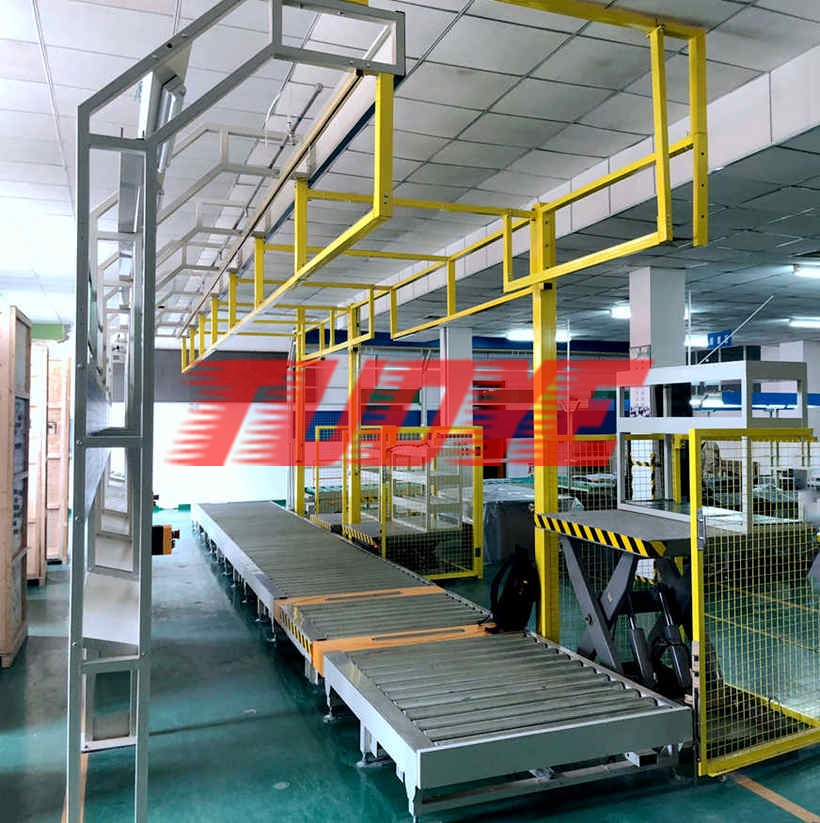
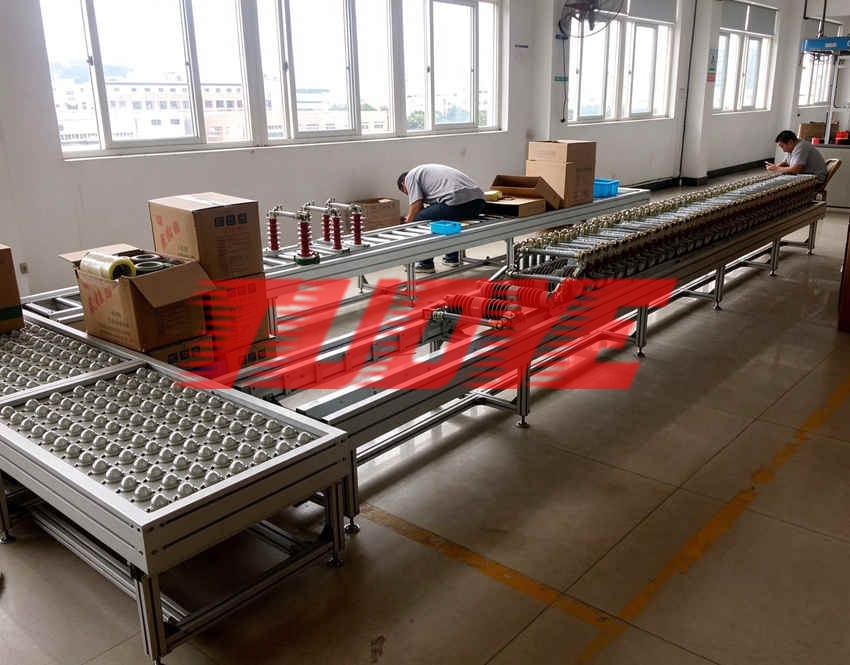
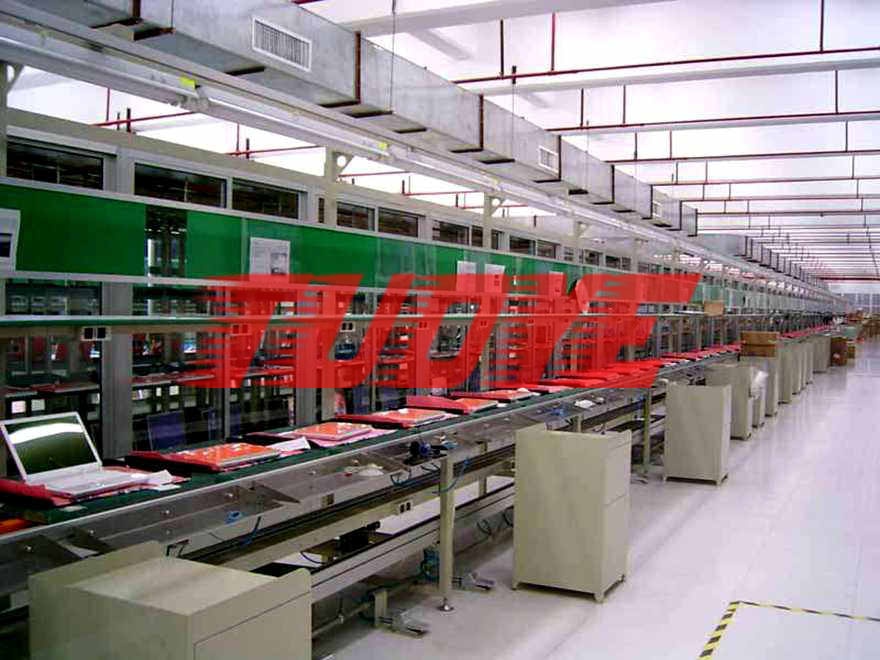
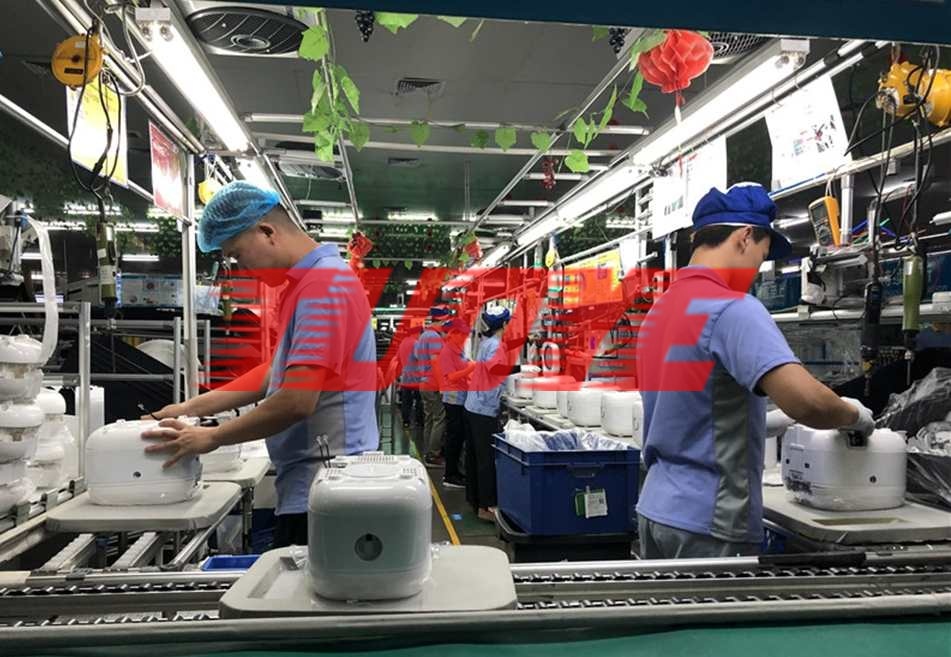
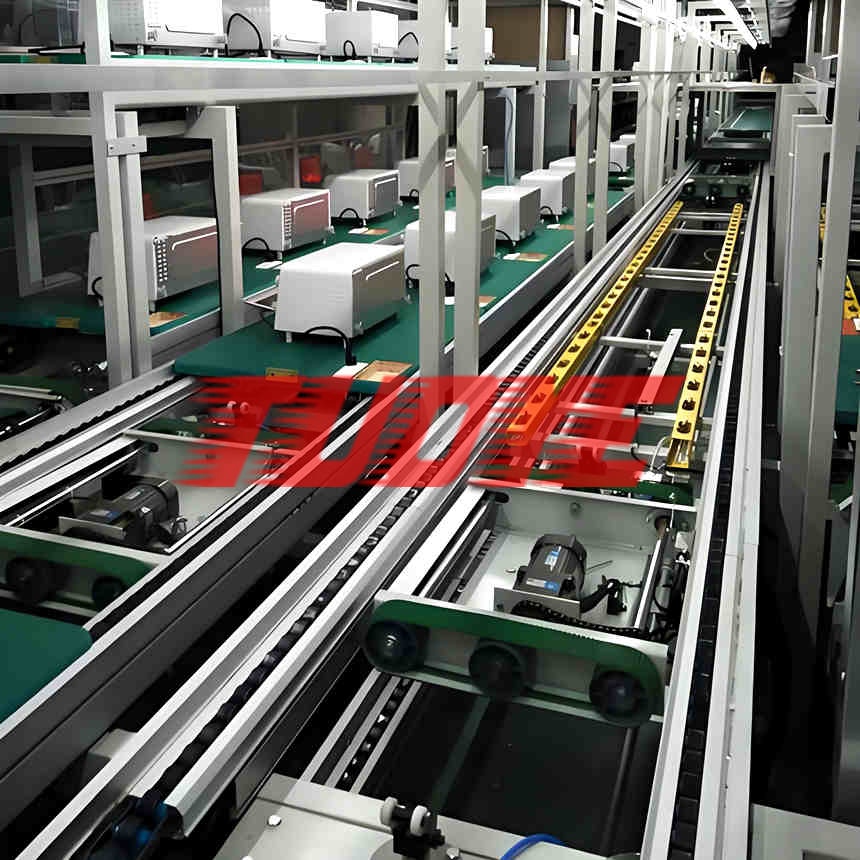
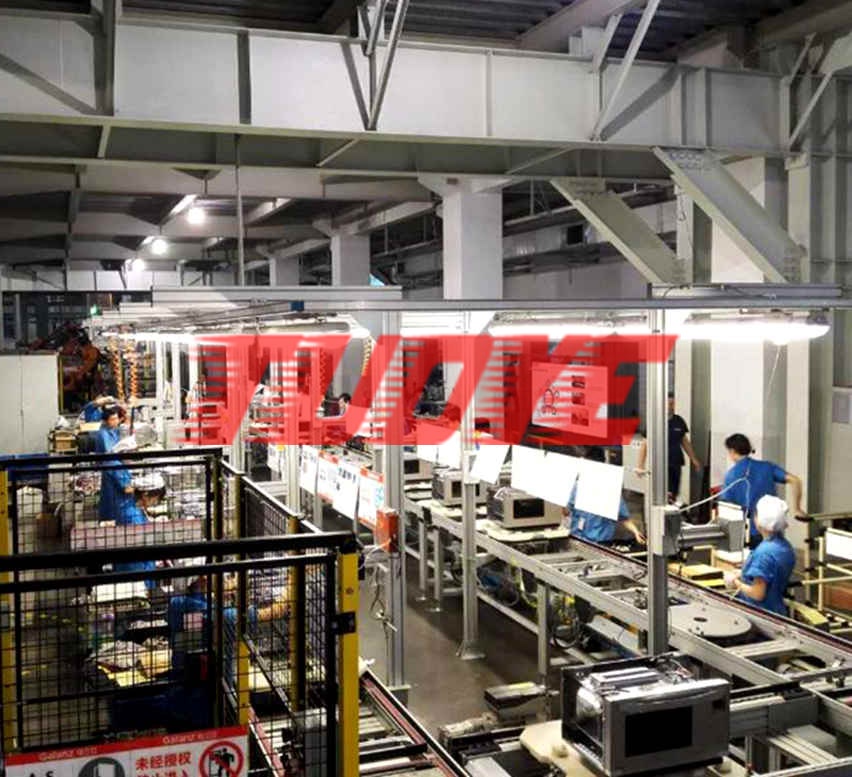
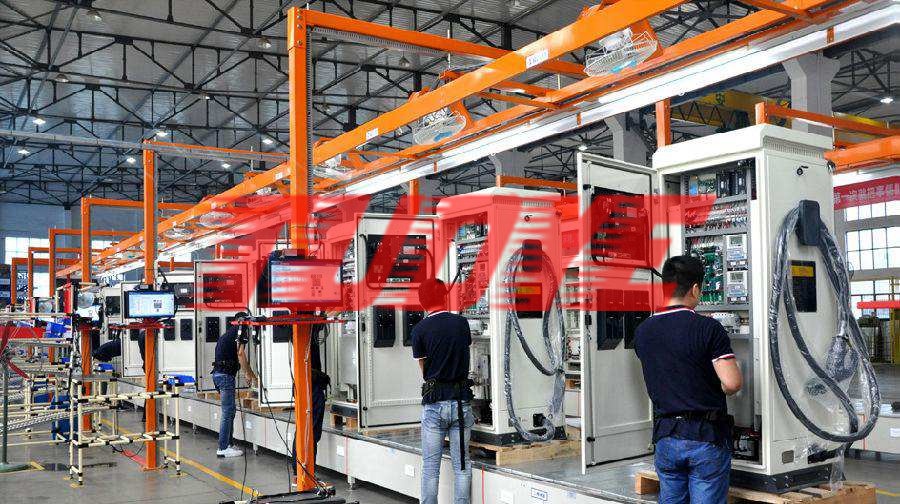
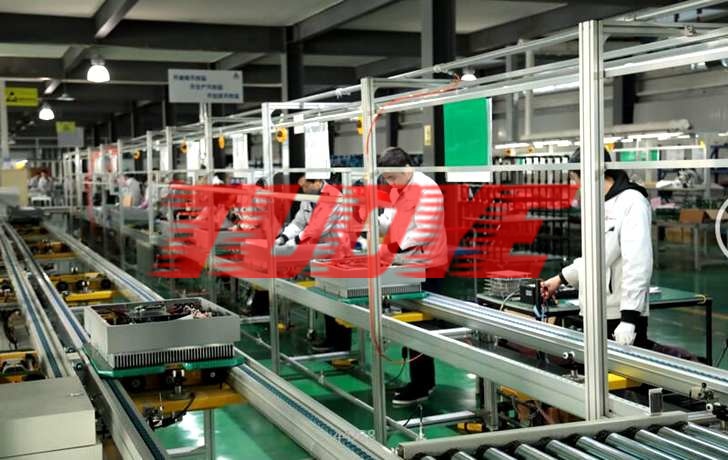
In a delivered project, the inverter assembly line runs a free-cycle speedchain with dwell pallets — operators park the pallet, finish the work, release — the right rhythm for long single-station labor and many variants; aluminum gantry frames hang one SOP card per station with air lines and lighting on the frame; the roller section at right takes units off line, operators in white ESD smocks.
3. Configuration & Selection Tips
Burn-in capacity on a PV inverter assembly line sizes as daily program times burn-in duration — calculate first, build second, or the two sections fall permanently out of balance. ESD management goes beyond equipment: wrist-strap monitors at the stations, because static damage surfaces only in burn-in and the monitors supply the data trail. The withstand and burn-in sections take enclosures and warnings — high-voltage safety rules rank ahead of output, always.
4. Delivery & Service
From power classes, daily program and burn-in scale, Tuoye — in Wenling, Taizhou, Zhejiang, China — issues the PV inverter assembly line proposal; equipment is pre-assembled in-plant and commissioned through trial production. One-year machine warranty, pallets and chain parts supplied long-term, plus burn-in expansions on existing inverter production lines.
Permanent link: https://www.liushuixian.com/post/pv-and-storage-expansion-burn-in-configuration-and-capacity-balance-on-an-inverter-assembly-line.html
Disclaimer: Some articles on this site are compiled from public technical sources for reference. If any content infringes your rights, please contact us for removal. Please credit the source when reprinting.