Smart Toilet Assembly Line Test Stations: Sealing, Aged Flow Testing and Whole-Unit Verification
1. Industry Overview
Smart sanitation upgrades drive smart toilet capacity growth, and test stations take a visibly bigger share than on traditional lines. A smart toilet assembly line — the trade also says smart toilet production line — runs the full sequence of bowl on-line, water-circuit assembly, electronics assembly and unit-by-unit testing. By type: integrated units marry ceramic bowl and electronics in one, carrying the fullest process; smart bidet seats ship alone for the retrofit market on lighter, faster lines; instant-heating models add a heating module in the water path with longer test times; high-trim models with auto-lid, foam shield and auto-flush get stations verified item by item against the function list. Products follow GB/T 23131 with electrical safety under the GB 4706 series. The water circuit — pressure regulator, flow meter, instant-heat module, diverter valve and spray wand in series — is the quality-critical system of the whole unit.
2. Process Flow & Line Configuration
The typical smart toilet assembly flow: bowl or seat unit onto pallet → cistern components → water-circuit assembly (pressure regulator, flow meter, instant-heat module, diverter valve, spray wand) → electronics (heated seat, sensors, control board) → seal test → aged flow test → whole-unit function check (flushing, heating, lid, drying, item by item) → grounding and withstand voltage → cleaning and packing.
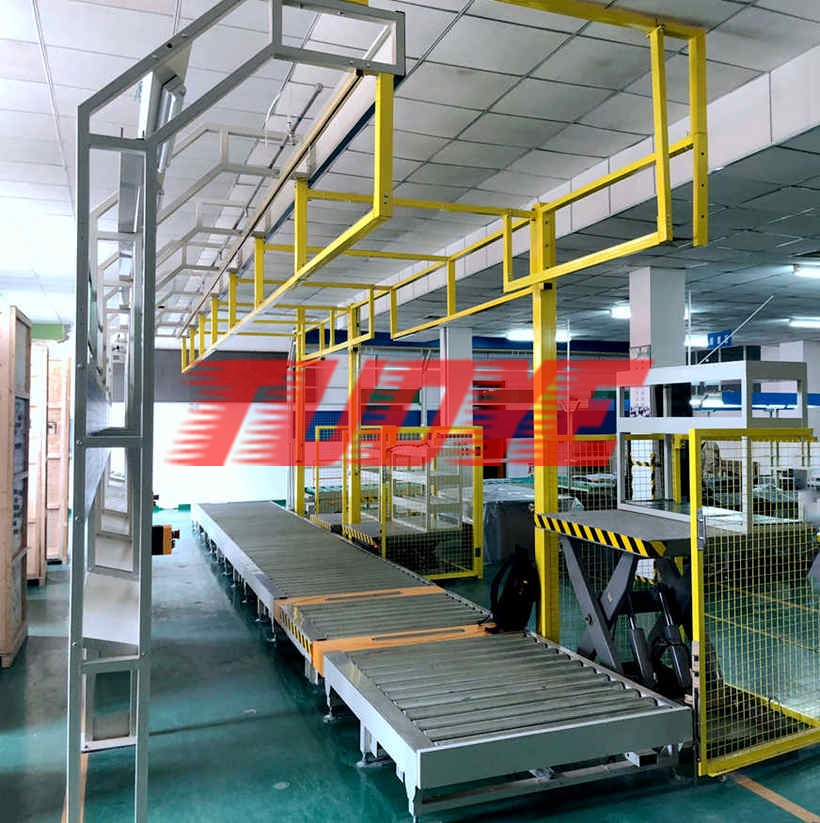
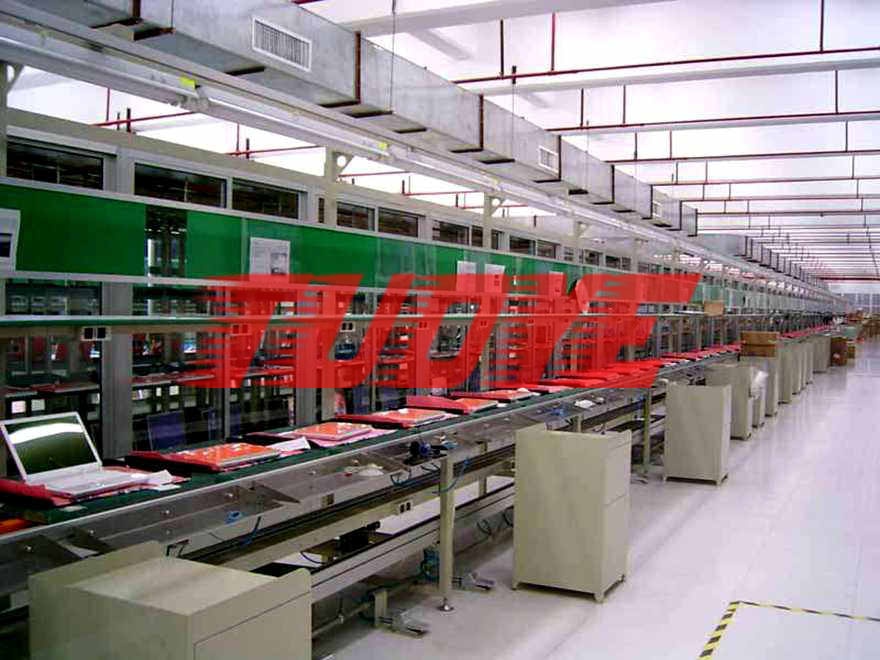
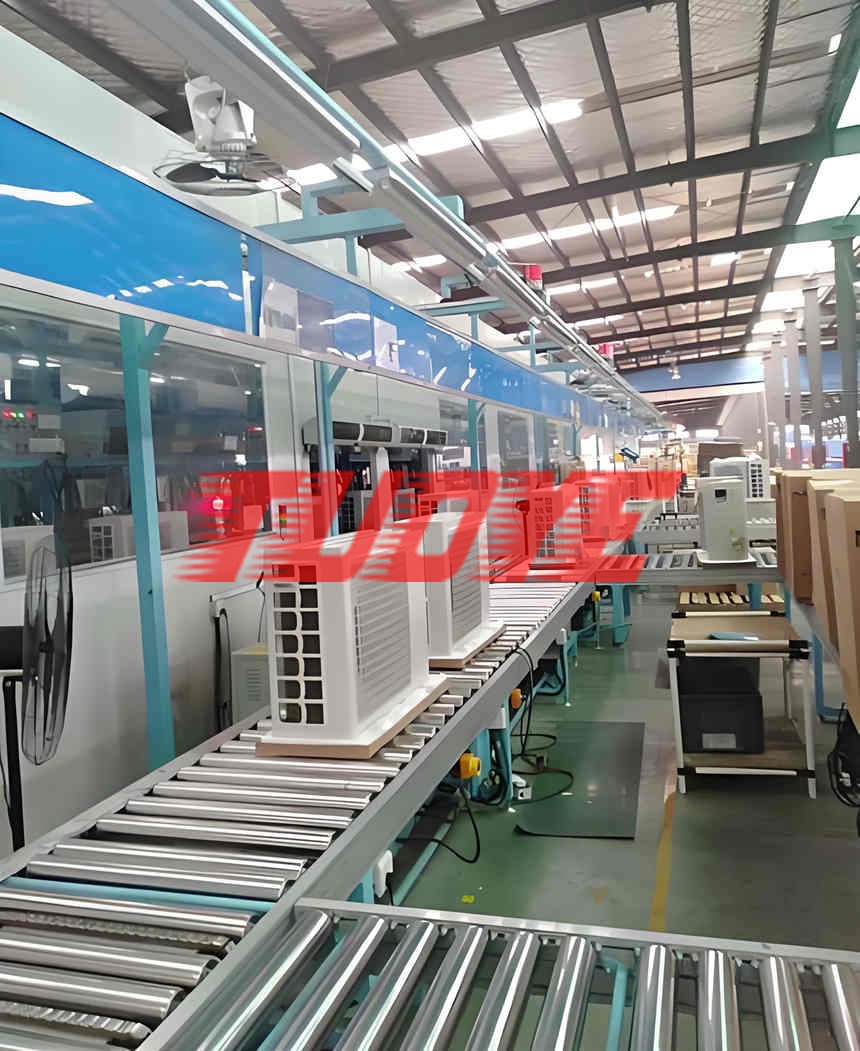
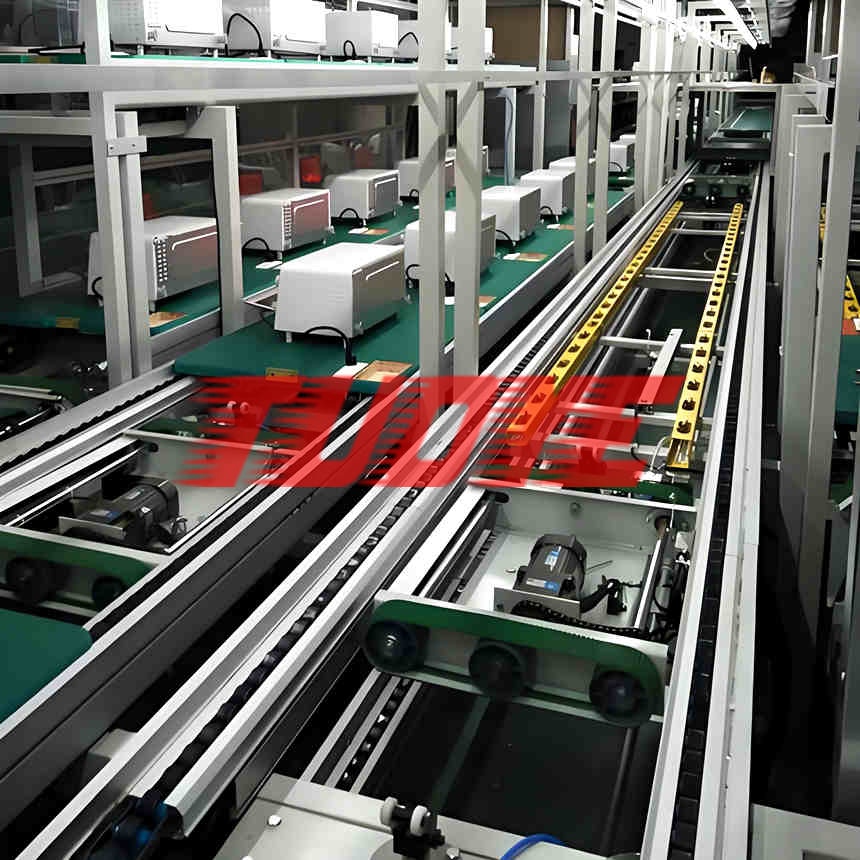
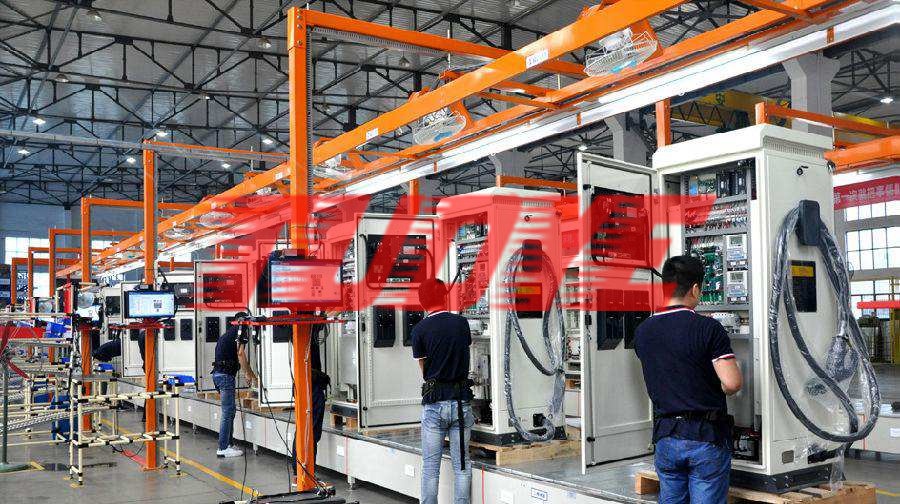
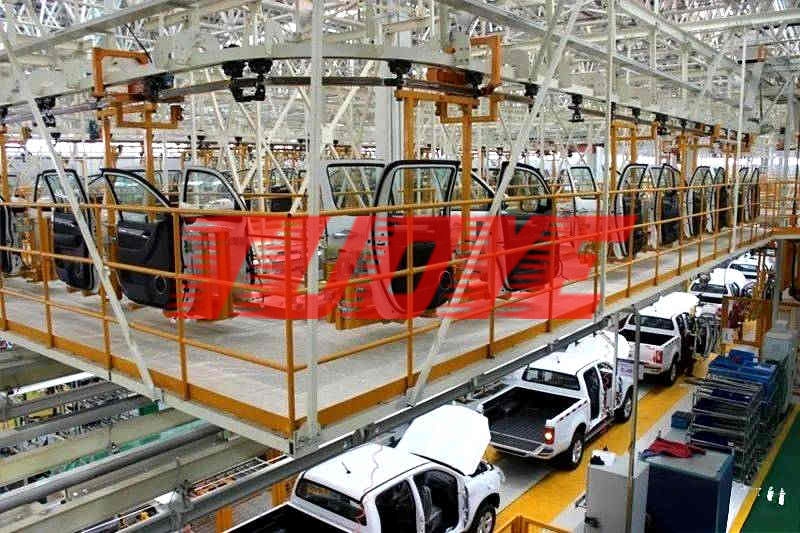
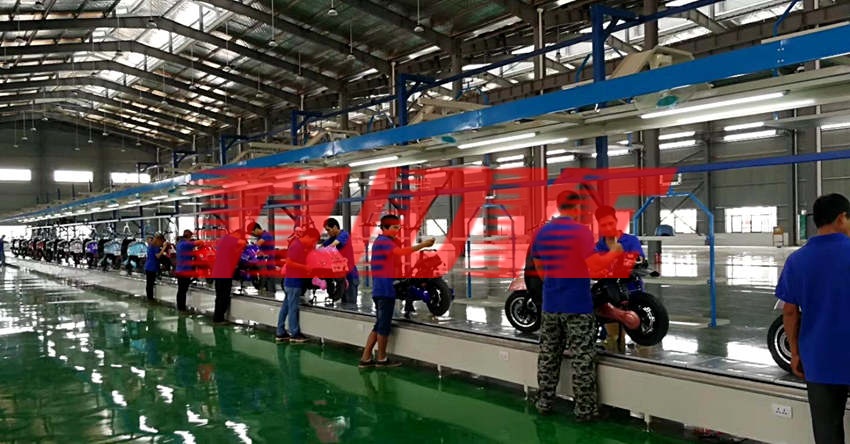
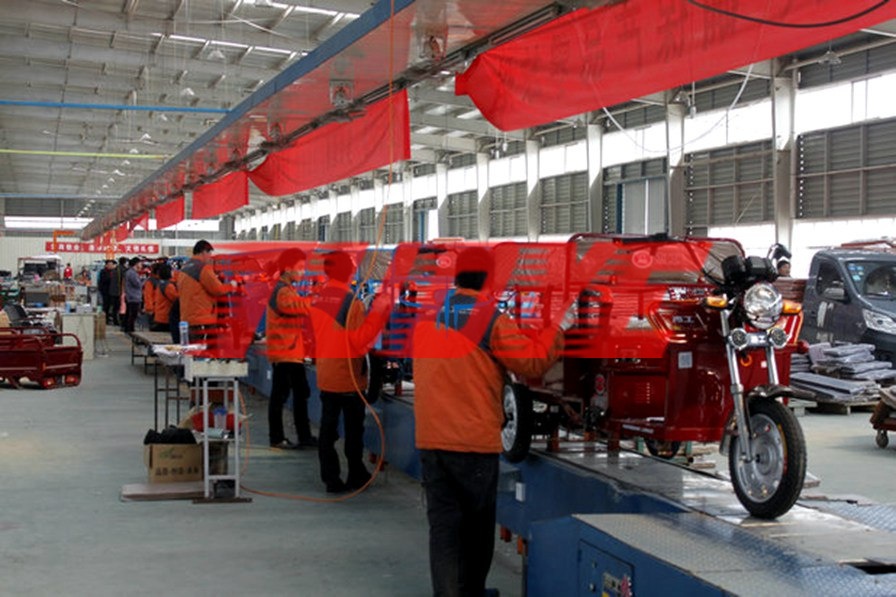
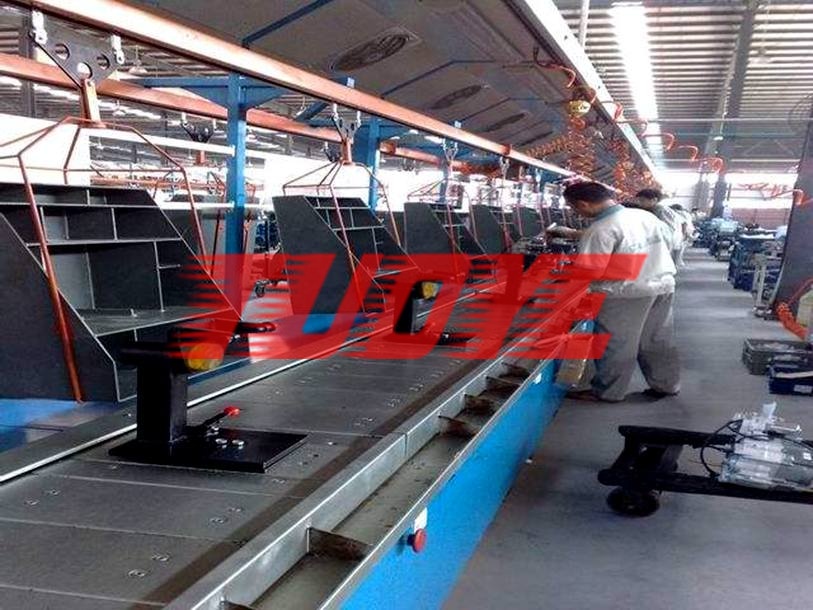
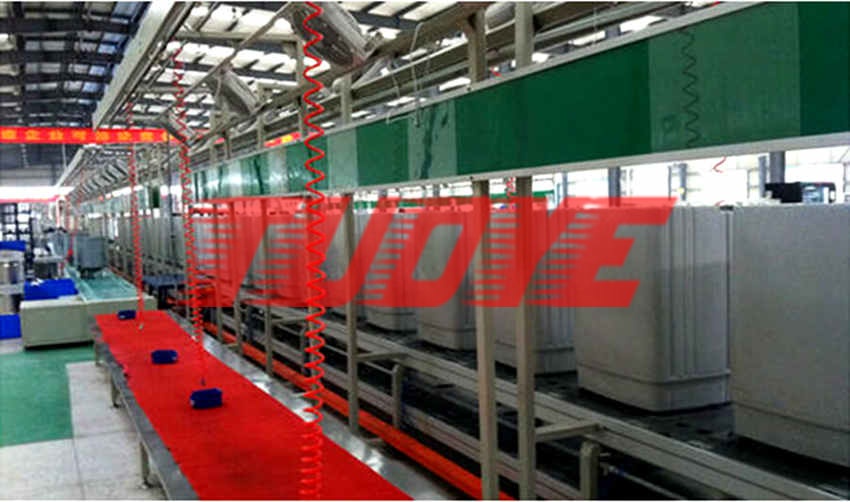
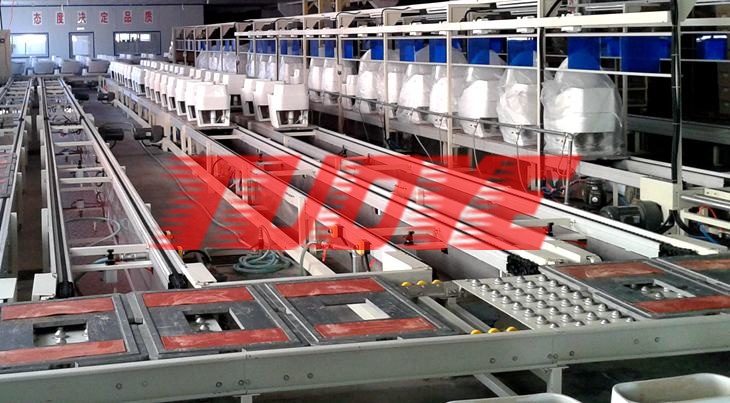
In a delivered project, the smart toilet assembly line runs a multi-tier speedchain in vertical layout: the lower tier assembles on metal pallets; inter-tier conveying carries parts with dust bags on the big pieces; lift-transfer sections at the ends merge pallets between lines, racks feeding both sides continuously. Assembly, buffering and testing stack in layers, cutting the footprint by roughly half versus single-level. Test stations run filtered recirculating water with quick couplers, data feeding MES for traceability.
3. Configuration & Selection Tips
Test-station counts on a smart toilet assembly line follow water-circuit complexity; water is filtered and softened to keep flow readings stable, and circuit components like instant-heat modules and diverter valves get incoming hydraulic sampling to avoid post-assembly rework. Function-verification benches configure per the model's function list — flushing, heating, lid and seat, drying, night light, each checked unit by unit. Bowls run heavy: pallets and lift-transfer sections are rated at the 60 kg class. Data retention with MES docking is optional, fit for plants running formal traceability systems.
4. Delivery & Service
From model list, daily program and utility conditions, Tuoye — in Wenling, Taizhou, Zhejiang, China — issues the smart toilet production line proposal; equipment is pre-assembled in-plant and commissioned on site through trial production. One-year machine warranty, pallets and test couplings supplied long-term, plus retrofits adding smart models to traditional sanitaryware lines.
Permanent link: https://www.liushuixian.com/post/smart-toilet-assembly-line-test-stations-sealing-aged-flow-testing-and-whole-unit-verification.html
Disclaimer: Some articles on this site are compiled from public technical sources for reference. If any content infringes your rights, please contact us for removal. Please credit the source when reprinting.