Cycle-Time Organization on High-Volume Appliance Lines: Test Section Configuration on a Washing Machine Assembly Line
1. Industry Overview
Washing machines are high-volume appliances — thousands of units a day demand lines organized to the hourly beat (JPH). A washing machine assembly line chains cabinet, tub, drive, electronics and testing into one continuous flow; the trade also says washing machine production line. By type: impeller machines (twin-tub, automatic) are simple and fast-paced; drum machines add suspension and heater modules with longer per-unit labor; export, domestic and e-commerce batches often share the line, pallets sized to the largest model with quick-change locating. Two quality keys: concentricity and sealing at tub marriage, and vibration-noise in spin. Factory testing follows GB 4706 for withstand, insulation and grounding, plus water-fill leak checks and spin run tests.
2. Process Flow & Line Configuration
The typical washing machine assembly flow: cabinet on line → suspension hanging (rods for impeller machines, springs and dampers for drums) → inner and outer tub marriage → motor and clutch (or direct drive) → harness and hoses → panel and control board → withstand/insulation/ground test → water-fill leak check → spin and run test → appearance check and packing.
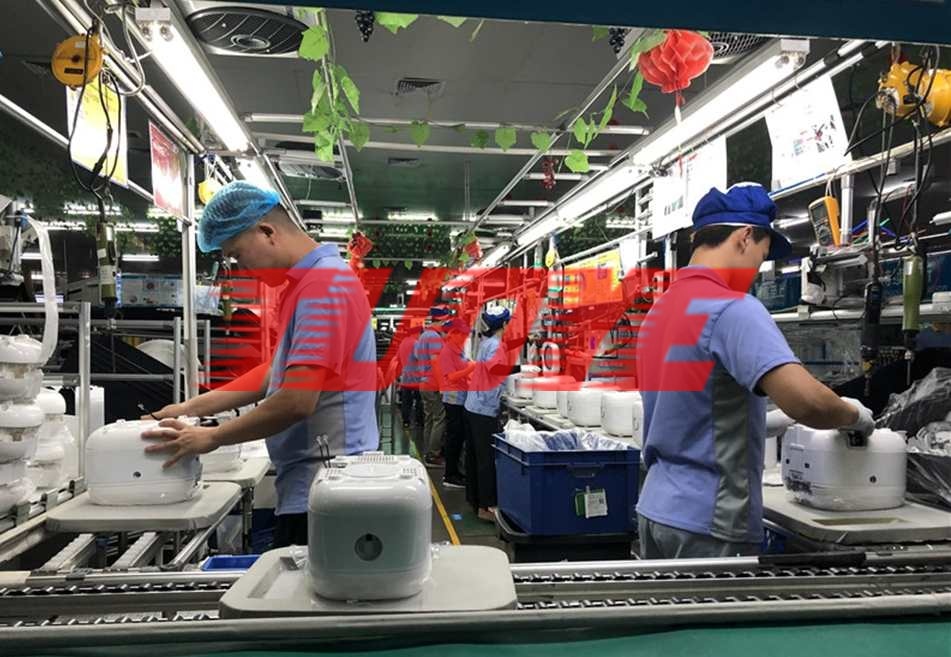
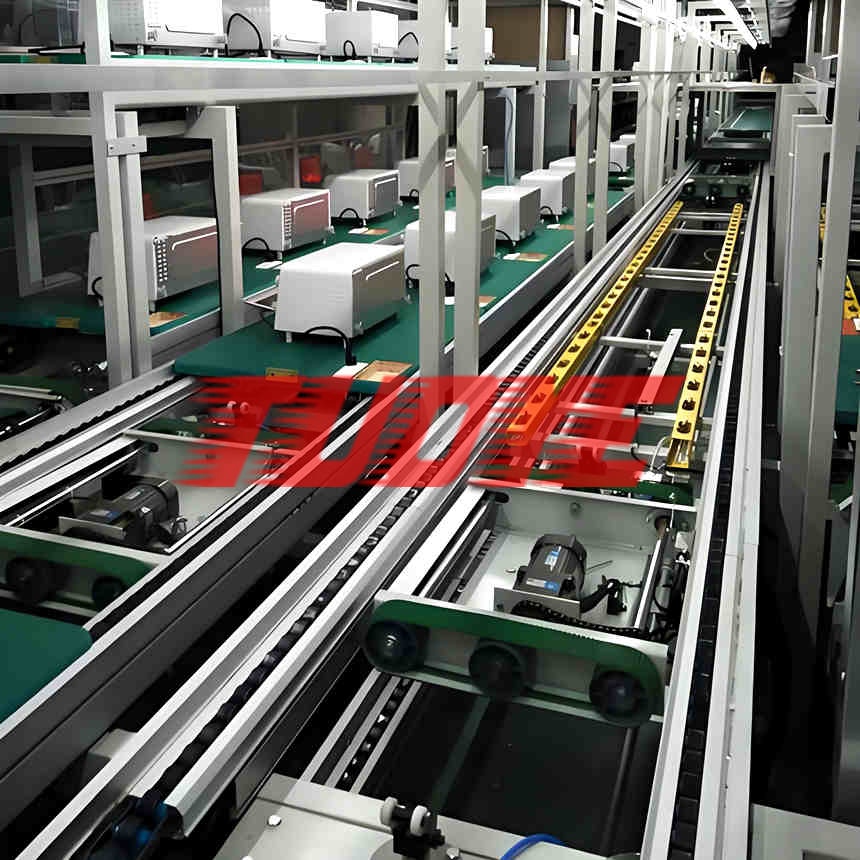
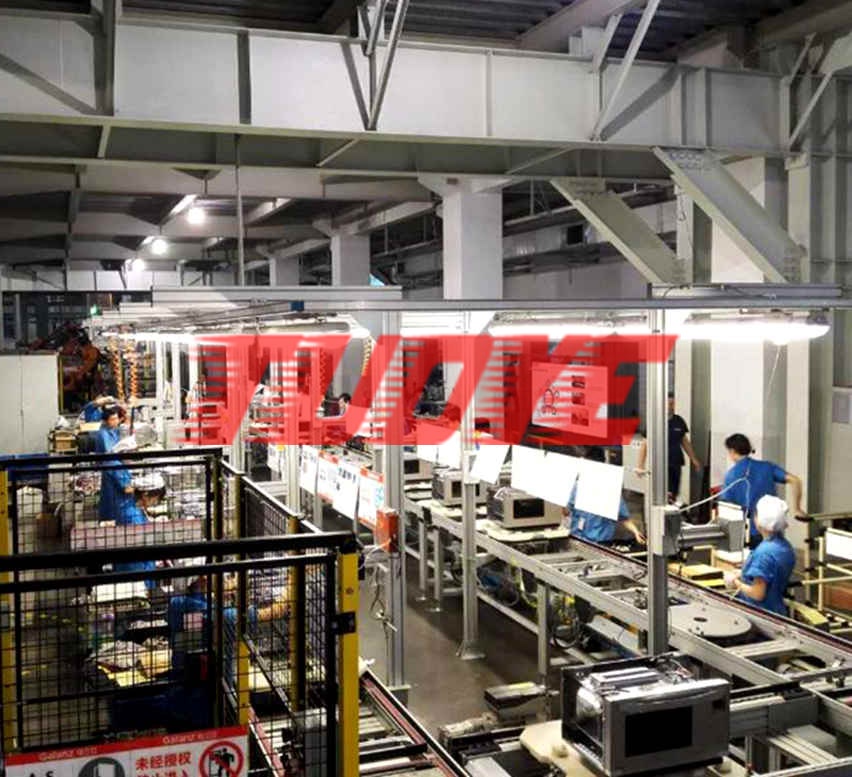
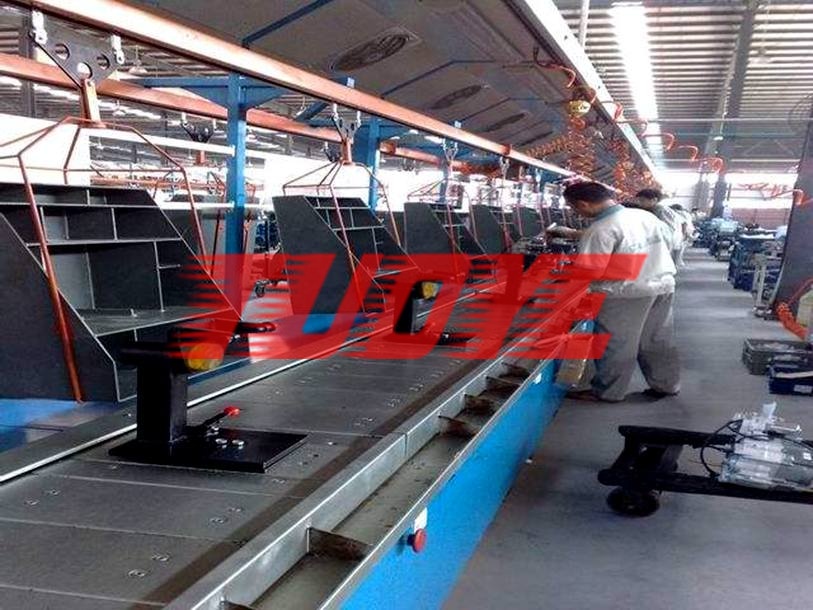
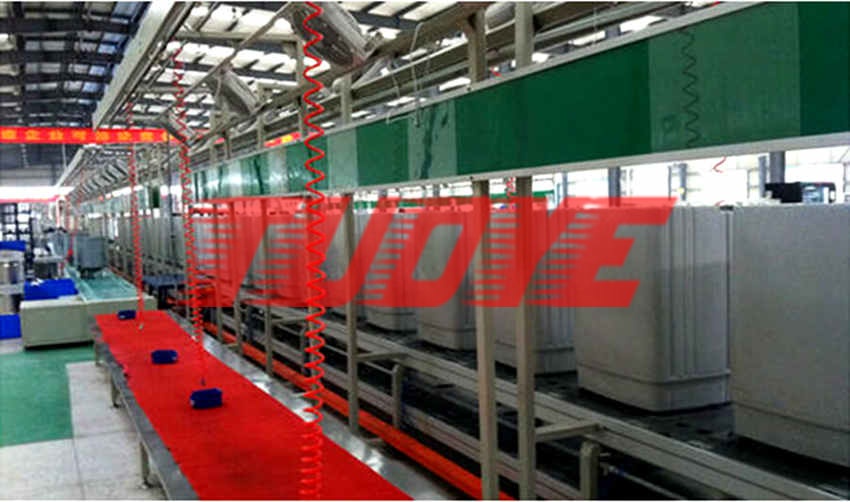
In a delivered project, the washing machine assembly line runs a two-tier circulating speedchain: the upper tier assembles, white pallets at one unit per board, side locating blocks fixing the cabinet and stoppers parking the pallet at station; the lower tier returns empty pallets for reuse. The photographed section is tub marriage — cabinet top open, tub dropping in — with a static-check bench on the left for seated work. The marriage station carries an assist manipulator, cutting labor strain and protecting tub-assembly quality.
3. Configuration & Selection Tips
Station counts on a washing machine production line derive backwards from the beat: 3,000 units a day on two shifts is roughly one unit every 19 seconds. Test stations deserve about triple the beat, covering the gap between test time and assembly time. The marriage station runs concentricity and runout checks — drum machines hang springs and dampers in diagonal order, uneven loading surfacing directly as spin vibration failures. The spin-test foundations get vibration isolation so common-mode interference never spoils the readings. With export batches mixed in, the test-zone supply switches voltage standards per market, and certification orders add sampling stations per the target market's safety items.
4. Delivery & Service
From models, daily program and workshop conditions, Tuoye — in Wenling, Taizhou, Zhejiang, China — issues the washing machine production line proposal; equipment enters after in-plant pre-assembly and trial runs and commissions through trial production. One-year machine warranty, pallets and chain parts supplied long-term, plus capacity expansions and added test sections on existing washing machine assembly lines.
Disclaimer: Some articles on this site are compiled from public technical sources for reference. If any content infringes your rights, please contact us for removal. Please credit the source when reprinting.