Control Cabinets vs Switchgear: Secondary Wiring Craft on a Control Cabinet Assembly Line
1. Industry Overview
The switchgear trade splits its products into primary-circuit cabinets (distribution boards) and secondary-circuit cabinets (control and VFD), and their production lines differ accordingly. A control cabinet assembly line — the trade also says electrical cabinet production line — builds the secondary-heavy family: PLC control cabinets, VFD cabinets, soft starters and SVG compensation cabinets. By cabinet: PLC cabinets carry the most ducting and terminal strips, wiring labor taking the biggest share; VFD and soft-starter cabinets need heat dissipation and cable room around the power devices; SVG cabinets go modular plug-in. Secondary wiring follows GB 50171-2012: copper insulated wire no smaller than 2.5 mm² for current circuits and 1.5 mm² for the rest, with wire markers, ducting and terminal strips standard — and insulation resistance, power-frequency withstand and protection-action tests before ex-factory.
2. Process Flow & Line Configuration
The typical control cabinet assembly flow: cabinet frame on line → primary copper and busbars (torque fastened and marked) → breakers, contactors, VFD drives and components → ducting and terminal strips → secondary wiring (markers sleeved, dressed and tied) → door HMI, buttons, indicators → wire-number verification → insulation and power-frequency withstand → powered simulation debugging → factory inspection.
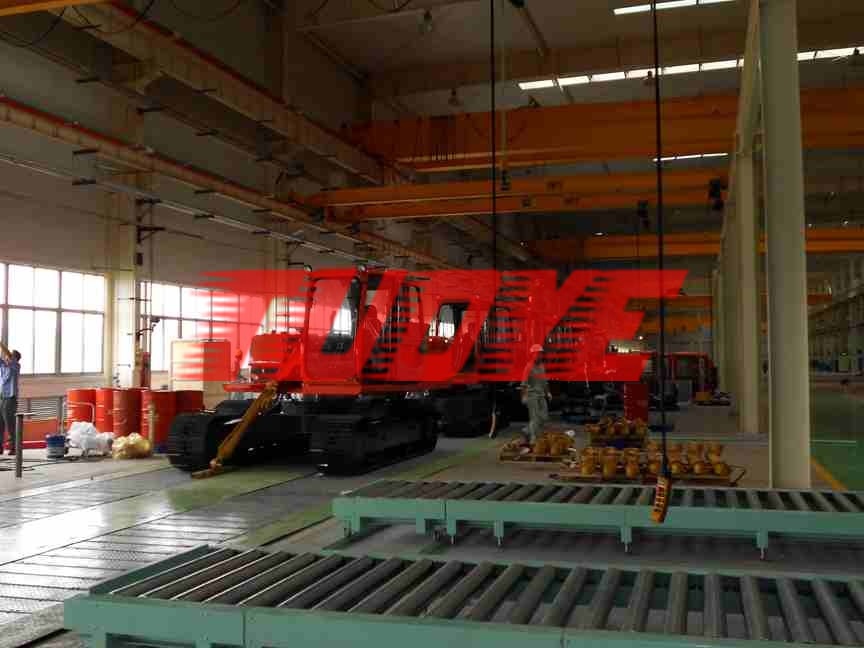
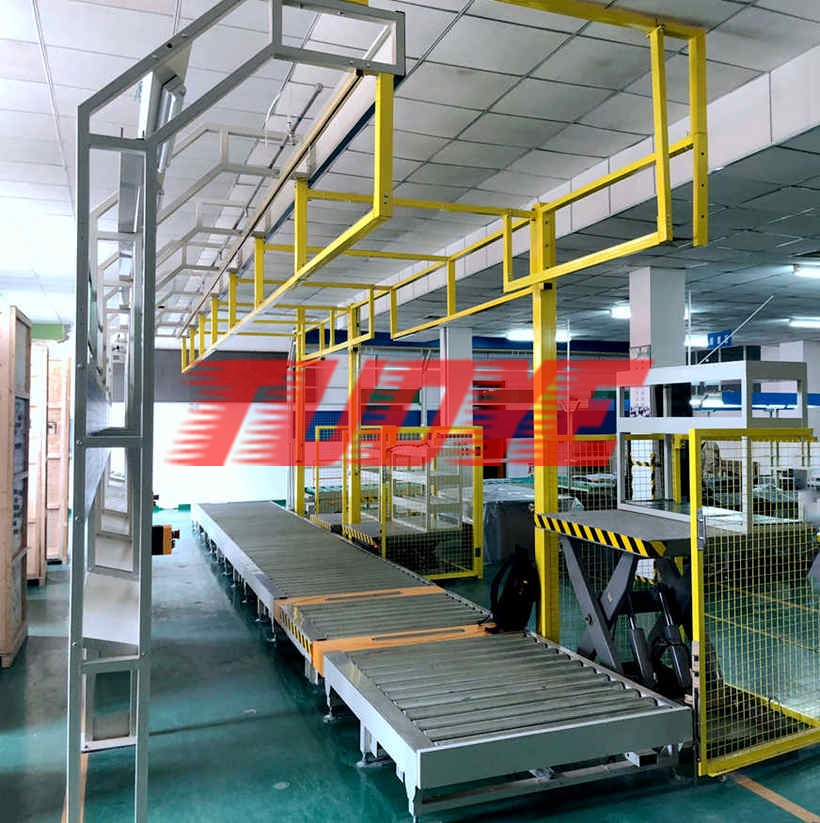
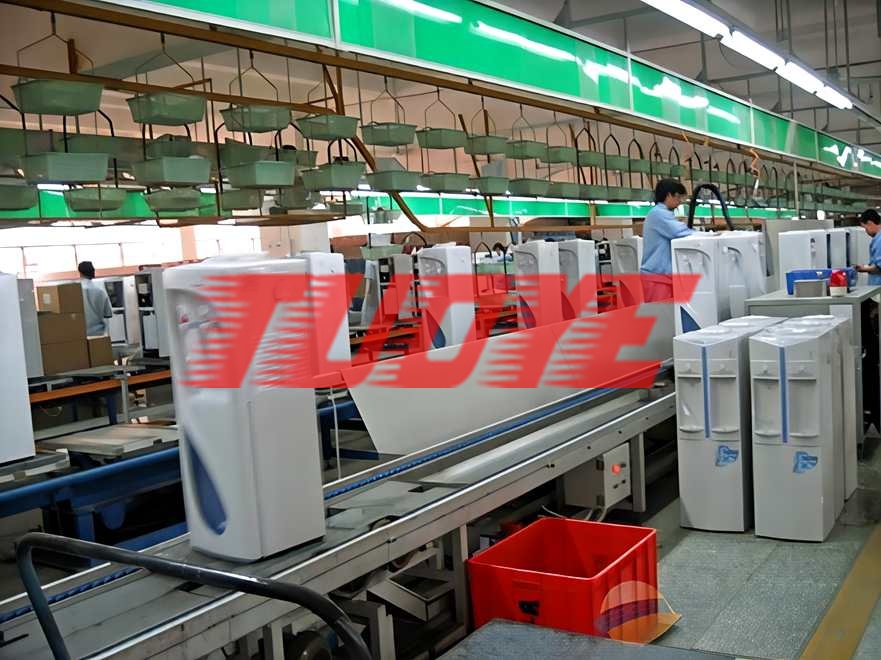
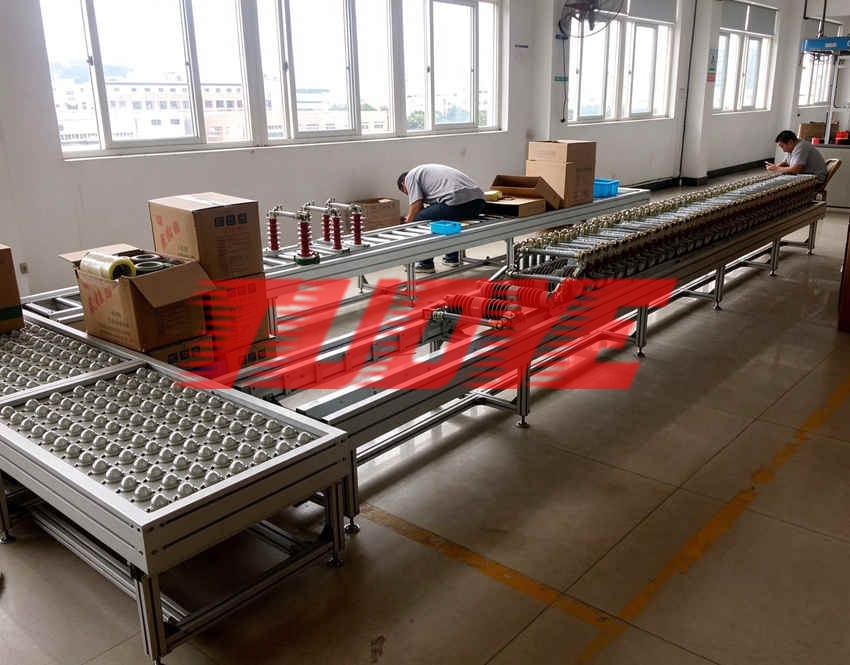
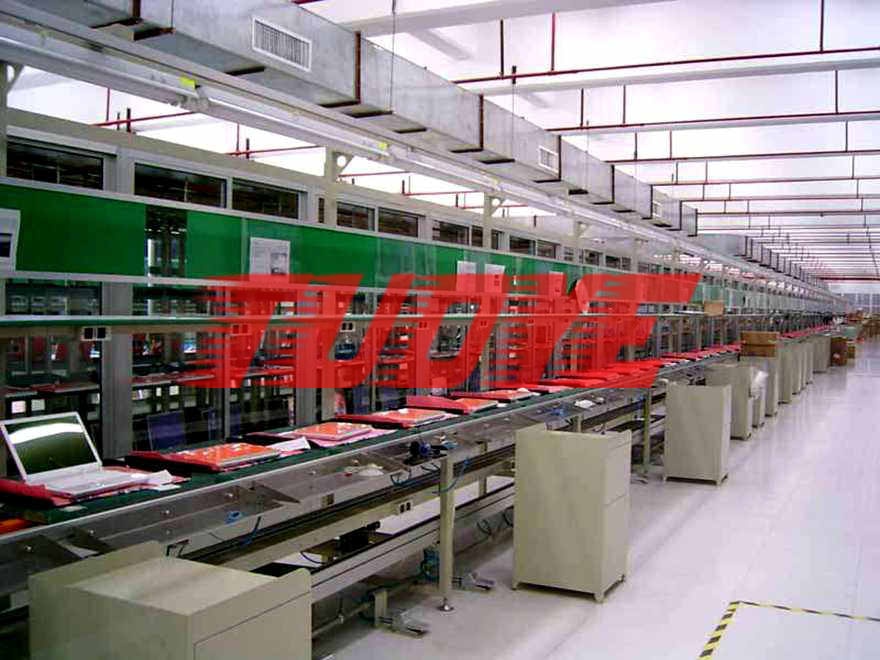
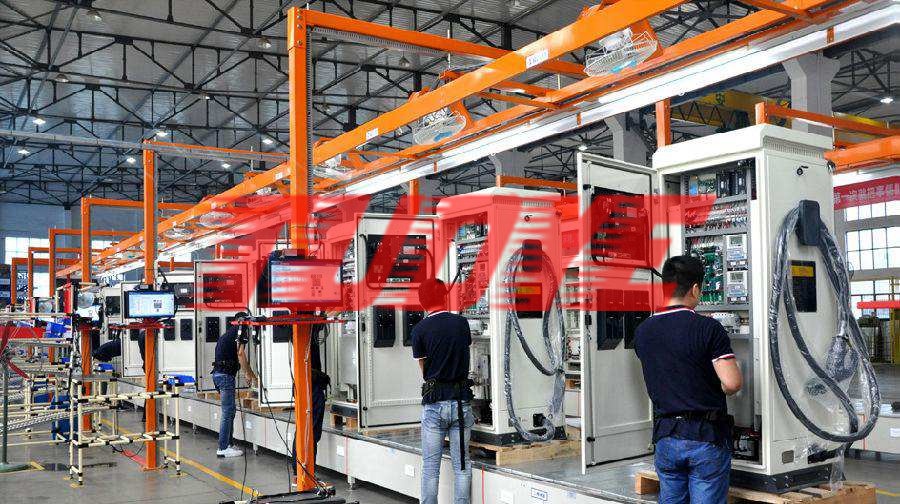
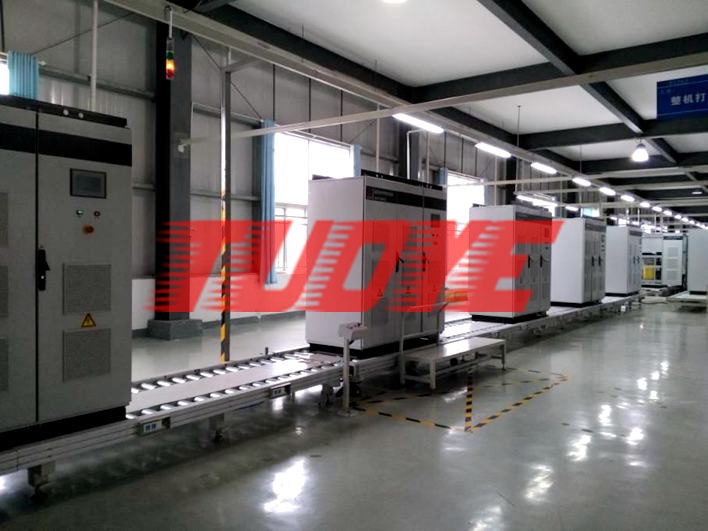
In a delivered project, the control cabinet assembly line runs heavy-duty speedchain pallets — cabinets of hundreds of kilograms, one per board, twin parallel lanes — with the process flow reading itself: bare frames taking copper at the front, mid-line cabinets with doors on and wiring finishing, and the lane head already lit with HMI screens in powered debugging. Section boards hang from the beams, three-color ANDON lights sit on the columns, yellow-black hazard tape zones the inspection hold on the epoxy floor, and the withstand and debugging sections carry their own enclosures.
3. Configuration & Selection Tips
Station lighting on a control cabinet assembly line is configured to wiring-work illumination. Secondary-wiring stations deserve inline wire-marker printers — print and sleeve on the spot, and wire-number errors drop. Debugging-section power runs through an isolation transformer with regulation, keeping grid wobble out of withstand and calibration data; station supply capacity is checked against cabinet loads, and HV test enclosures with audible-visual warnings are standard safety, not options.
4. Delivery & Service
From cabinet range, capacity and workshop conditions, Tuoye — in Wenling, Taizhou, Zhejiang, China — issues the electrical assembly line proposal; equipment enters after in-plant pre-assembly and loaded trial runs and commissions through trial production. One-year machine warranty, pallets and stopper parts supplied long-term, plus volume retrofits and debugging-section expansions on existing control cabinet assembly lines.
Permanent link: https://www.liushuixian.com/post/control-cabinets-vs-switchgear-secondary-wiring-craft-on-a-control-cabinet-assembly-line.html
Disclaimer: Some articles on this site are compiled from public technical sources for reference. If any content infringes your rights, please contact us for removal. Please credit the source when reprinting.