E-Bike Assembly Line Test Stations Under the New National Standard: Insulation, Withstand Voltage and Roller Testing
1. Product & Industry Overview
An e-bike assembly line — the trade also says electric bike production line or e-bike assembly line — is the core equipment of electric bicycle, electric moped and e-motorcycle assembly, marrying frame, fork, wheels, motor, battery, controller, harness, plastics and seat into finished vehicles to the beat. The lines built by Tuoye in Wenling, Taizhou, Zhejiang, China serve e-bike plants, e-motorcycle plants and shared-fleet manufacturers.
By standard, e-bikes divide into electric bicycles (new national standard: speed and weight limited, pedal-equipped), electric mopeds and e-motorcycles (motor-vehicle homologation); by duty they split into commuters, heavy-load carriers, folders, sharing custom models and delivery bikes. Electrical content, plastic structures and test items differ widely, so the e-bike production line must be designed around the product positioning — above all the new national standard's hard off-line requirements on vehicle mass, overspeed alert and insulation withstand, for which the line must reserve test stations.
2. Process Flow & Line Configuration (as shown)
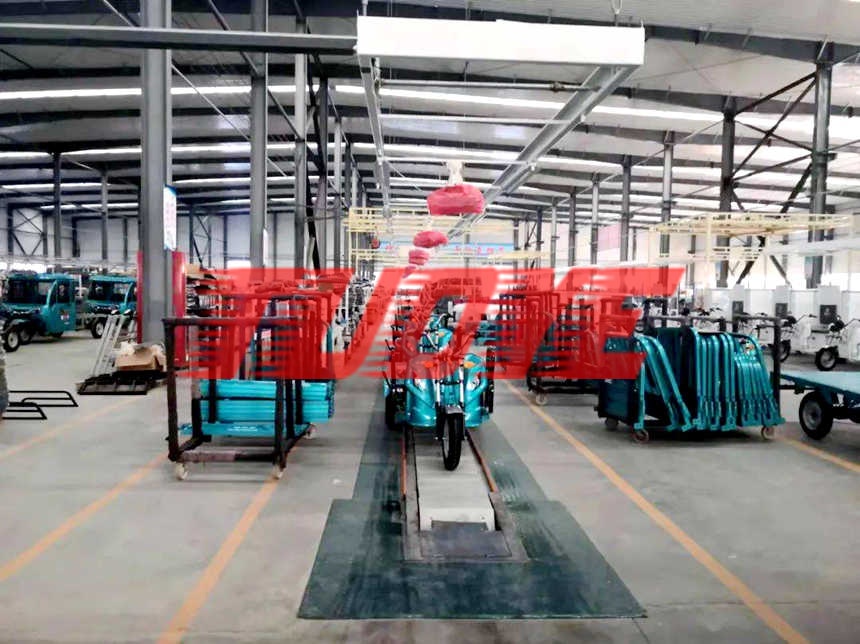
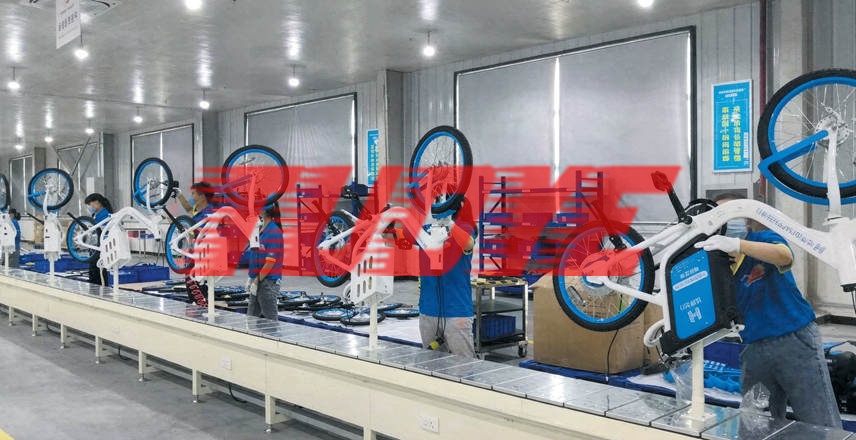
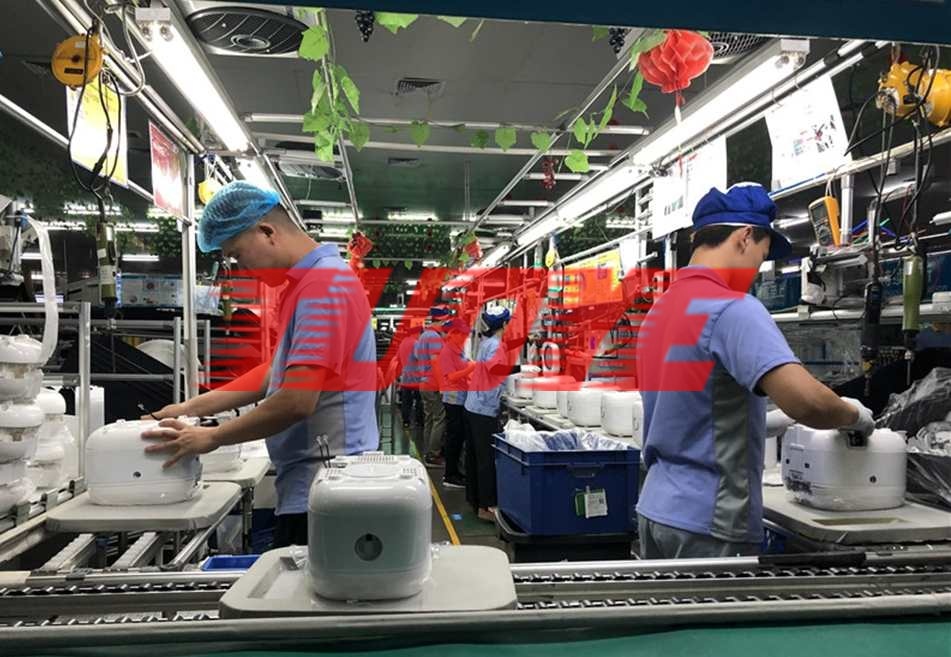
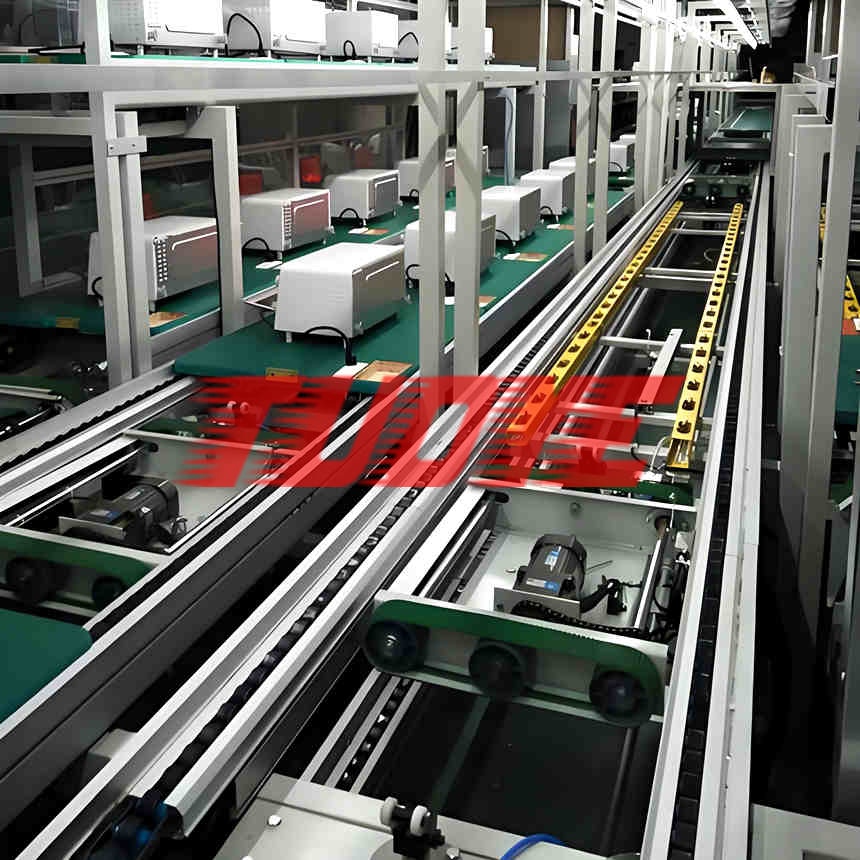
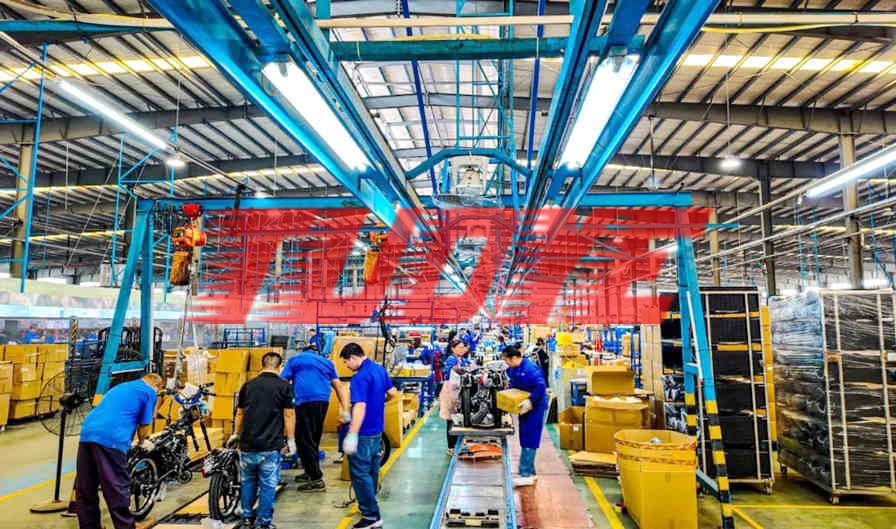
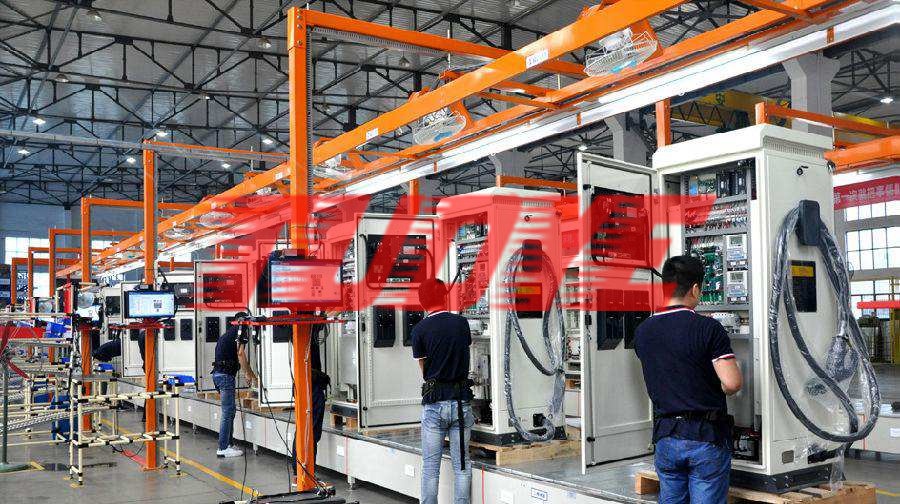
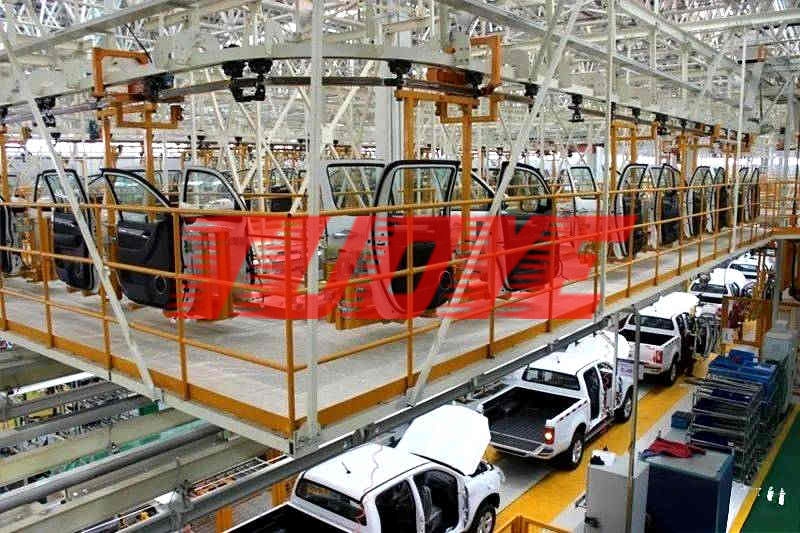
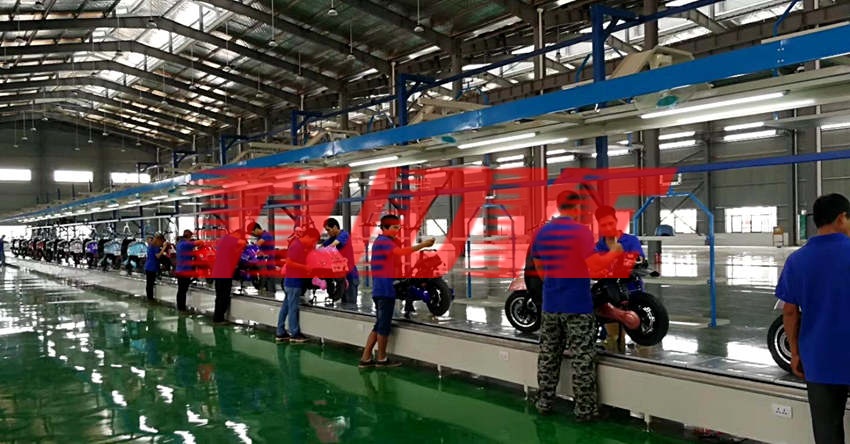
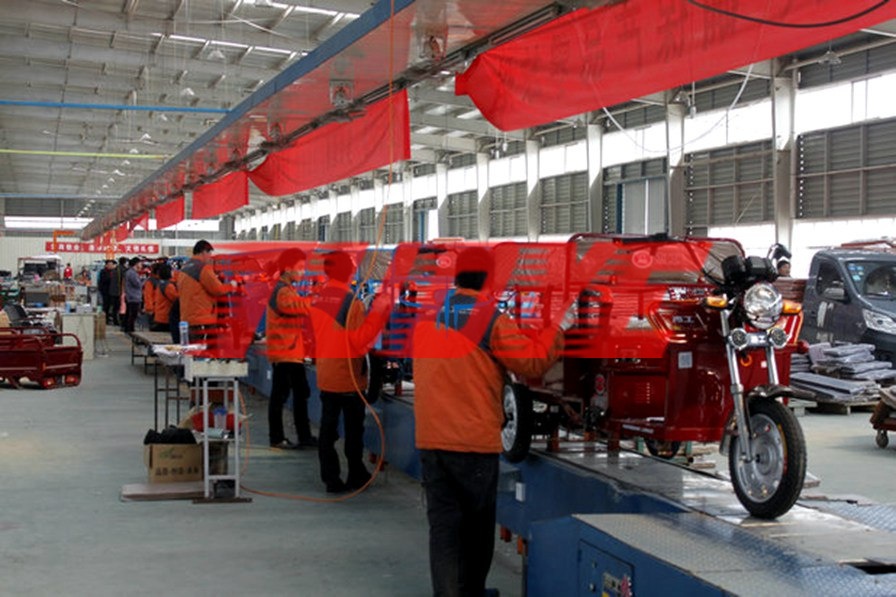
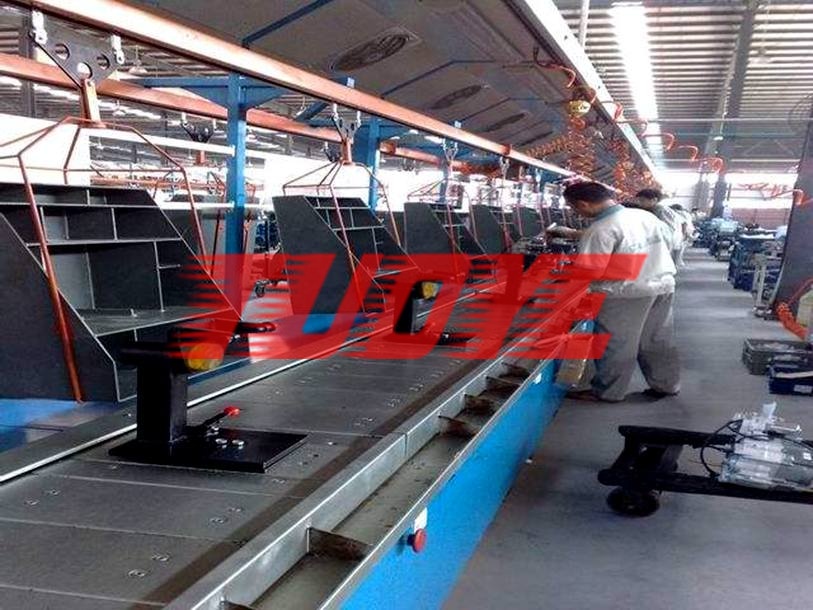
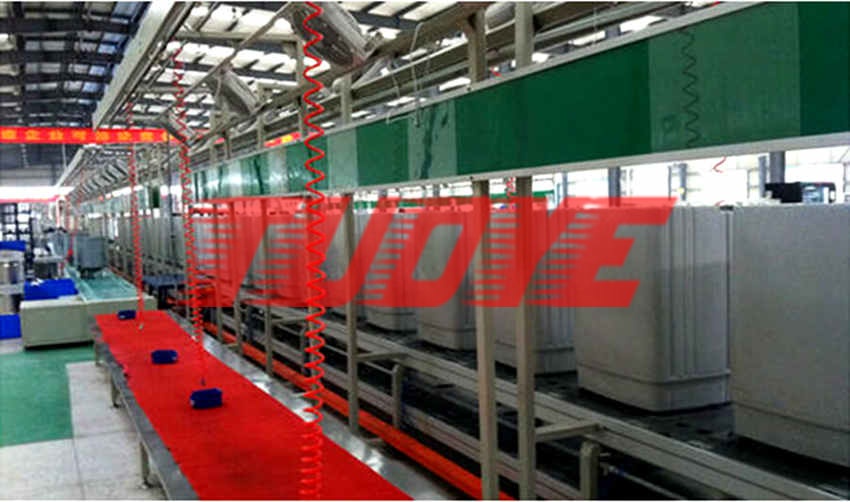
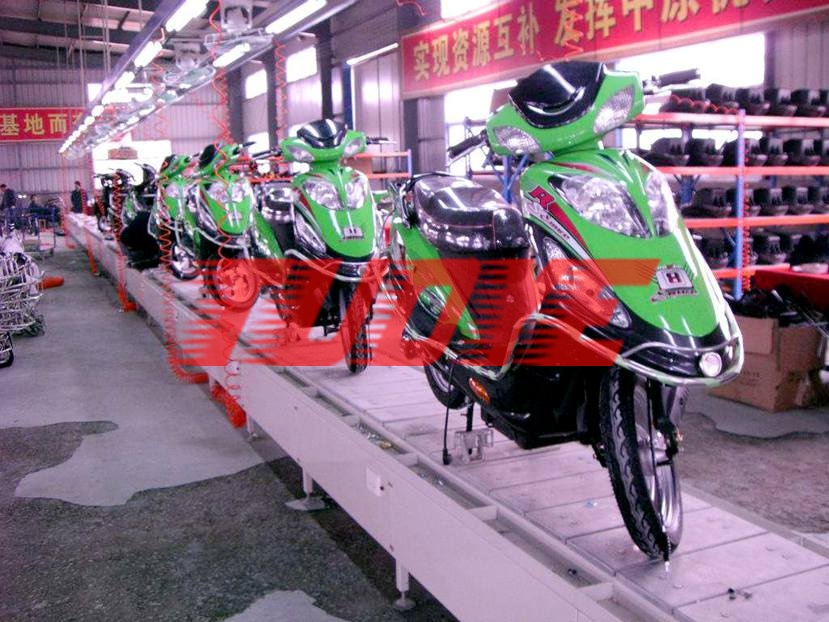
As shown, this case electric bike assembly line is a plate chain with white pallets carrying the vehicles, straight single-row with roughly 5-6 main stations, the vehicles more complete toward the tail; metal-extrusion line frame with red spiral air hoses and junction boxes feeding each station, a lighting rack overhead for working illumination, and line-side racks holding frames, plastics and cartons. The typical production sequence: frame on line → front fork and handlebar → motor (mid-drive or rear hub) → controller and harness → battery installation and connection → brake and drive adjustment → plastics and seat → static whole-vehicle checks (insulation, withstand voltage, lamps, brakes) → dynamic roller testing → appearance check, packing and off-line. The beat of an e-bike assembly line usually runs from tens of seconds to a minute-plus, and line balancing with parts feeding decide single-line daily output.
3. Customization Options
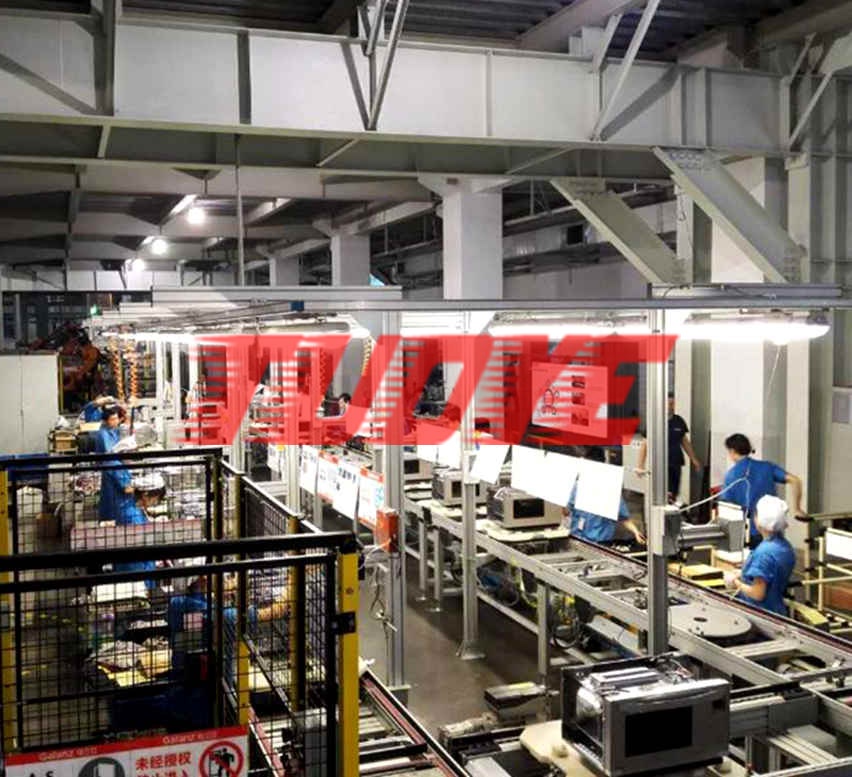
The e-bike assembly line is non-standard custom equipment: line length and station count calculated to the annual program; wheel sub-assembly, frame pre-assembly and plastics kiosk stations hang off the main line; the test section integrates insulation resistance, withstand voltage, whole-vehicle roller benches and scan traceability, meeting the off-line rules of an electric bike production line; stations carry air tools, smart drivers and torque management. From your models, capacity and workshop, Tuoye issues the complete proposal and quotation for an e-bike assembly production line, with later expansion and upgrades supported.
4. Delivery & Service
Project-based delivery: early checks cover the models (new-standard e-bikes, e-motorcycles), annual program and workshop dimensions; engineers issue the layout and equipment list plus station balancing and line-side logistics plans; equipment ships after in-plant pre-assembly and trial runs, is installed, commissioned and accepted in trial production, with operators and maintenance trained. One-year machine warranty, long-term supply of pallets, chain plates and pneumatic parts, plus old-line speed-ups, twin-line conversions and test-station upgrades. Building a new electric bike production line or e-moped assembly line — or integrating insulation withstand testing, roller dynamics and MES traceability into an existing e-bike assembly production line — Tuoye measures on site, quotes to the facts, and welcomes your call on lead times.
Disclaimer: Some articles on this site are compiled from public technical sources for reference. If any content infringes your rights, please contact us for removal. Please credit the source when reprinting.