Mixed-Model Production for Micro EVs: Flexible Design of a 4-Wheeler Assembly Line
1. Product & Industry Overview
A 4-wheeler assembly line — also called a 4-wheeler production line — is the turnkey equipment for four-wheel EV, micro EV and low-speed 4-wheeler assembly, organizing everything from chassis marriage and powertrain assembly through body trim and whole-vehicle debugging. The lines supplied by Tuoye in Wenling, Taizhou, Zhejiang, China support multi-model mixed production, matching the micro EV industry's many-variety, mid-volume character.
Industry-wise, the 4-wheeler model range is wide: micro low-speed EVs (two- and four-seat) serve community and campus mobility; electric sightseeing cars shuttle scenic areas and parks; electric trucks and yard vehicles handle factory logistics; low-speed canopy 4-wheelers carry urban-rural short-haul transport. Model differences concentrate in battery capacity, motor power, body structure and trim complexity, so the station layout of a micro EV production line must balance chassis, powertrain, body trim and electrical debugging sections — with flexibility reserved for model changeovers.
2. Process Flow & Line Configuration (as shown)
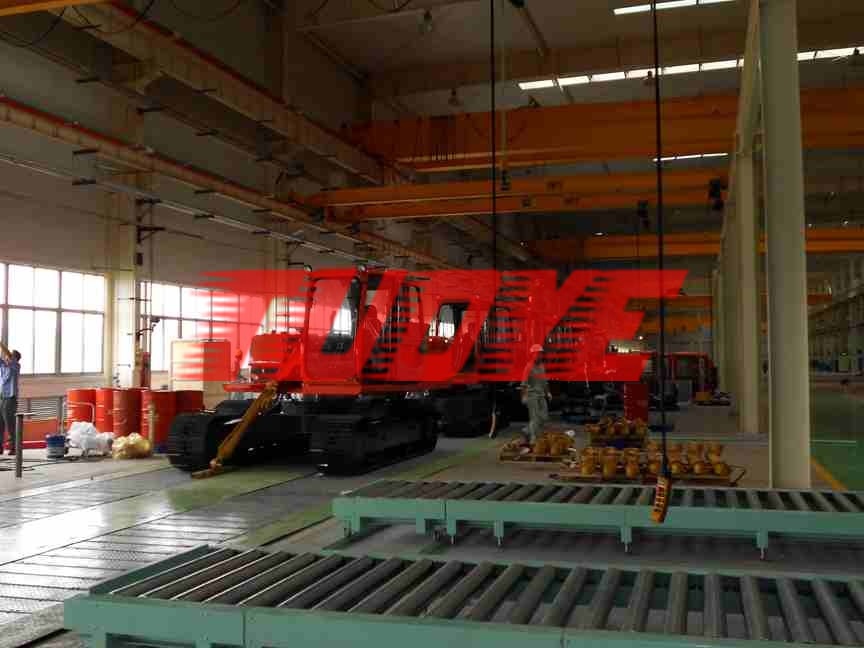
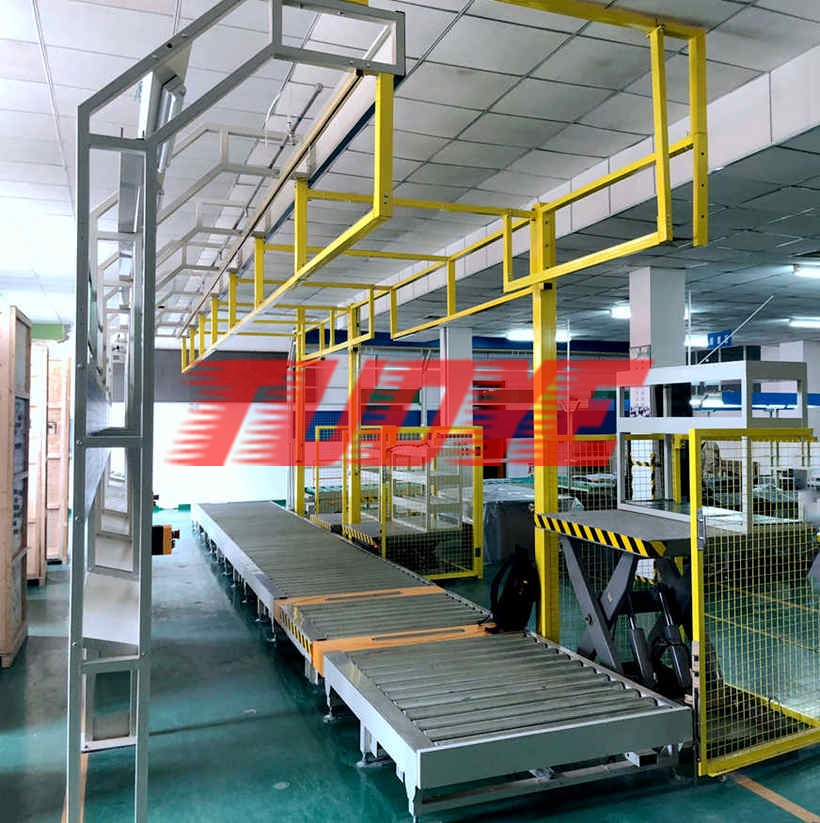
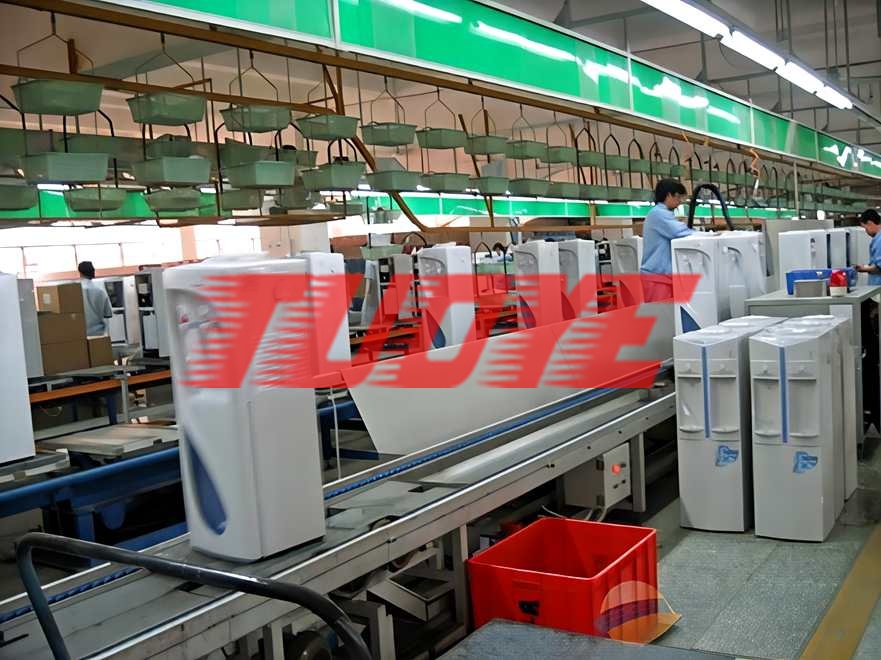
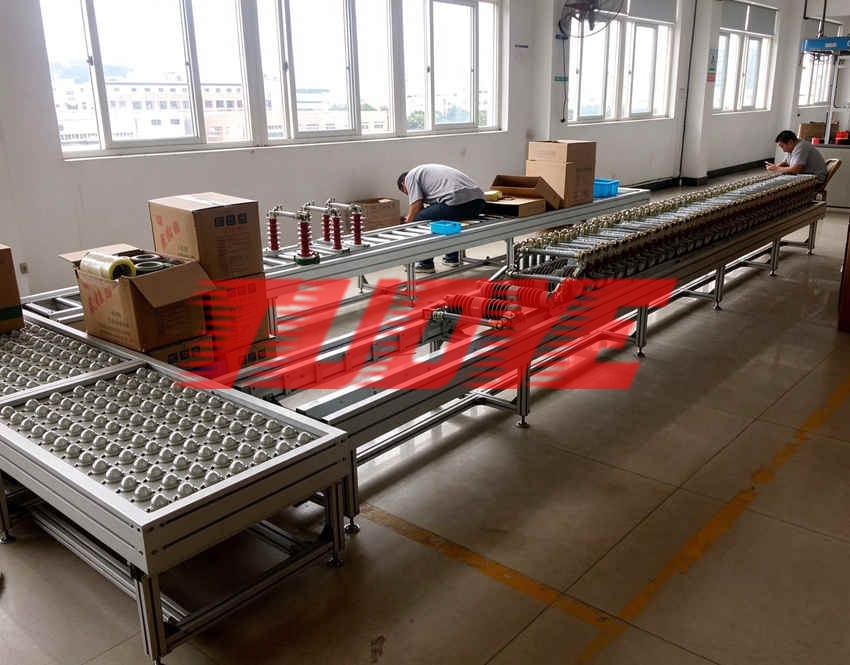
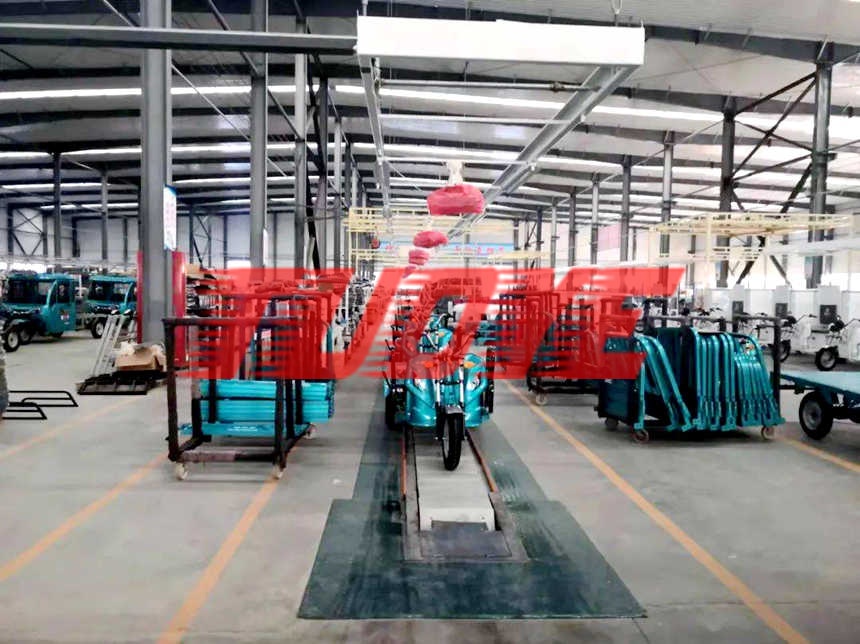
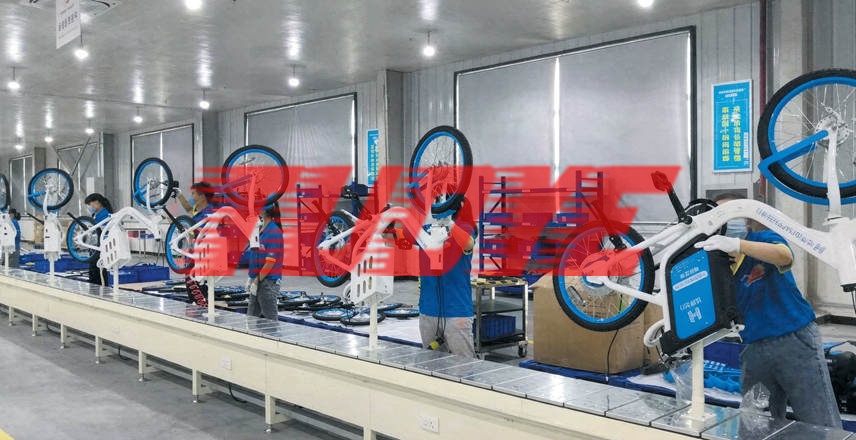
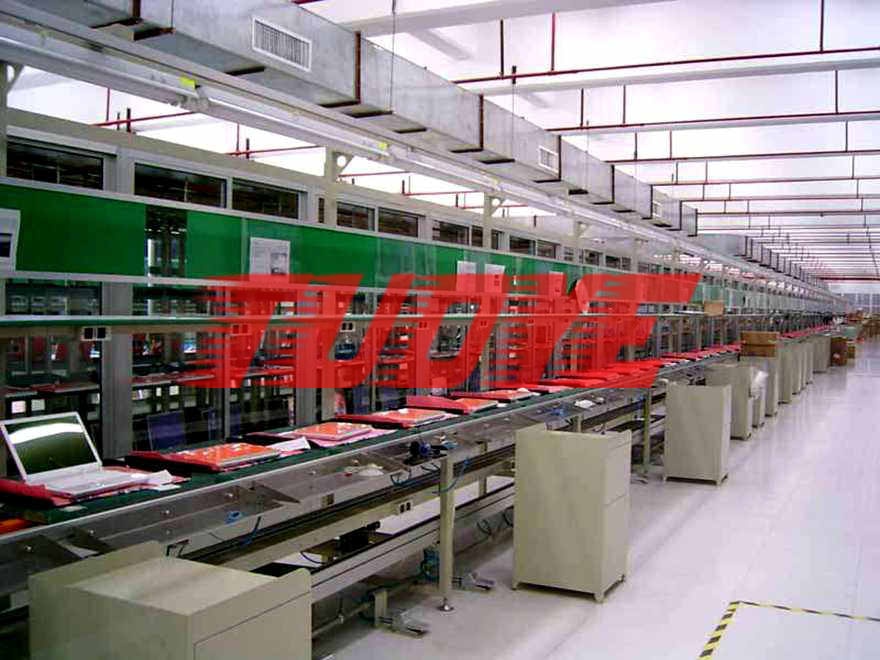
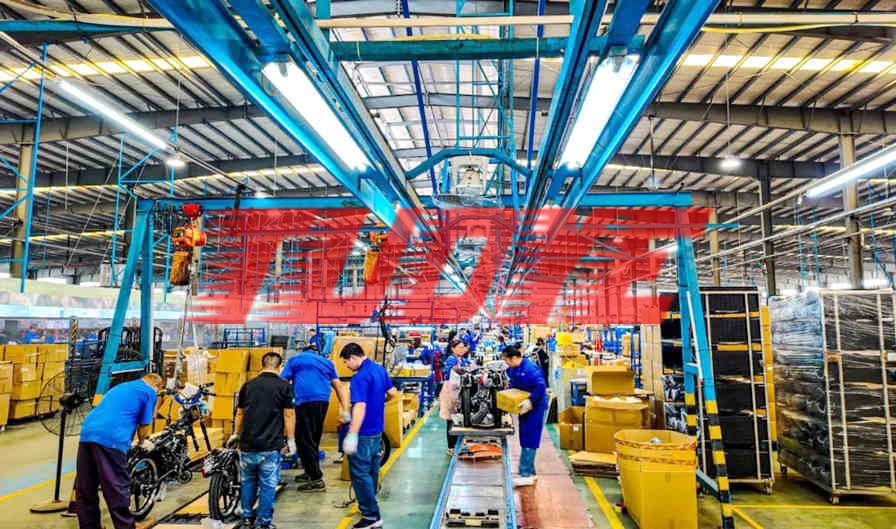
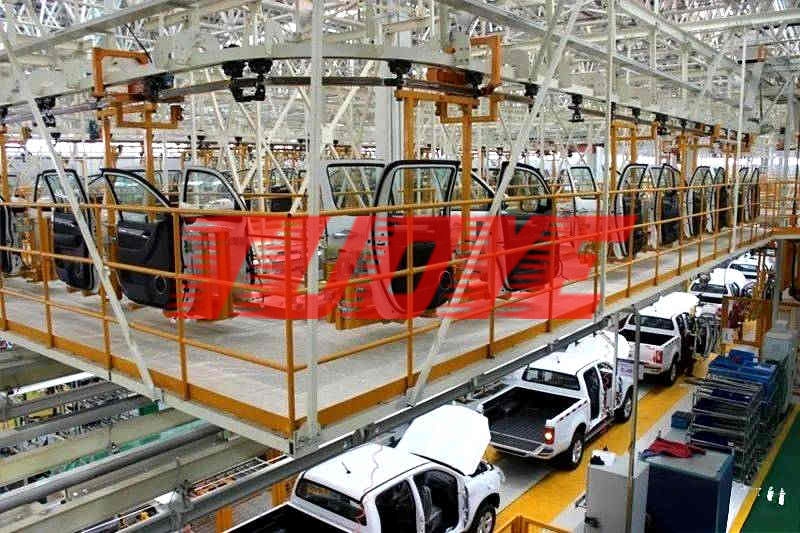
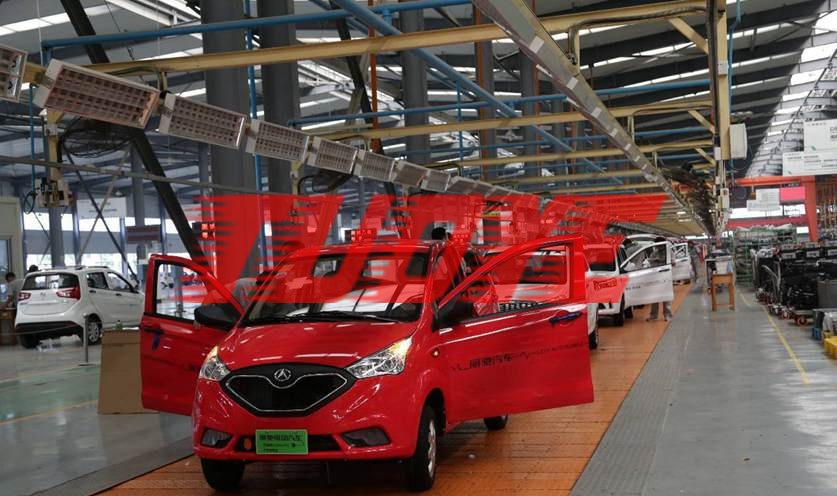
As shown, this case 4-wheeler assembly line uses orange pallet-type plate chain floor conveying: vehicles advance straight on carrying tabletops past roughly 10-15 stations, with station seats and workbenches along the side and bins and racks in a row; bridge lighting and hanging fans above, column boards and signs announcing each station's work, button boxes and e-stops at every station, and partition fencing separating assembly from the logistics lane. In the photo, red and white micro EVs run mixed on the line — the mixed-model flexibility of a low-speed EV assembly line on display. The typical production sequence: chassis on line → front/rear suspension and brakes → motor, rear axle and drive → battery pack and controller → body hoisted and married → harness and electrical parts → doors and panels → seats and trim → whole-vehicle debugging, testing and off-line.
3. Customization Options
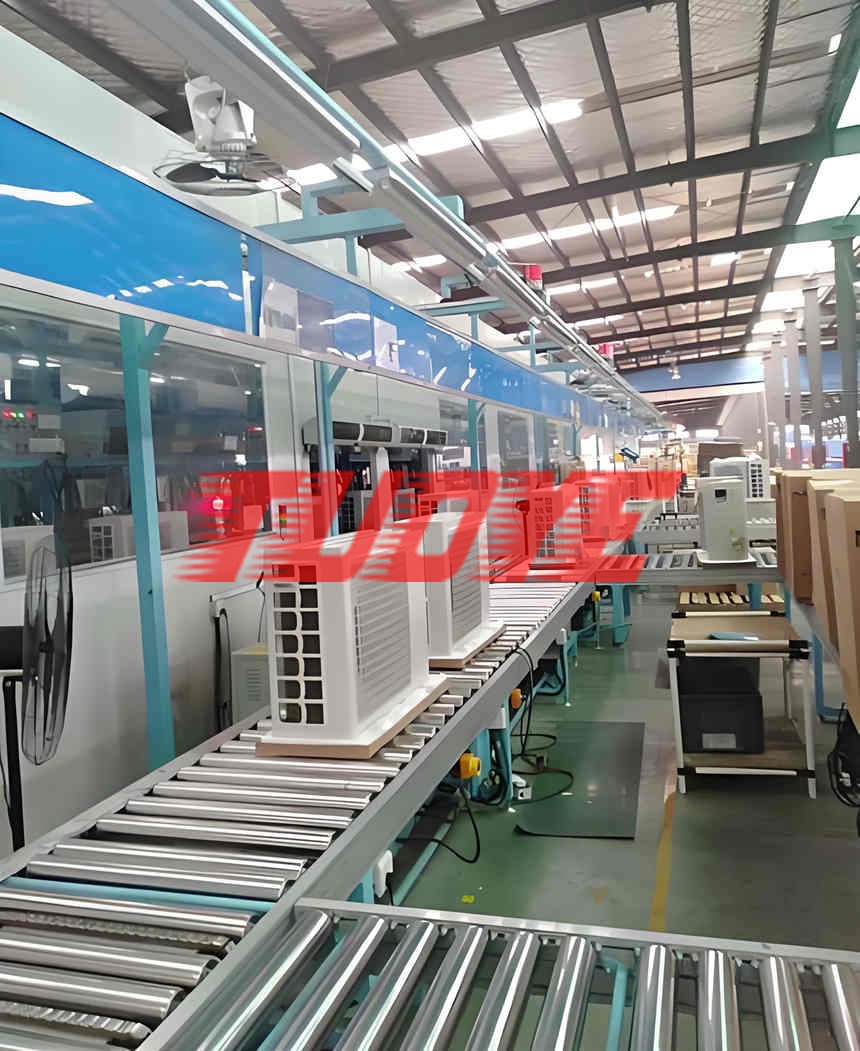
The 4-wheeler assembly line is non-standard custom equipment: conveying combines plate chain, speedchain, roller and belt by section; station count and beat are calculated to the annual program, supporting multi-model mixed runs and quick changeover; pneumatic balancers, smart electric drivers, torque records, in-line voltage checks and off-line test stations are available; lighting, fans, racks and ANDON boards come as options. From your model range, capacity target and workshop conditions, Tuoye issues the planning proposal and turnkey quotation for a 4-wheeler assembly production line — an electric 4-wheeler production line that is economical and expandable at once.
4. Delivery & Service
Project-based delivery: engineers first align the model range (micro EVs, sightseeing cars, yard trucks), JPH target and floor plan, then issue the layout and section-wise equipment list; equipment ships after in-plant pre-assembly and trial runs, is installed and commissioned on site and accepted in trial production on your models, with operation and maintenance training. One-year machine warranty, long-term supply of pallets, chain plates and gearmotors, plus old-line speed-ups and phased expansion. Building a new low-speed 4-wheeler assembly line or micro EV assembly production line — or adding mixed-model identification, in-line testing and ANDON to an existing 4-wheeler assembly line — Tuoye measures on site, quotes to the facts, and welcomes contact on proposals and lead times.
Permanent link: https://www.liushuixian.com/post/mixed-model-production-for-micro-evs-flexible-design-of-a-4-wheeler-assembly-line.html
Disclaimer: Some articles on this site are compiled from public technical sources for reference. If any content infringes your rights, please contact us for removal. Please credit the source when reprinting.