Three Key Processes on Refrigeration Lines: Leak Checking, Vacuum and Charging on a Portable AC Assembly Line
1. Industry Overview
Portable air conditioners are all-in-one units with built-in compressors — no installation, exhaust hose out and they run — and their orders run strongly seasonal with a high export share. A portable AC assembly line — the trade also says portable air conditioner production line — completes whole-unit assembly and testing of compressor, heat exchangers, piping and electronics. By type: household portables run the 1-2 HP mainline; industrial units serve server rooms and sites, a size and test-duration class up; heat-pump models add four-way valves with matching assembly and test steps. On any refrigeration line, the key processes concentrate in leak checking, vacuum evacuation and metered charging — equipment that outweighs the conveying itself in investment.
2. Process Flow & Line Configuration
The typical portable AC assembly flow: base pan and compressor (damping mounts, bolts) → condenser and evaporator into chamber → piping welding → nitrogen hold & leak check → vacuum evacuation → metered refrigerant charging by electronic scale → panels and air ducts → safety tests (withstand, insulation, leakage current) → powered run test (cooling capacity, current, noise) → cleaning and packing.
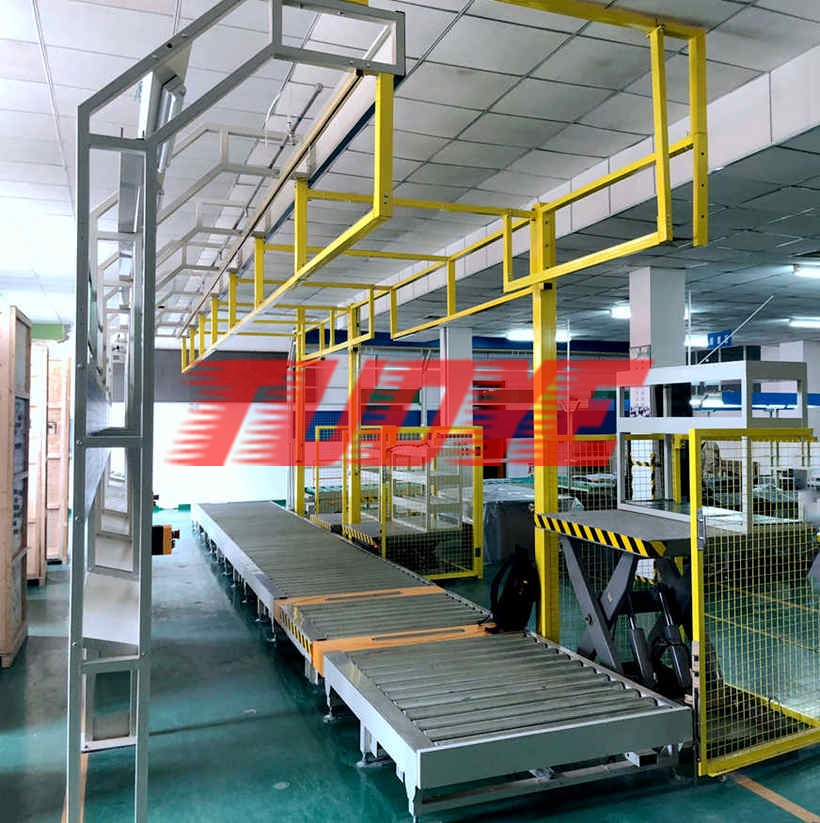
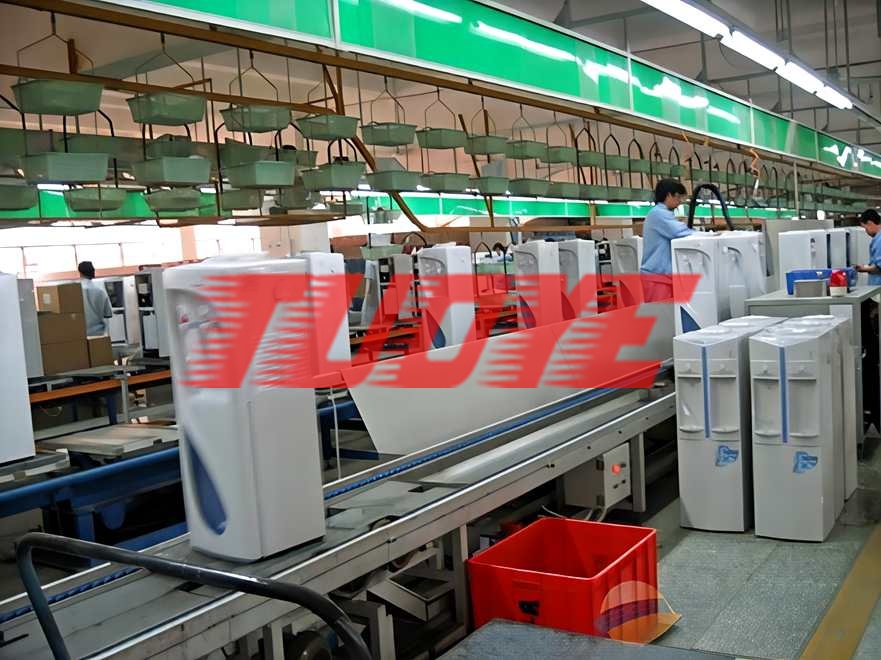
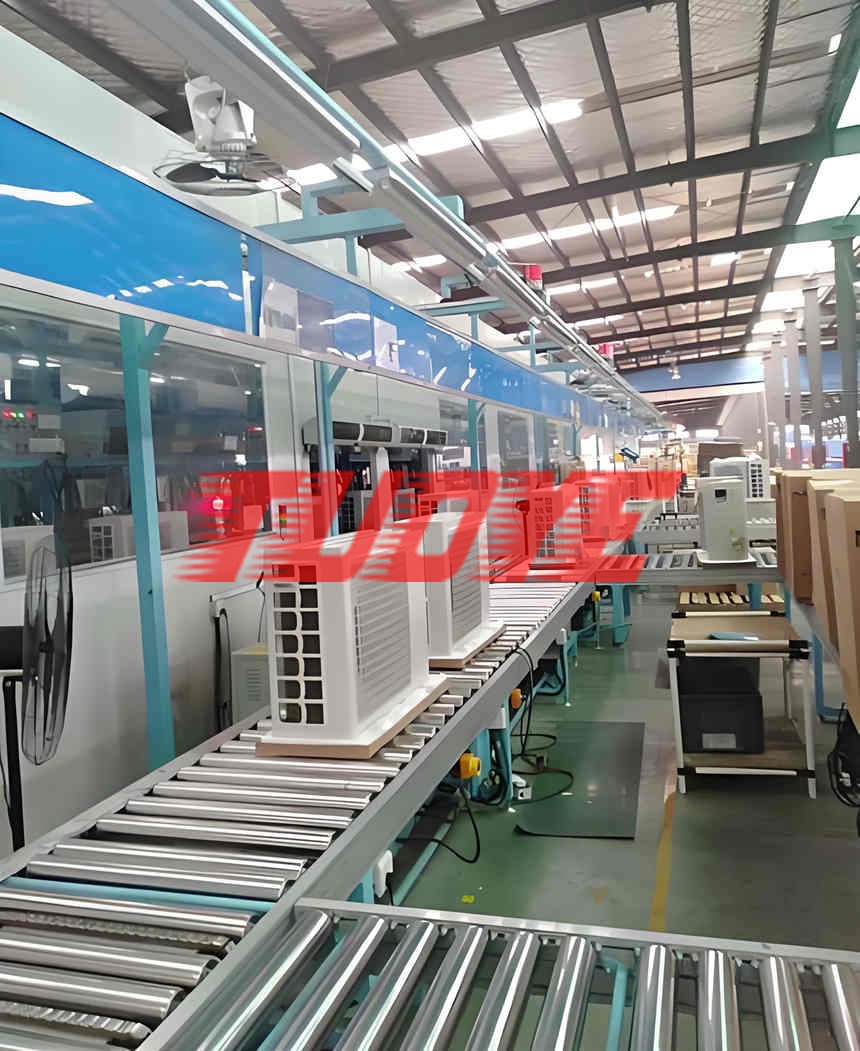
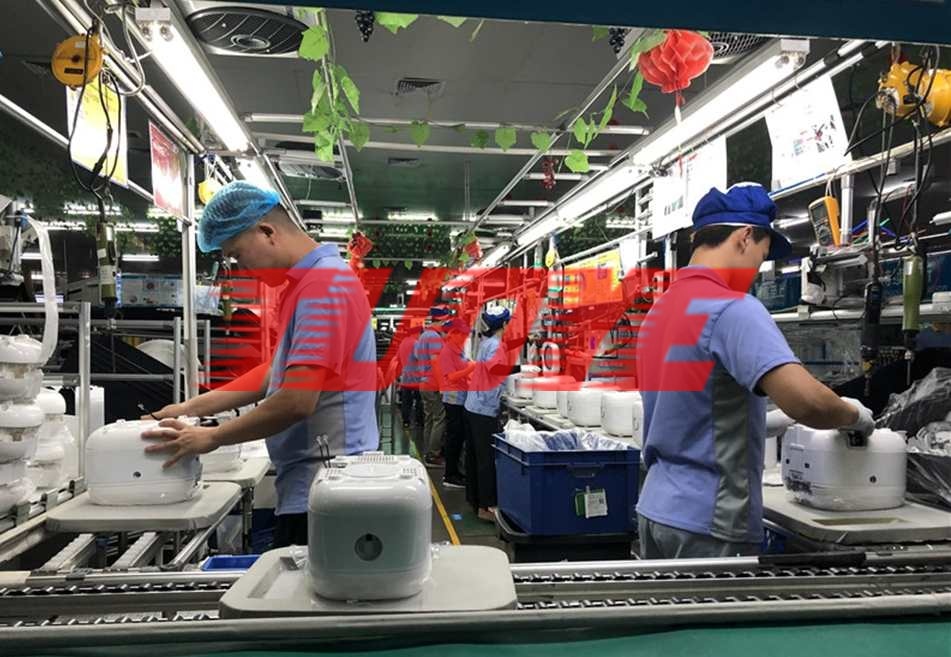
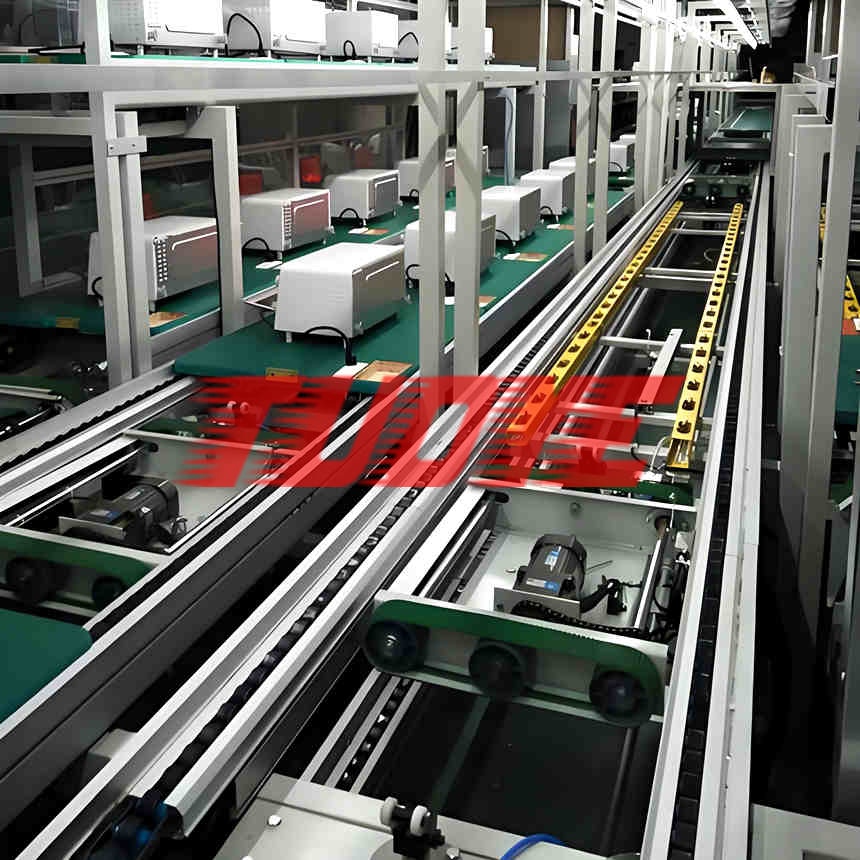
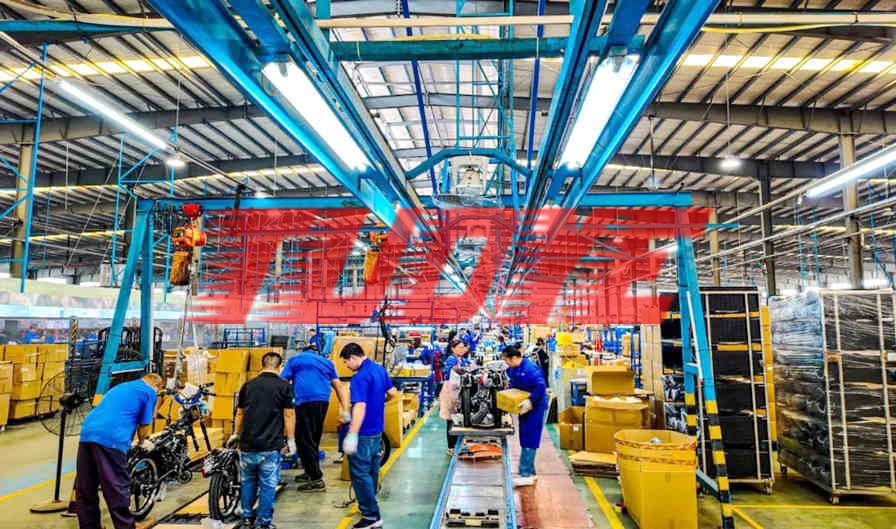
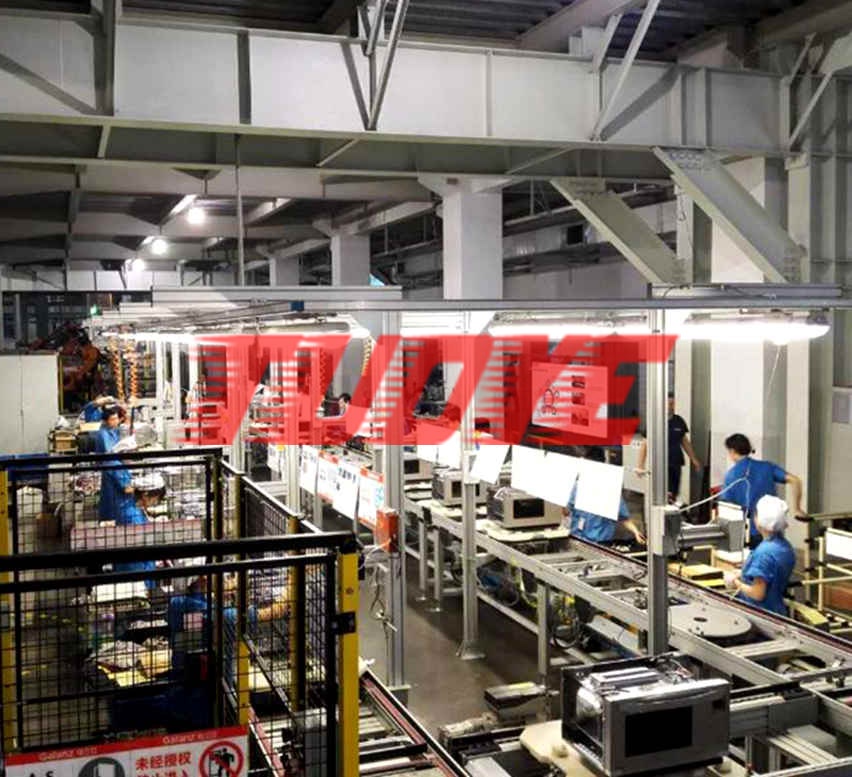
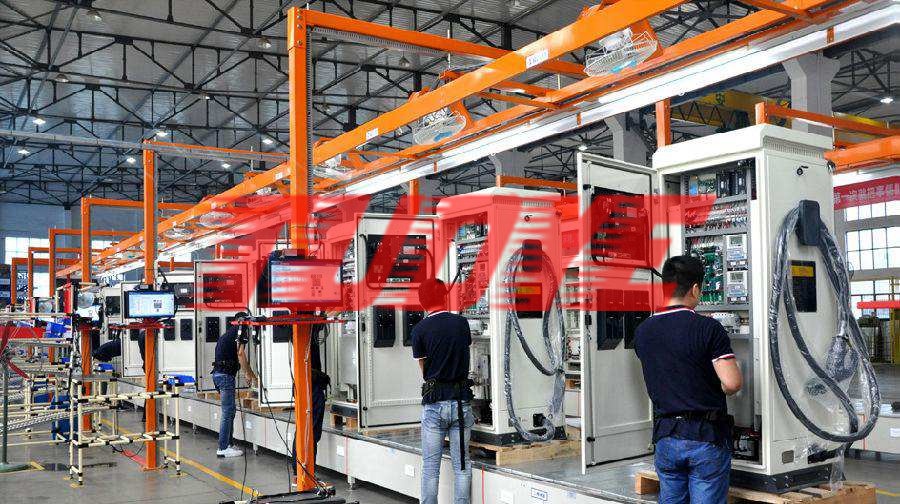
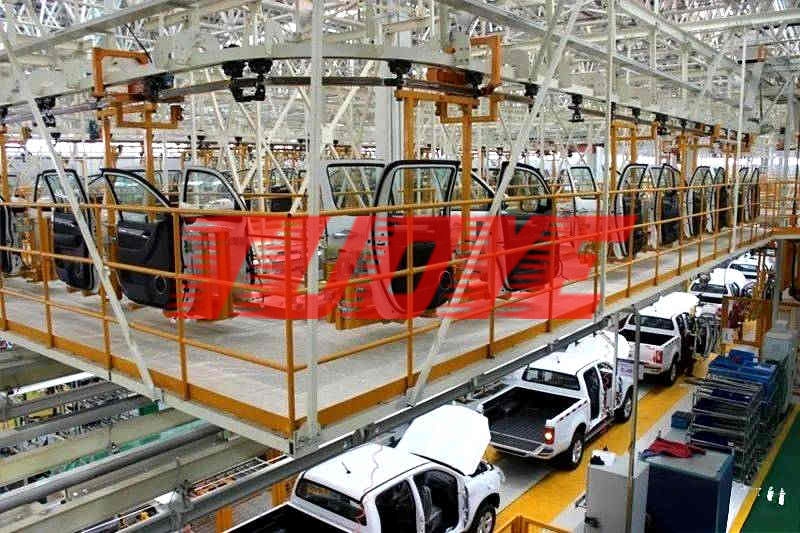
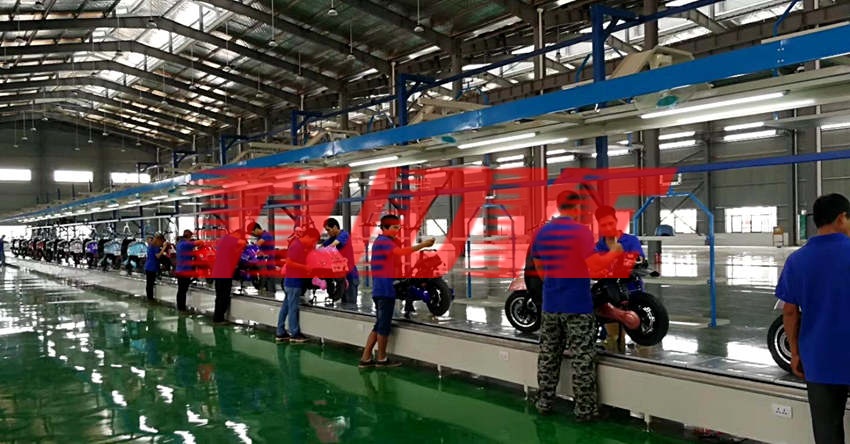
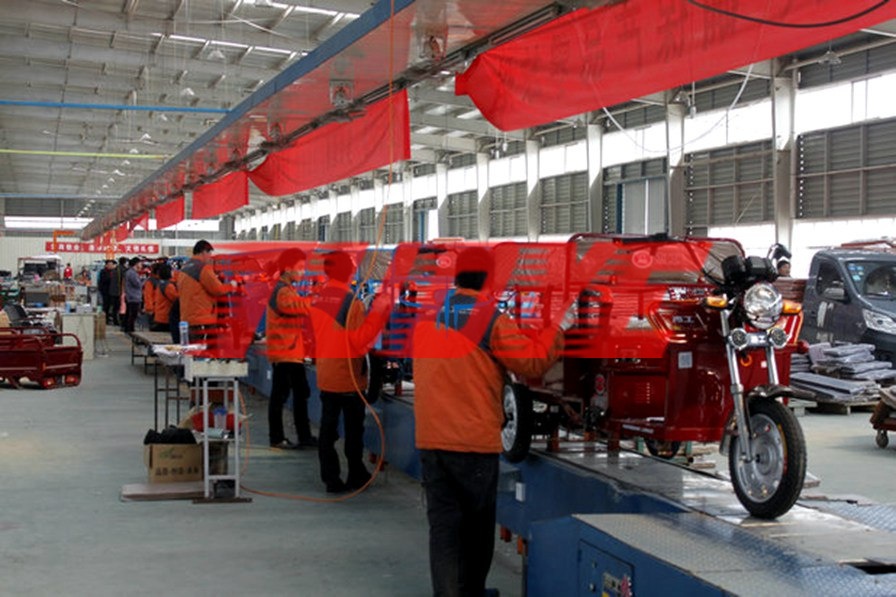
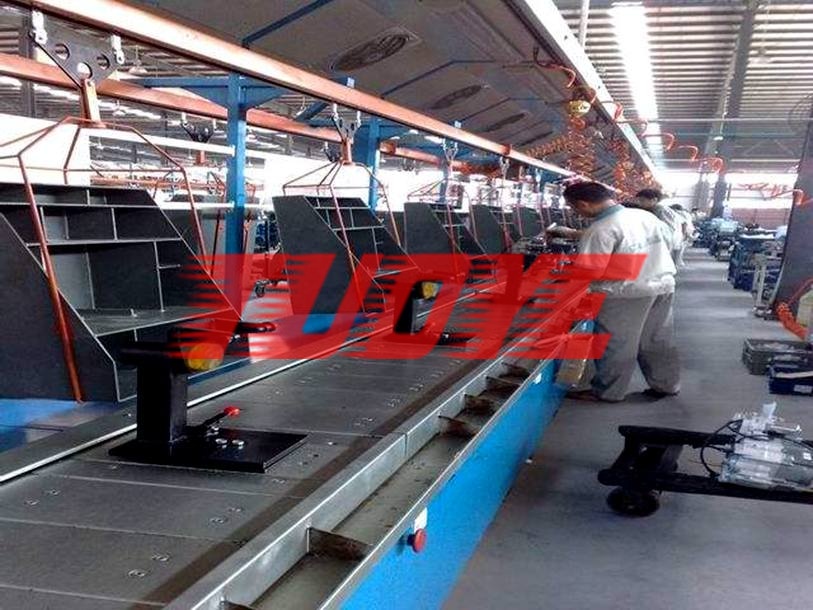
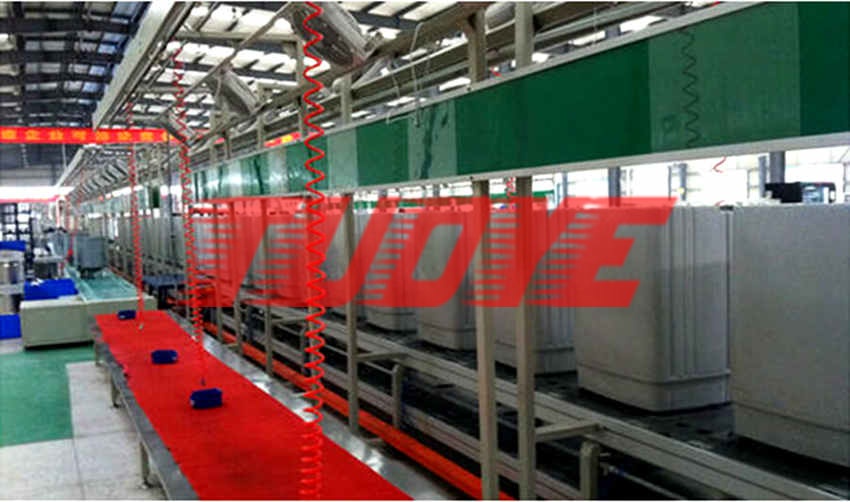
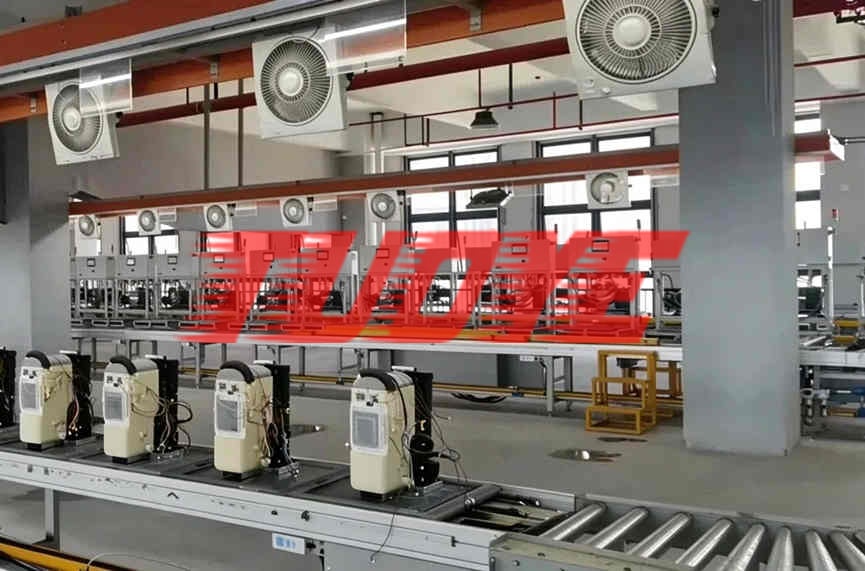
In a delivered project, the portable AC assembly line runs a stacked layout: the lower speedchain layer assembles on pallets — piping welding and wiring at the photographed stations; above, a run-test island of a dozen-plus slots, big fans overhead shedding the test heat; the roller tail takes units off to packing. Charging machines sit in ventilated positions, refrigerant cylinders enclosed apart.
3. Configuration & Selection Tips
Test-island power on a portable AC production line sizes at unit current times slot count plus 30% — no supply wobble at full occupancy. Vacuum runs to the process level, holds to confirm acceptable pressure rise, then charging by weight on electronic scales to gram-level precision; hold times follow the process file, because skimped holds convert straight into after-sales cost. Models running flammable refrigerants like R32 charge in a segregated zone with reinforced ventilation and ESD measures under refrigerant safety codes. Leak checking selects nitrogen hold or helium per company standard, and same-platform dehumidifiers share the line through fixture and charging-parameter switching.
4. Delivery & Service
From models, daily program and test-island scale, Tuoye — in Wenling, Taizhou, Zhejiang, China — issues the portable AC assembly line proposal; equipment is pre-assembled in-plant and commissioned through trial production. One-year machine warranty, pallets and test couplings supplied long-term, plus test-island expansions on existing portable AC production lines.
Disclaimer: Some articles on this site are compiled from public technical sources for reference. If any content infringes your rights, please contact us for removal. Please credit the source when reprinting.