Two Process Stages on a Treadmill Assembly Line: Belt Tensioning and Whole-Unit Run-In Testing
1. Industry Overview
A treadmill is half appliance, half machine — console electronics on one side, deck, belt and drivetrain on the other — and its production line serves both crafts. A treadmill assembly line completes deck sub-assembly, whole-unit final assembly and unit-by-unit run-in testing; the trade also says treadmill production line. By type: home folding machines (walking pads included) run the big volumes with frequent changeovers; light-commercial machines serve home and studio both; commercial treadmills weigh in above a hundred kilograms with big motors, tabletop loading and test-zone supply rated to the commercial class; export and domestic orders differ in voltage standard, so the test zone must switch supplies. Two quality-critical stages: running-belt tensioning and whole-unit run-in — every unit powers on before ex-factory to verify speed curve, incline, e-stop and abnormal noise.
2. Process Flow & Line Configuration
The typical treadmill assembly flow: deck sub-assembly (board, rollers, belt pre-tensioned) → frame and uprights → console and harness mating → handrails and trim guards → belt tension tuning → powered run-in test (speed, incline, e-stop, noise) → appearance check → off-line and packing.
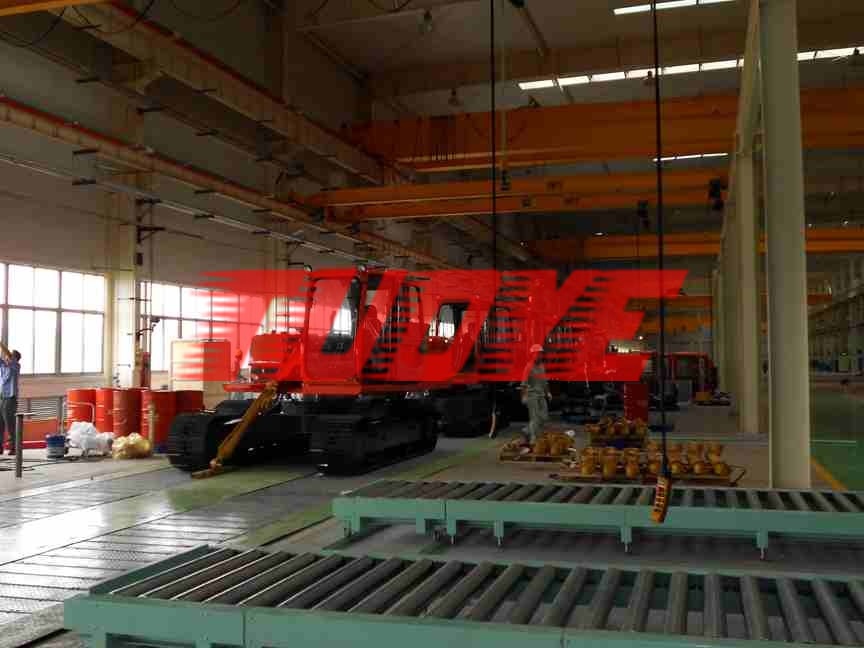
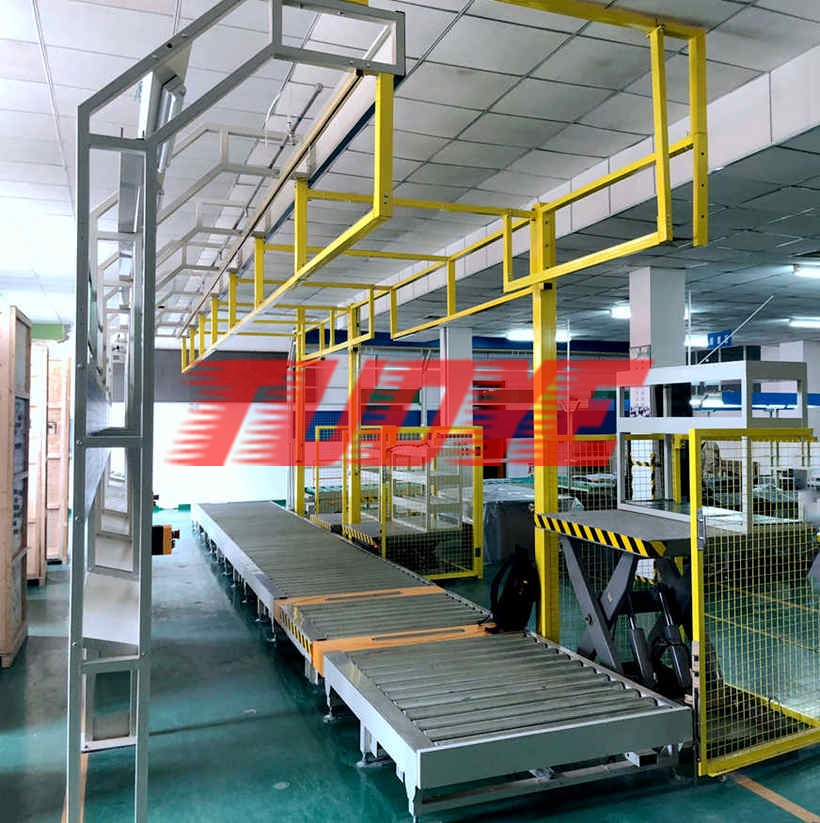
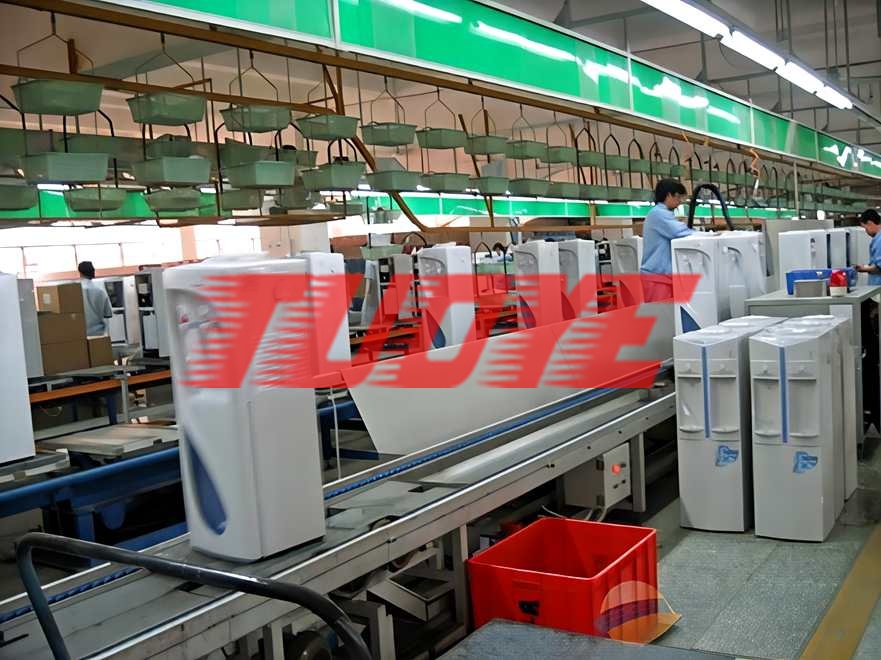
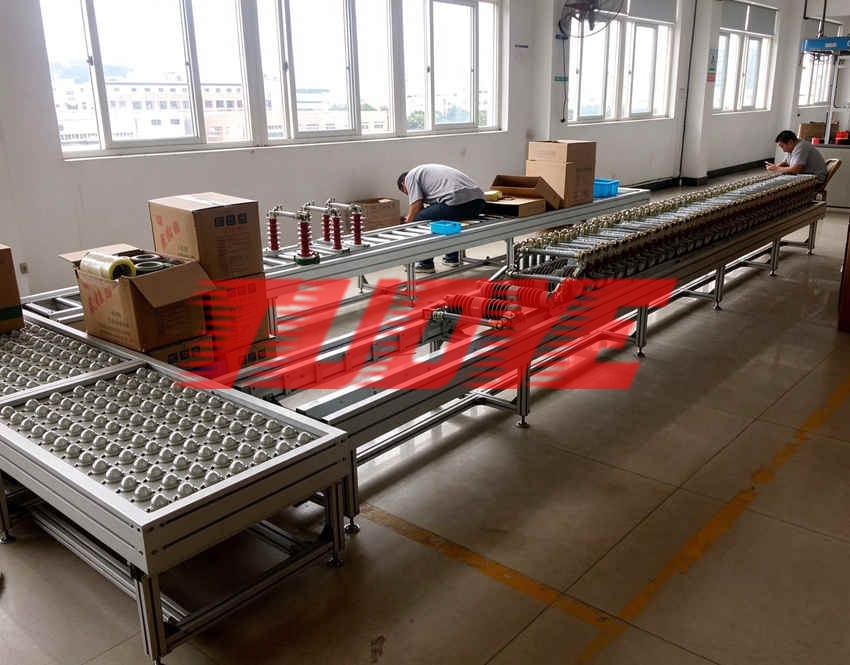
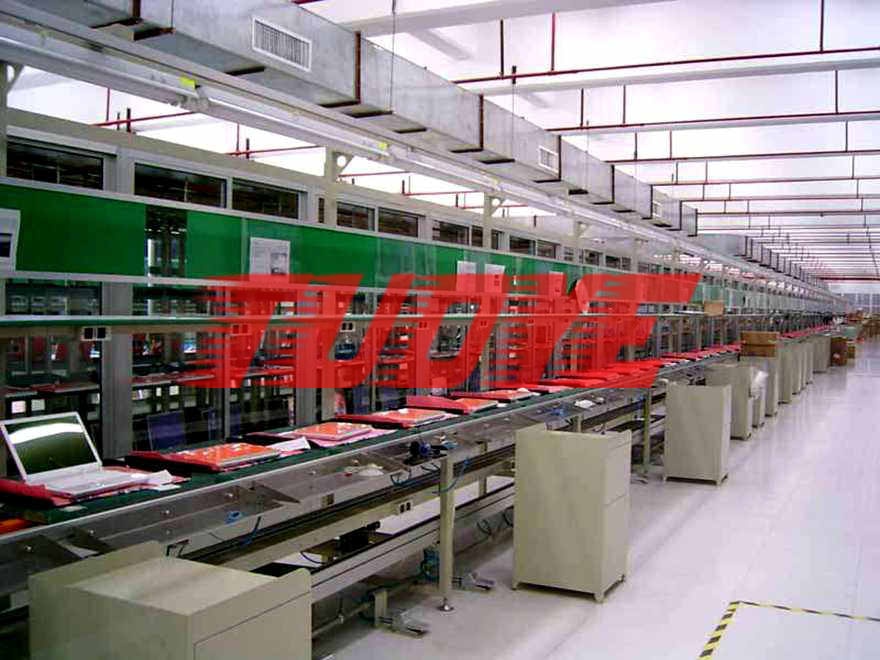
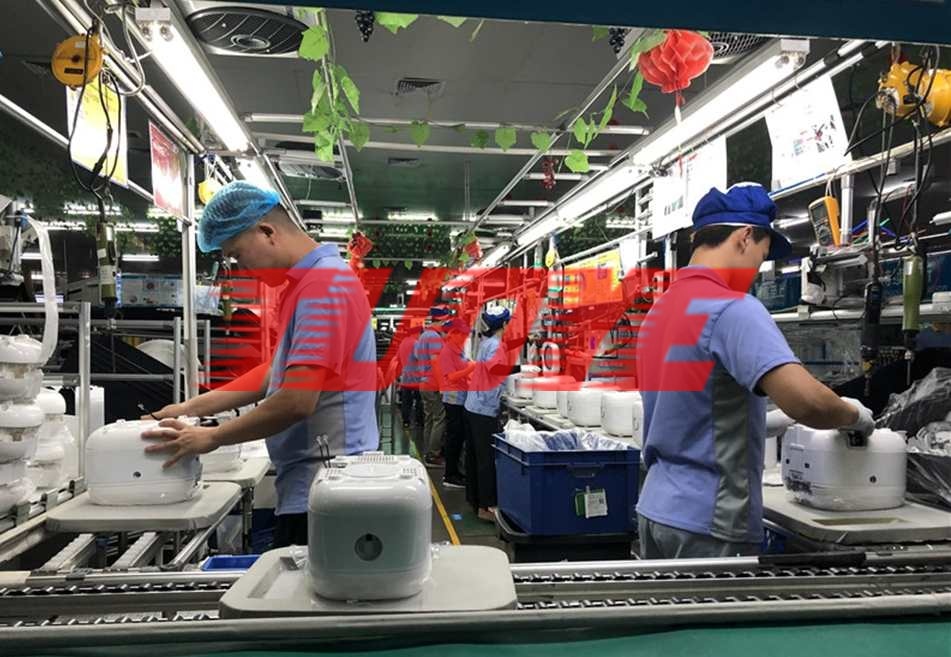
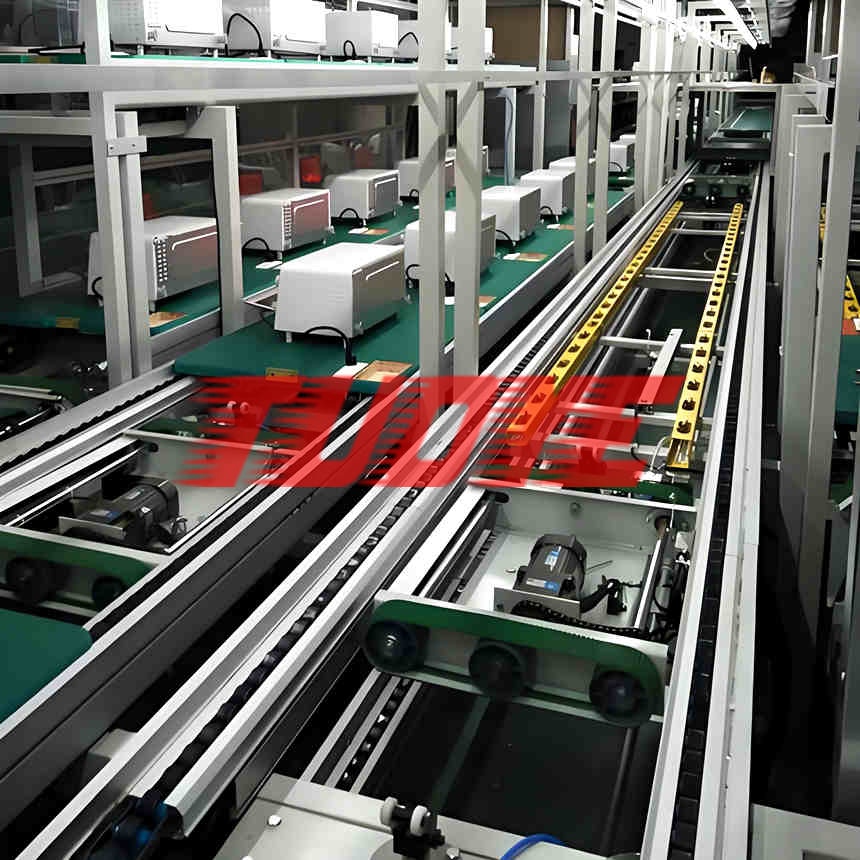
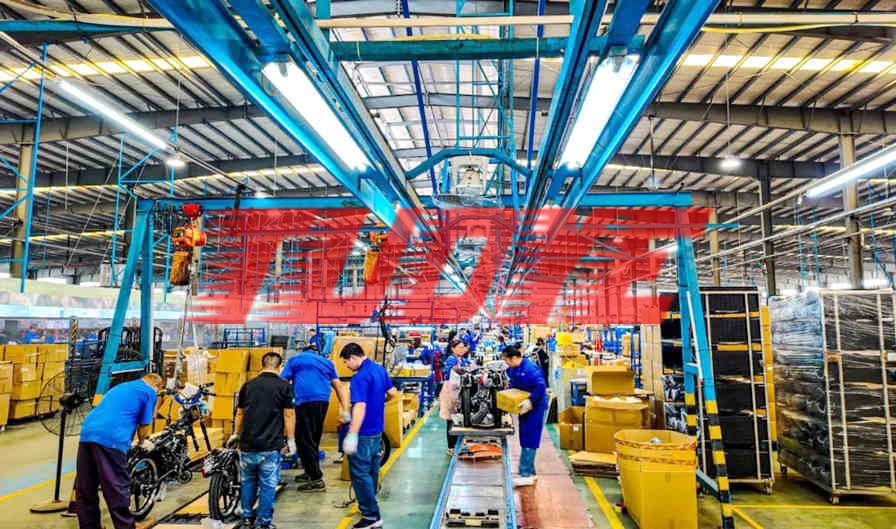
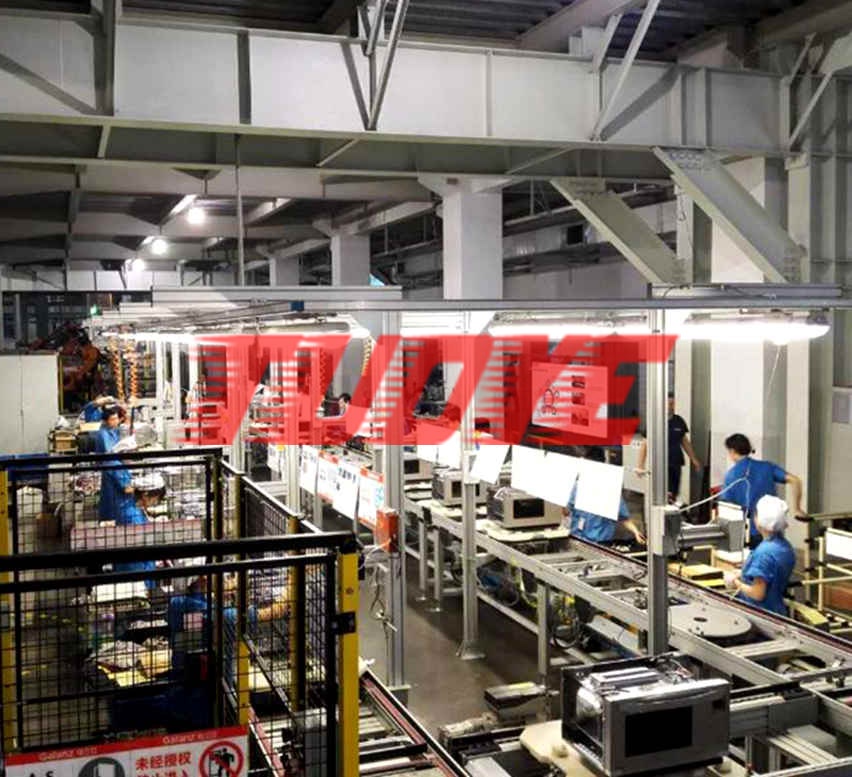
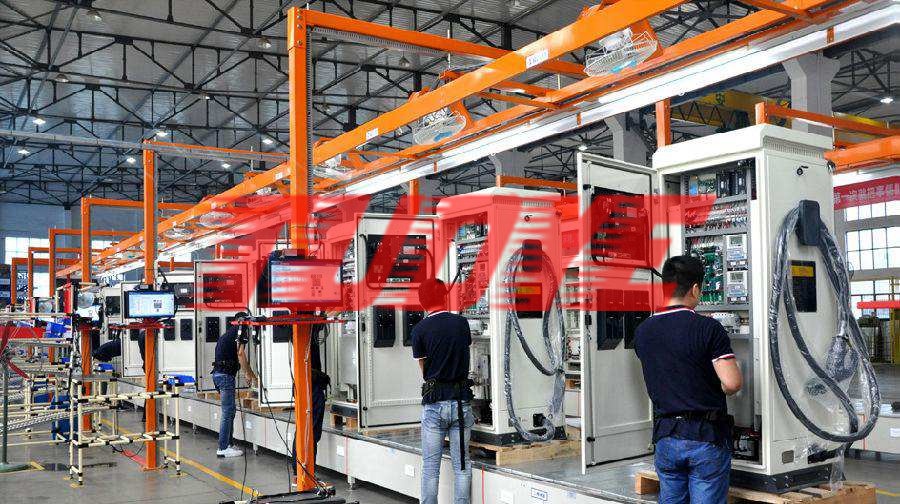
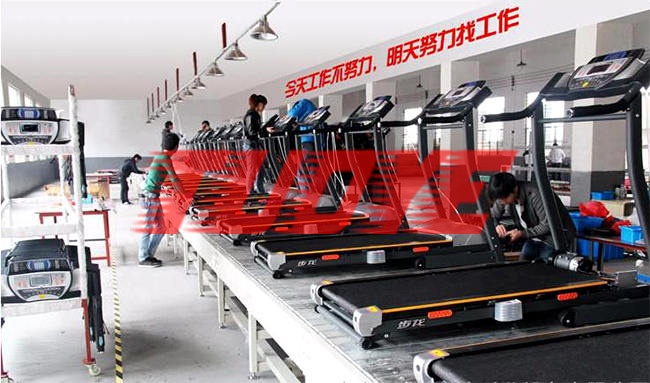
In a delivered project, the treadmill assembly line runs bench-type final assembly: long light-gray tabletops take whole machines advanced by hand — right for many-variety mid-volume work; the upright station uses step ladders for high-level work, line-side racks holding console boxes and parts; the open floor at the tail hosts the powered run-in zone, test positions laid with damping mats so floor-bounce noise never drowns the judgment of rattles; pendant lighting runs continuous over the tabletops.
3. Configuration & Selection Tips
Bench width sizes to the largest model's unfolded footprint plus two-person margin — commercial machines spread to nearly 1.8 meters. The deck sub-assembly stage checks boards on arrival, selects quiet-spec belts and mounts damping blocks by position number; after tensioning, an empty run confirms the belt tracks centered. Stations order "mechanical front, electrical rear": dusty work like belt tensioning up front, clean work like console mating at the back, cutting electrical defect rates. Run-in duration follows the company standard, speed curve, incline limits and e-stop verified on every unit. When volume grows, the bench line upgrades to plate-chain conveying for an enforced beat.
4. Delivery & Service
From models, daily program and workshop conditions, Tuoye — in Wenling, Taizhou, Zhejiang, China — issues the fitness equipment assembly line proposal; equipment enters after in-plant pre-assembly and commissions through trial production. One-year machine warranty, tabletops and roller parts supplied long-term, plus test-section expansions and plate-chain conversions on existing treadmill production lines.
Permanent link: https://www.liushuixian.com/post/two-process-stages-on-a-treadmill-assembly-line-belt-tensioning-and-whole-unit-run-in-testing.html
Disclaimer: Some articles on this site are compiled from public technical sources for reference. If any content infringes your rights, please contact us for removal. Please credit the source when reprinting.